Wine bottle lights – a gift for you, a gift for them

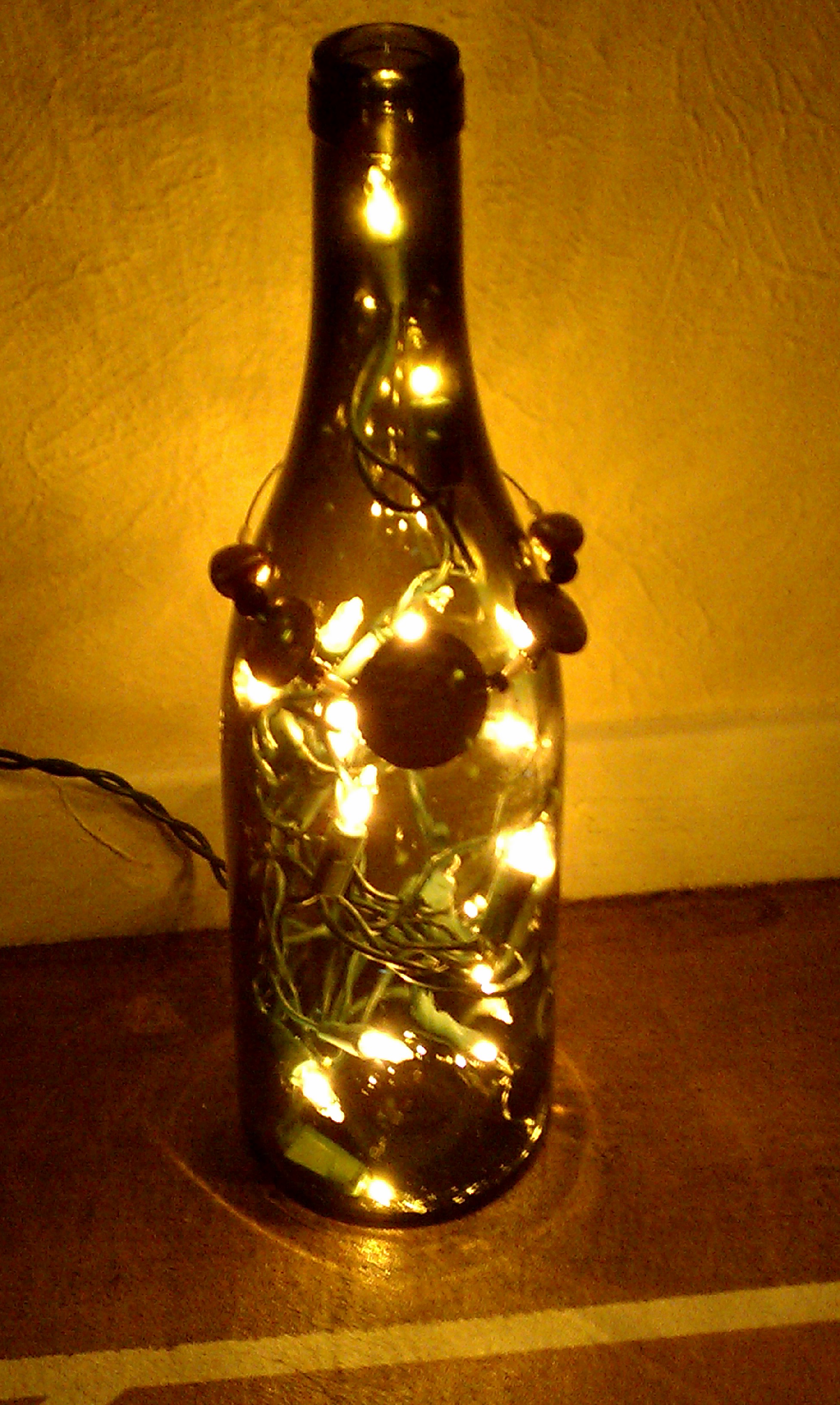
Wine bottle lights are a gift that can be given any time of year really. Especially if you want to give yourself the gift of drinking a few bottles of wine so that you have some nice looking bottles to start with.

I saw this idea in a number of places and can’t even really point to a source.

Supplies:

  • Empty wine bottle (colored ones are nicer than clear)
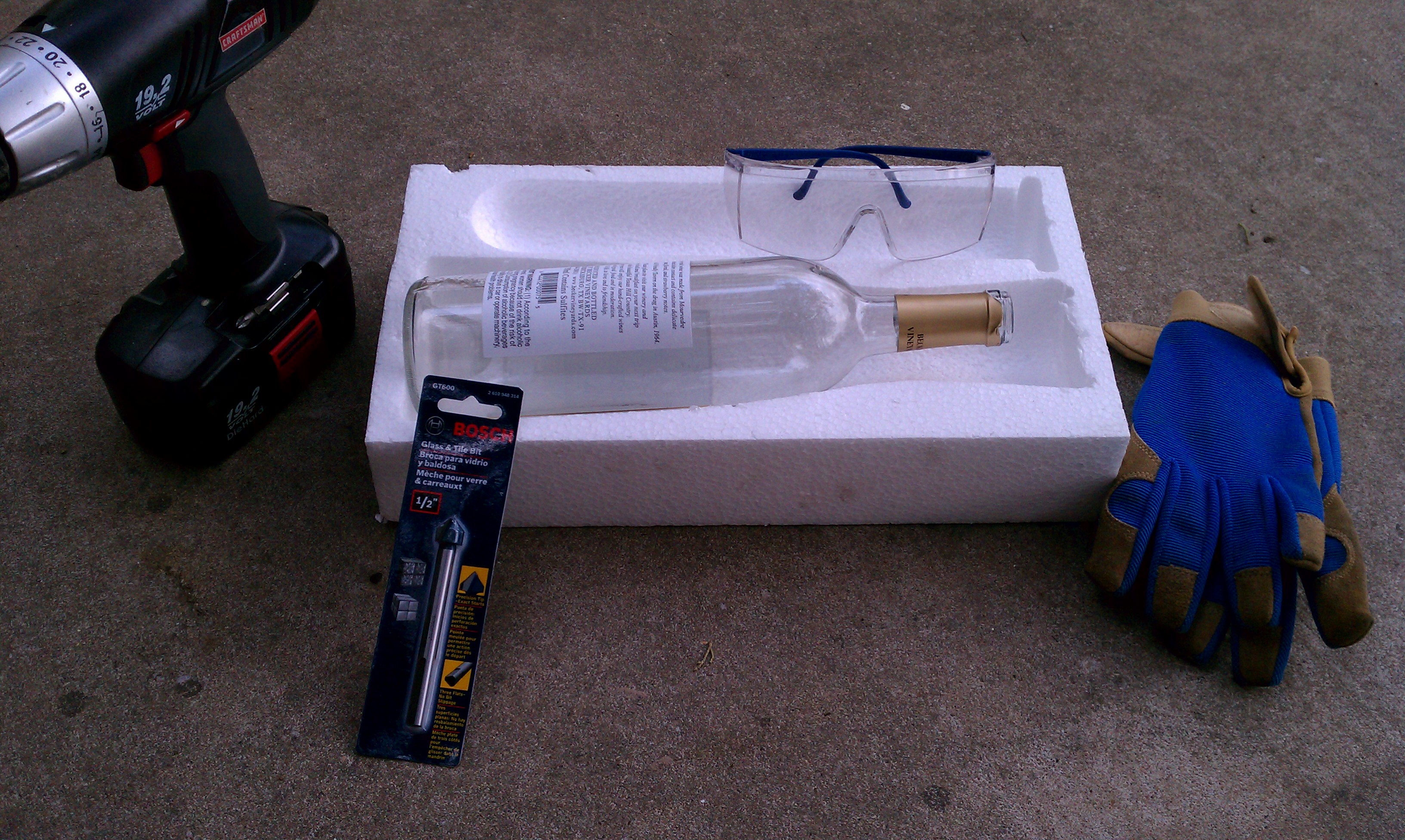
  • Indoor/outdoor christmas lights. I used a clear strand with 20 bulbs and a plug only on one end
  • Corded drill (cordless will run out of batteries)
  • 1/2″ Glass drill bit (like this one at home depot)
  • Wire and beads if you want to make a “necklace” for the bottle

Instructions:

  • Wear safety glasses and gloves while drilling through the bottles. None of mine broke during drilling, but make sure to be safe.
  • I used a piece of styrofoam to cradle the bottle while drilling it
  • Use the label to start the hole. If the bottle doesn’t have a label, put a piece of masking tape on the bottle.
  • Start drilling. The whole process takes 20 – 30 minutes. I would start and stop quite often because my hand got tired.
  • Drill until the drill bit fits through the hole
  • Soak the bottle in hot water with a bit of oxyclean until the label is easy to get off. A razor blade will help. I also used a brillo pad to take off the glue. After that was done, I used a bottle brush to clean out the glass dust left in the bottle.
  • Feed the lights one by one through the hole
  • Using some wire and vintage beads from Etsy I made a necklace for the bottle

I’d like to think I’ll make a whole army of these to decorate my yard, perhaps under the bottle tree but we’ll see how that goes. For now though, the bottles have been a hit with the recipients!

Enhanced by Zemanta

Making a quinoa loaf

The holidays this year have been crazy. We didn’t even have time to make our typical multi course holiday meal to enjoy slowly throughout many days. Instead I settled on making one dish that was somewhat festive. To avoid using meat, I found this whole foods recipe for a quinoa loaf with mushrooms and peas.  I didn’t get that many pictures, but you basically make a paste with oatmeal and chickpeas and then stir in the mushrooms, peas, onion, sun dried tomatoes, and quinoa. To bake it, the mixture is pressed into a loaf pan:

After baking:

The loaf was good, but definitely go heavy on the spices and add any additional spices that you like. To reheat slices, I first heated them in the microwave and then browned the outside on a pan so that it would be toasted. We added either some hot sauce or tapenade to the top.

Enhanced by Zemanta

Caramel apple oatmeal cookies… a perpetual hit!

If you ever want to make cookies that are guaranteed to get raves, try these caramel apple oatmeal cookies. They take a bit of work to make but the result is delicious. The trickiest part is cooking them long enough. Either my oven isn’t hot enough or the time quoted on the recipe is way too short. To get them fully cooked, I ended up baking them for at least 16 – 18 minutes.

Assembling the ingredients:

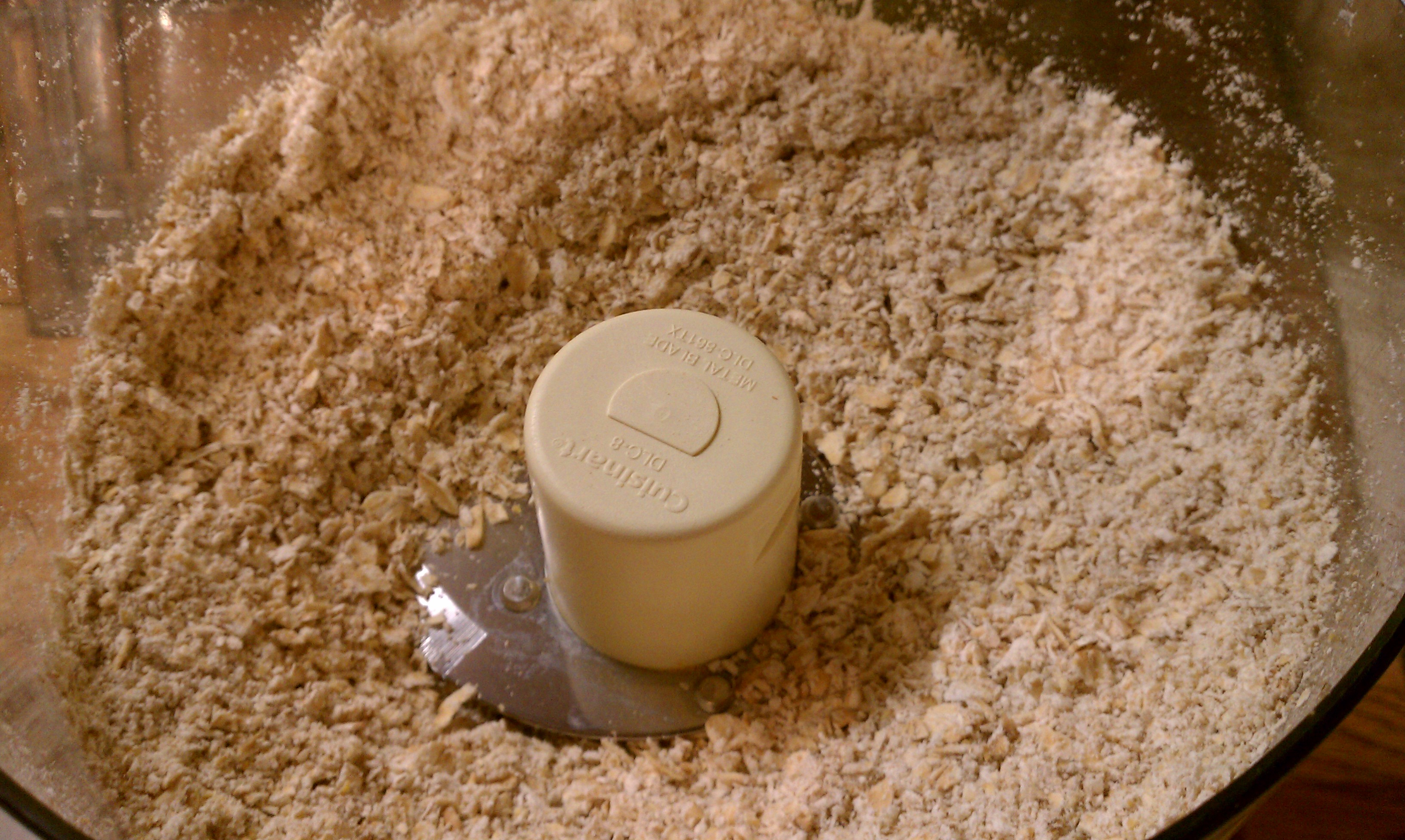
Chop up the oatmeal in the food processor. I really like this step because I’m not a huge fan of oatmeal cookies, but if you chop it, the texture is much nicer.

Chop up the apples into little bits:

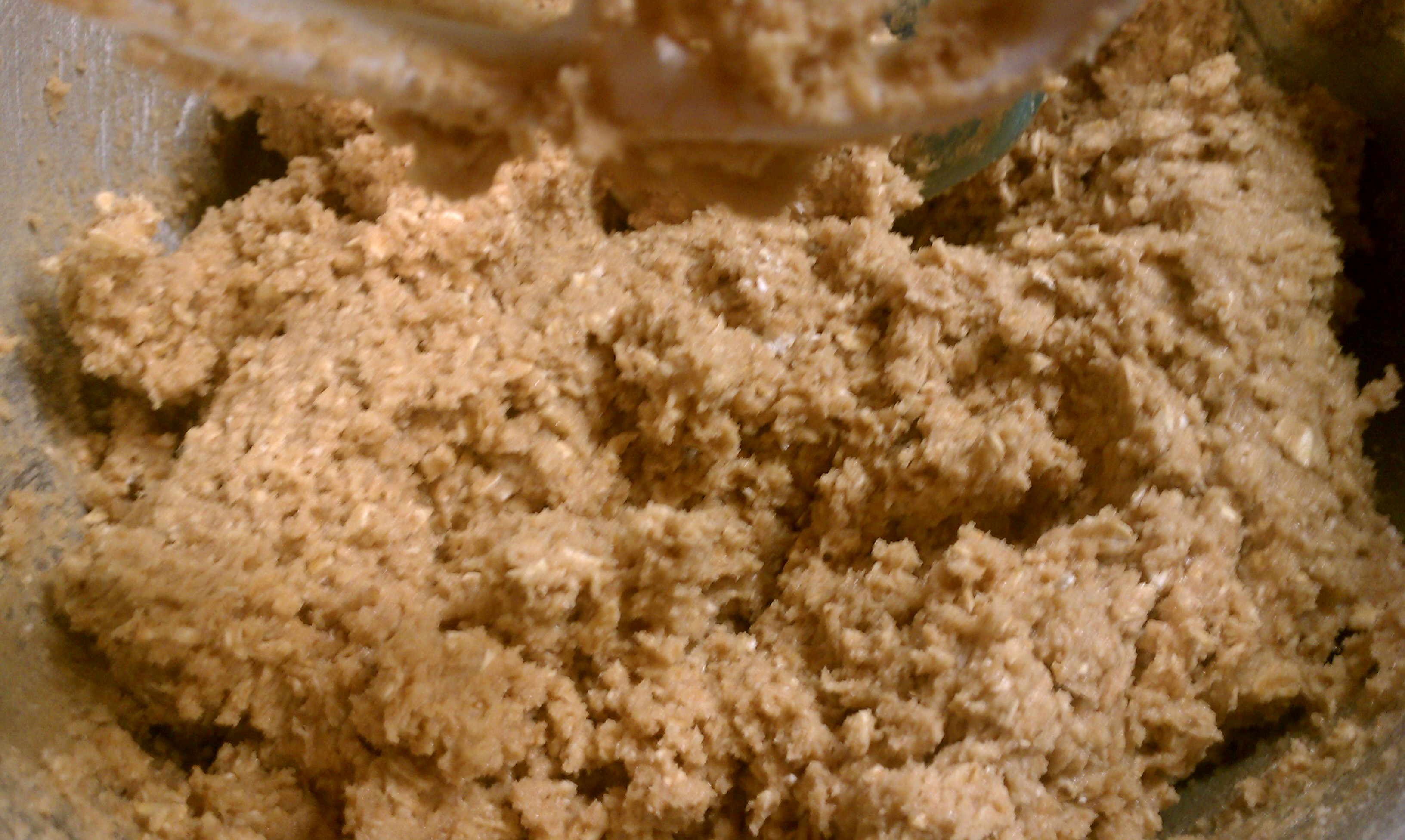
Mix the wet and dry ingredients:

After mixing in the apples and caramel bits, the dough is chilled for an hour or more and then formed into round balls and placed on a parchment paper lined baking sheet. Extra caramel bits are added to the top of the dough for presentation.

After baking, they are ready to eat! This particular batch was actually under cooked. You need to make sure that the tops are a golden brown. Even under baked, they are quite delicious.

These cookies are quite soft and get softer by the day because of the moisture in the apples. I found it best to store them in the fridge.

Enhanced by Zemanta

A homemade gift: Vanilla!

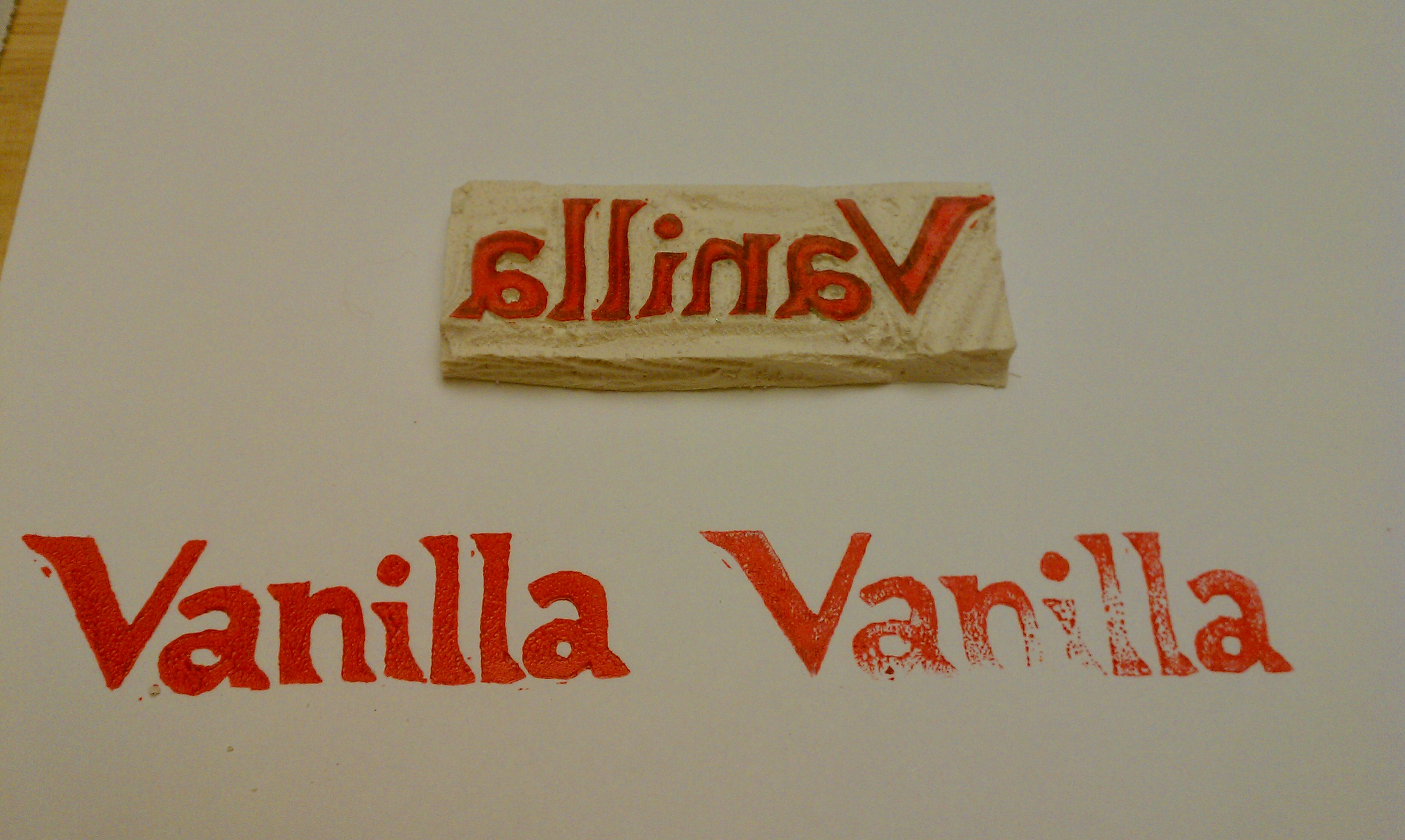
Earlier this year, I wrote about making my own vanilla extract. I know a number of women who like to bake, so I decided to give some of this deliciousness as gifts this year! I bought some small swing top bottles at the container store, made labels with a home made stamp and packaged up the vanilla. I sure hope it’s a hit 🙂

To make my own stamp, I first started by creating gridlines on my sketch paper and then drawing the word in a nice font of my own making.

I then carefully carved my stamp block using a speedball lino cutter handle. After doing some test stamps and cleaning up the carving, I mixed red and brown to make a slightly dark red colored paint and stamped a thick piece of cardstock.

After the paint dried, I cut up the paper into labels, punched a hole in the label and used some rafia to tie it around the neck of the bottle.

Enhanced by Zemanta

Personalize your stockings with beads and wire!

A number of years ago, a friend gave me an awesome idea of how I could personalize our stockings WITHOUT using glue and glitter like we did when I was a kid. It took a bit more work than glue and glitter, but every year I get out our stockings and smile because I love them so much.

Here’s how you can do this too:

1. Get some flexible wire. You need to bend it into letter shapes. I used cursive writing for our names. The wire should be flexible enough that you can just form it with your hands and cut it with scissors.

2. Form the letters. Include little loops at the end so that you can put thread through the loop and secure it to the stocking.

3. Put small seed beads on the wire. I used a red and white pattern to match our stocking.

4. Use red (or other appropriately colored) thread and secure the letters to the stocking. I used the start and end of the letters to do this.

5. Add other buttons and beads that match. You can see the little snowflake buttons that I sewed on.

6. Hang them and enjoy 🙂 Happy Holidays!

Making myself festive

This past weekend we had a holiday party to attend. Not just any holiday party, but an ugly Christmas sweater party. Unfortunately, I seemed to have purged my wardrobe of all ugly holiday sweaters many years back. On that same day, I just happened upon this blog post on Craft about how to make a festive headband. Since I have a ton of craft supplies, I had everything needed to make myself a silly holiday headband but the headband itself. A quick stop at Walgreens to pick up a headband (and a blinking Christmas pin as an accessory) and I was ready to do some last minute crafting!

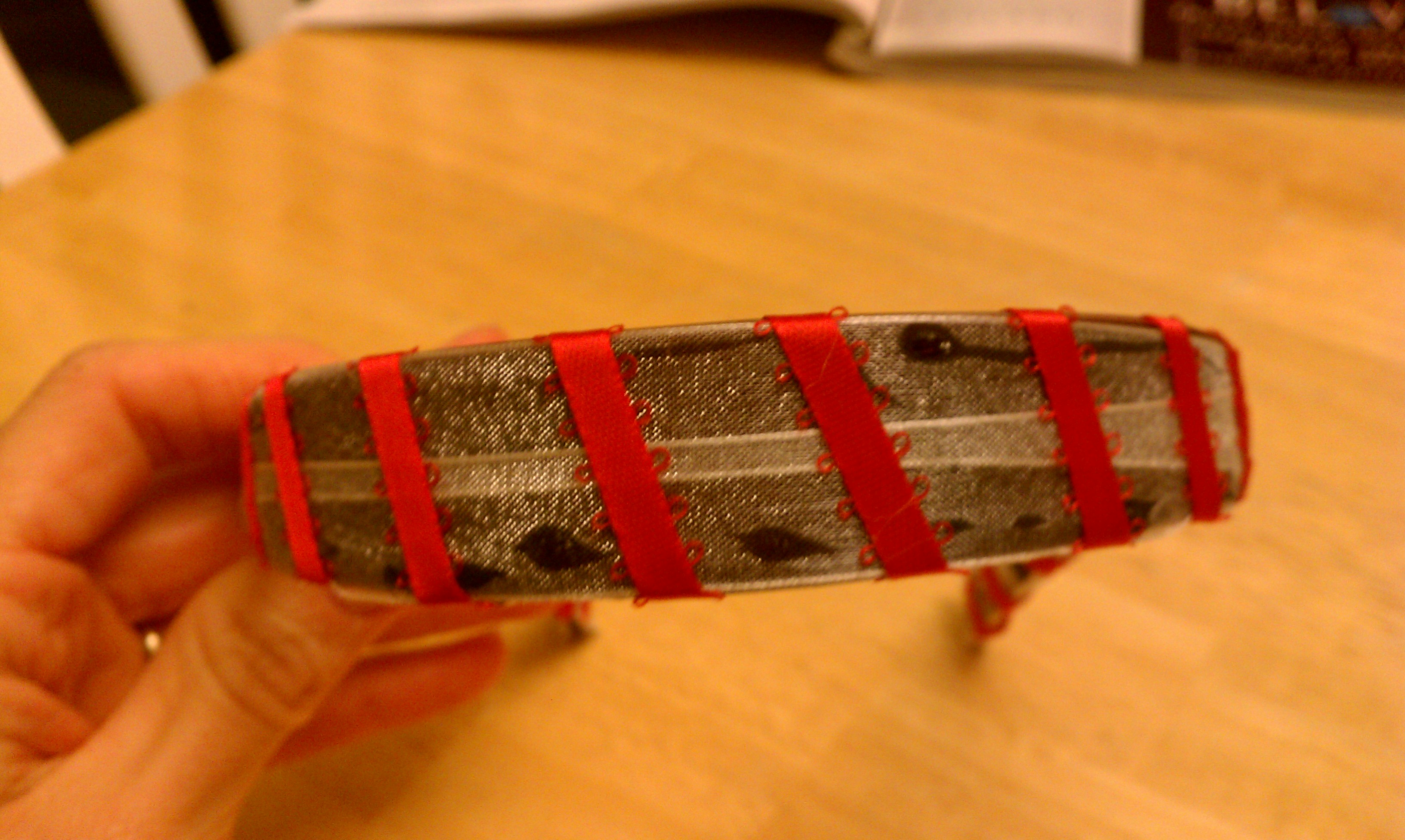
I wrapped my headband first in some shimmery white ribbon, held in place by hot glue, and then added a red ribbon accent.

Finally, I used some red tulle to tie on a big bow. Just in time for the holiday party!

Enhanced by Zemanta

Beer cap ornaments

I have a HUGE collection of beer caps because not only do we drink a lot of beer in our house, our friends also save their caps and give them to me. Because we have a beer theme going on in our house, I got the idea to make Christmas ornaments with beer caps. Here’s how I did it – make some of your own!

Supplies:

  • Ornament hooks (I found some fancy ones at World Market last year)
  • Beer caps (preferably holiday themed or colored)
  • A drill
  • Some easy to bend wire
  • Scissors
  • Small pliers (I have some jewelry pliers)

Process:

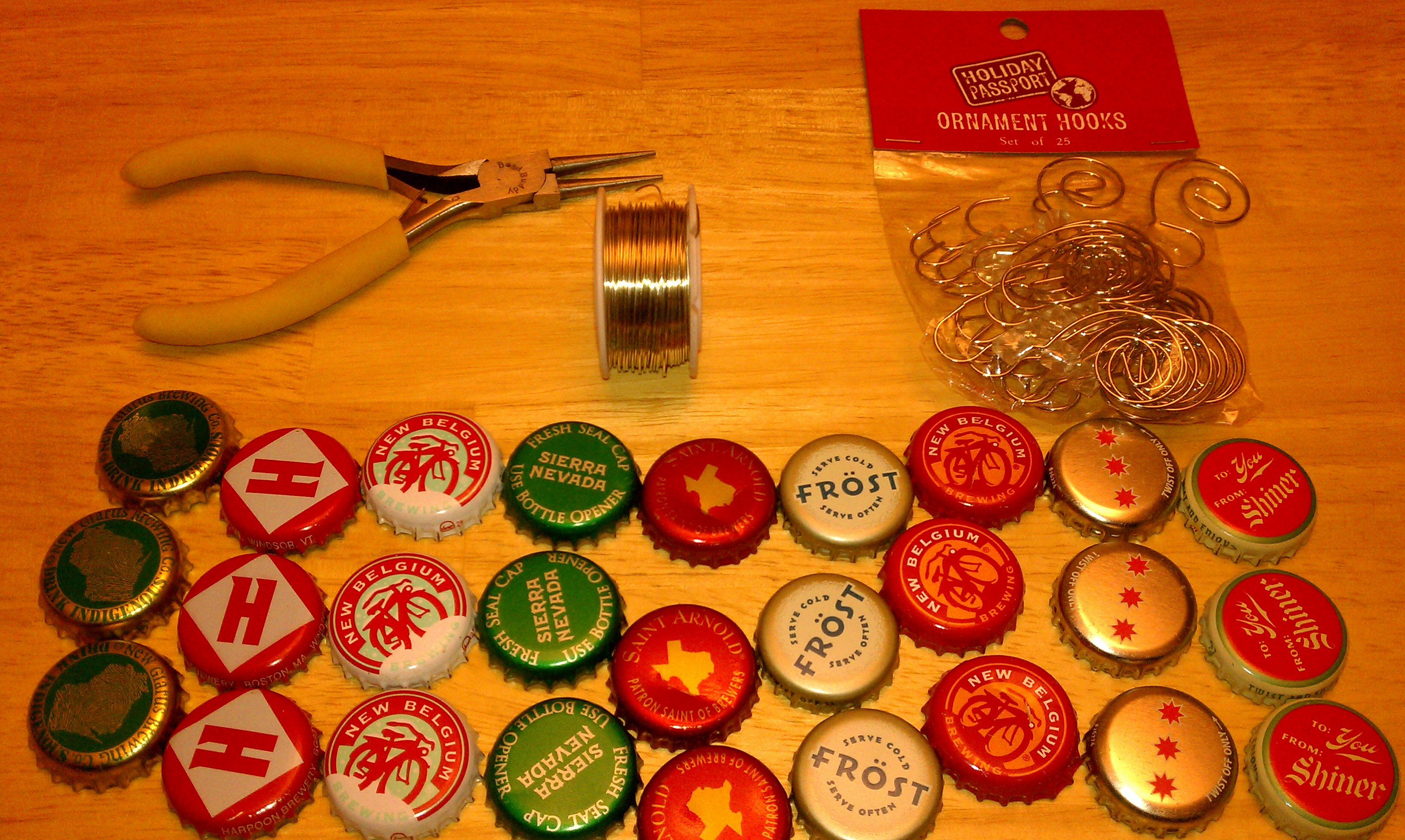
First, I sorted my caps. I made each ornament from 3 matching caps. Here you can see my supplies:

Next, I drilled holes in the caps. For each set of three caps, I drilled two holes in two caps and one hole in the third cap. The third cap is the bottom cap so it only needs one hole.

Then I used the wire to attach the caps together. I just twisted the wire together on the back side of the caps and cut off any excess. I made sure to point the wire ends toward the cap so it wouldn’t scratch anyone. For the top cap, I used a longer piece of wire so that I could make a few twists before attaching the ornament hook. That way, the directions that the caps faced could also be adjusted relative to the hook direction.

The finished product!


A long tale about staining our concrete floors: Part 3 of 3 (maintenance)

Ok, this is the last in my series of posts about how we stained our concrete floors one year ago. The posts:

  1. Preparing to stain concrete
  2. Staining and sealing concrete
  3. Caring for your floors

Since it’s been a year, I’ve learned a bit about caring for these floors. Despite calling them concrete floors, the finish is susceptible to scratches and nicks. Especially if you have a big dog with hard claws like we do. It also can get damaged from furniture, so I recommend sticking on those felt or rubber feet wherever possible.  We also kept small bits of our old carpet to put under large pieces of furniture like our bed. We put the carpet side down so that the floor wouldn’t be nicked by the hard furniture.

Even if the floors do get small nicks, you can easily repair them. The floors also seemed to take a few weeks to completely cure to their hardest state so those first few weeks racked up quite a few nicks and now we don’t get them nearly as often.

To fix any nicks, just get a Qtip and dip it in the stain. Apply to the nick. Use the clean end of the Qtip to remove any excess stain, or you will see it left behind after it dries.

If you get light scratches that don’t actually affect the color but you can see in certain light, it’s probably just scratches in the wax coating. These can typically be fixed by applying an extra coat of floor wax (we use the discontinued Alpha 290). The floor wax should be applied at least yearly to keep up the shine.

Another product that helps keep the shine is a BioShield floor soap recommended by House + Earth. It’s the best floor cleaner I’ve ever used. It even makes mopping the tile kitchen floor a breeze because it cleans the dirt off so easily. I’m hooked.

All in all, I’m very happy with the floors. We get many compliments and some people even think it’s tile at first. It was also very economical as far as floors go. I think we did the whole house, even with painting supplies for well under $2000.

A long tale about staining our concrete floors: Part 2 of 3 (staining)

This is a continuation of my long tale about how we stained our concrete floors about a year ago. It has three parts:

  1. Preparing to stain concrete
  2. Staining and sealing concrete
  3. Caring for your floors

So now that you have finished preparing your floors, it’s time to learn about how to actually stain and seal them!

As I mentioned in the last post, we used a line of products from ecoprocrete to stain our floors because of the fact that they are non-toxic and in fact quite easy to use. We purchased the bulk of these products from House + Earth in Austin (with a 10% Go Local card discount!).

Supplies:

  • Deco-Poz polymer and cement mix
  • SoyCrete stain – we used two dark colors for the main floors and a light one to stain the fake grout lines. Espresso for the edging, leather brown for the main floor sections, and a watered down desert sand for the grout lines. A small sample of desert sand was all we needed.
  • 1/2″ tape (we used this with a laser light level and a carpenter’s square to create fake grout lines)
  • A roller to go over the tape to make sure it was stuck to the floor. We used a brayer.
  • AcriSoy sealer
  • Mixing paddle to put in a drill to mix up Deco-Poz
  • Sanding blocks and coarse sand paper (the coarser the better)
  • Shop Vac to vacuum up dust after sanding
  • Dust masks, safety glasses
  • Magic trowel for spreading Deco-Poz
  • Painters tape – masking the baseboards
  • Applicator pads for applying stain
  • Paint trim applicator (for getting the edge of the floor next to the baseboards)
  • Paint roller for applying sealer (can also use applicator pads)
  • Floor wax and sponge mop to apply it so that the floor gets a nice shine. We used Alpha 290, which is now discontinued it seems.

Ok, so you’ve got your supplies assembled, your floors clean, and large holes in the floor patched, and your baseboards covered with painter’s tape. It’s time to mix up the Deco-Poz polymer and cement mix! We followed the instructions that came with the Deco-Poz and mixed the two together to a fairly thin consistency. It took us some experimenting to get this right. We used the mixing paddle with our cordless drill to make sure the stuff was mixed correctly. We ended up applying two coats of the overlay in each room. We started in one corner and my husband poured some overlay onto the floor. Being the more artistic one, I wielded the magic trowel and used big sweeping motions to apply a thin layer to the floor. You need to start with any areas that have unpatched divots to make sure they are adequately covered. Use very light pressure on the magic trowel. The weight of the trowel itself is enough, so I would just drag it across the floor to spread the overlay. We continued this process until the entire floor was covered. We then waited the appropriate amount of time for it to dry and then applied a second coat. When walking on the fresh overlay, make sure to wear socks so that the oils in your feet do not get in the untreated Deco-Poz.

My masterful application of the overlay

Covering the patched (and some unpatched) divots while a sad doggy looks on

The first coat of overlay goes on in the dining room

After the two coats are finished, you have to sand the overlay to make it smoother. We found that the coarser the sandpaper, the faster this went. Also, it generates a lot of dust so consider a dust mask and safety glasses.

My nice helper sanding the floor

After the sanding was complete, we vacuumed up the dust and then the long and tedious process of applying the fake grout lines began. I decided on a design of diagonal tiles with a 6″ edge strip around the walls. Luckily the scientists inside my husband and I were able to flex our analytical muscles to get the design to work out. It was harder than I expected to decide where the lines needed to start so that the lines looked nice. We were up doing this until 2 am. To make sure the stain doesn’t seep under the edge of the tape, make sure it’s pressed down well. We used a brayer to do this (I’ve linked an example above).

Applying the edge lines along the walls

Diagonal 18" fake tiles in the living room

Diagonal tiles in the dining room continue from the living room. You can also see the 6" edge strip and my expert use of the carpenter's square.

In the hallway we did smaller squares because the large diagonal tiles didn't look right.

After your grout lines are applied (which is optional by the way) it’s time to move on to staining! In order to be economical, we cut each applicator pad in half and then stapled it to a piece of 2×4 wood so that we could have a good grip when applying the stain. We poured stain into a paint tray and then dipped the applicator or edger in. We used the edger to go along the baseboards with the darker stains and the applicator to do the main color. We just applied the stain right over the tape. Hand applying the stain with a small applicator instead of using the large t-bar applicator that you can buy gives you more variation in color like real tiles (I think, but I didn’t use the the larger applicator).  Read the instructions for applying the stain, but keep in mind that you should really rub in the stain.

Here I am applying the main stain color. It took some effort to really rub it in.

Look at all that stain!

After two coats of stain and the appropriate drying time, we were ready to remove the tape.

Removing the tape in the dining room

After the tape was removed, we realized that the grout lines were very very white. I watered down one of the stain samples I had and used a paint brush to apply a very slight amount of cream color to the white to tone it down a bit. I think it turned out really well.

The final step was the application of the AcriSoy sealer. Again, you should follow the instructions for the appropriate amount of drying time. We used a paint roller on a long handle to apply two coats of the sealer. You can also rub it in with the applicator pads but after two coats of stain, we were ready to stand up to apply the next two coatings.

The AcriSoy sealer is a matte coating and doesn’t leave the floor shiny at all. I was interested in having a slightly shiny floor without having to use an epoxy coating or something equally as toxic. During our research phase, the employees at Eco-Wise in Austin recommended that we use Alpha 290, a floor wax that is super easy to use and unfortunately now discontinued. Basically, you just sponge mop it on and 15 minutes later it’s dry. You need to apply a few coats to get maximum shine. It’s not too shiny though, which is why I like it. I applied 4 coats after the sealer was dry.

After that, we were done! Our new floors were ready to be lived on 🙂

The cats were SO happy to be allowed out of the computer room.

You can see the full set of our concrete floor photos here and here.

Enhanced by Zemanta

A long tale about staining our concrete floors: Part 1 of 3 (preparation)

Happy Thanksgiving! Exactly one year ago, my husband and I were smack in the middle of the largest home improvement project we’ve ever tackled: staining our concrete floors. We did sections of the house in stages and we stained probably about 1100 square feet of floor. Over the Thanksgiving 2010 holiday, we tackled the largest chunk which was probably 750 square feet all at once. More about that later.

Because this was such a long and involved process, I’ve broken up my tale into 3 parts:

  1. Preparing to stain concrete
  2. Staining and sealing concrete
  3. Caring for your floors

So, on to the preparation!

The preparation phase was by far the longest mostly because of the research I did. I knew that I wanted some sort of hard floors in the house and stained concrete seemed like the most affordable.  Aside from that, I knew nothing about what to do. I began researching online. I don’t have much recollection of everything that I read, but I do have a record of links saved on delicious if you are interested.

I read about many different ways to stain your floors. Since we would be living in the house with our four pets during the process, I knew I wanted to avoid the toxicity of most etch and stain combinations (like the ones found in Home Depot or Lowes). That lead to me to the ecoprocrete line of products, specifically SoyCrete stain. A number of discussions with employees at House + Earth here in Austin confirmed my idea that this would be the best stain for us to use.

I knew that I wanted to take this process slowly and test out colors and methods as we went. We decided to tackle the small spare bedroom first. I wasn’t quite sure which color I wanted so I ordered a number of samples from Eco Safety Products. We also knew from removing the carpet during our computer room remodel that our concrete was covered with paint from when the walls were painted before we moved in. (Thanks for the mess, painters!) From talking to some of the dealers on the phone and researching online, we decided to try some soy based paint strippers. I got two of them (one was Soy It and I don’t remember the other) and tried them out in the closet of the spare bedroom. They both worked pretty well for thick paint but the real fine paint spray didn’t come off that well. That combined with the fact that the stain didn’t look that great on top of our ugly concrete slab led us to seek an alternative.

At this point, we decided to use a concrete overlay. Again, ecoprocrete offered an easy-to-use, non toxic product that we settled on called Deco-Poz. We purchased it from House + Earth and talked extensively with the employees there who had used the products in the restroom of their store.

With our decisions about stain color and concrete overlay made, it was now time to begin the physical labor of preparing the floors.  We actually did the floors in three sections, the spare bedroom to test out our methods, the master bedroom, and then the combination of the living room, dining room, and hallway all at once (yeah, that was the giant Thanksgiving project of around 750 square feet).

In general this is how preparing the existing concrete worked:

  1. If you are painting the room, it’s a good idea to do it before the staining. Make sure to have some left over in case you splatter things from the floor on to your freshly painted walls. Trust me, it will happen. We also painted the baseboards at this time and went back and touched them up later.

    We painted the walls before removing the carpet

  2. Remove all carpet and carpet strips (Aside: if you have glue under the carpet, you will need to clean this off thoroughly. We were lucky and did not have glue.)
  3. Get a cheap mop to spread water around on the floor. Let it soak for 15 minutes or so. We found this made the paint much easier to remove from the floor. It also very handy to have a large squeegee to move water around during all stages of the cleaning process.
  4. Because the overlay is thin, the thick paint splatters had to be scraped up to keep from showing through. We got a paint scraper that you could stand up and use as well as a smaller one for the more delicate areas like by the corners. The big scraper looked something like this. This step can take quite a while depending on how much paint is splattered about and it’s nice if you can get men with muscles to help out.

    So. Much. Paint. Splattered.

  5. After scraping, mop the floors with water again and use a shop vac to vacuum it up so that there is very little residue left. You want the floor to be as clean as possible.

    The shop vac was our best friend during this process.

    Clean enough. And our helper.

  6. If your concrete has greasy spots on it (ours had some) you should also rent a floor buffer and use it to first buff the floors with citrus degreaser. Then buff with water to clean up the degreaser. Use the shop vac to suction up the water. I got these tips directly from ecoprocrete.  While we did this step, we only could rent a small floor buffer that was very difficult to use. You should be able to find a big industrial sized one to rent that you basically just walk behind. I think that would have been a better choice as we could still see some greasy spots through the stain when complete. However, because of the variations in the stain color, it at least looks natural.

    The floor buffer was ridiculously hard to use. Only my husband could run it while I felt bad for him.

  7. After cleaning and vacuuming the floors as best you can, let them dry overnight.
  8. If you have large (deeper than about a quarter or half inch and a half inch across) divots in the floor, you will need to patch them. They recommend using the Deco-Poz mixed to a thick consistency but we found this to use too much of that pricey product to repair our carpet tack holes so we ended up just buying a concrete patch kit and using that instead.

After everything is clean and dry, you are ready for part 2: staining your floors!

Enhanced by Zemanta