First try at making a video

My lovely husband gifted me a GoPro 3 video camera for Christmas. I wonder if this means he wants me to try more adventure sports…

Anyhow, we picked up a handlebar mount for the GoPro since biking is the closest to any adventure sport that I get. I tried it out over this weekend and used iMovie to create two YouTube videos.

A few lessons learned from using the GoPro:

  • The handlebar mount can’t just be hand tightened. There’s a reason why the finger screws have a phillips screw head in the center of them. To use a screw driver so that the camera doesn’t end up filming the ground!
  • The battery doesn’t last that long. From a full charge I road my bike for about an hour with the camera on, but it wasn’t taking video the whole time. I took about 18 minutes of video and the battery was already showing just one bar out of three.
  • I need to learn more about video formats. Both of my YouTube videos look sort of grainy / pixelated. I used all the default settings in iMovie.
Back view of the camera on my handlebars

Back view of the camera on my handlebars

Front view of the camera mounted on my bike

Front view of the camera mounted on my bike

For the first video, I took two clips from my ride and cut them down a bit. I sped up the speed to twice the normal speed. The afternoon Texas sun was strong so the trails aren’t the easiest to see in that contrast-y light. I’ll have to redo them in better light on another day.

For the second video, I selected shorter clips and let them play in real-time. If you look closely, you’ll see some dogs playing in the creek crossing.

I have at least one more video from that day of riding the BMX loop that I want to edit and upload. I expect that to take a bit more time. Maybe I’ll learn how to create clearer videos by then 🙂

Pet-proofing the Christmas tree and decorating the tree stand

Ok, so there’s really no such thing as pet-proofing a Christmas tree, but at least I can keep it from being knocked down. Our fake Christmas tree is short, only about 5 feet tall, so years ago we made a 4′ x 4′ platform about 18 inches tall to raise the bottom of the tree so that the entire tree can be seen from outside the window. After our dog and a foster dog collaborated to knock the tree off the platform one year, we quickly anchored the base of the tree to the platform using some large U shaped bolts. So now each year before we assemble the tree and put down the tree skirt, we tighten the U bolts around the three legs of the tree stand to make sure that nothing will happen to the tree laden with our precious ornaments.

This year we broke out the tree stand in our new house and I realized that the cloth covering I sewed for the stand years back no longer worked. It was designed to go on the stand when only 2 sides of the stand could be seen. Now, you can see 3 sides of the stand. I took a quick trip to Joann fabrics to pick up some white eco-fi felt to cover the stand and some decorative garland accents to make it less plain. I then cut the felt to have enough to cover the entire 4′ x 4′ top of the stand, with a bit of overlap on each side (more on the side that no one can see, since I didn’t cover that with a “skirt”). I cut rectangles of felt to hang from the top of the stand to the floor, with a bit of extra so that I could fold it over at the top. I fastened the tree stand skirts with my staple gun and then added the garland to each side, also fastening with the staple gun. We then cut the felt on the tree stand where the U bolts went though and proceeded to fasten the tree and decorate it. Now if only I could keep the cats from getting their fur all over my nice new white felt….

Overall view of the tree, tree stand, and white felt and garland used to decorate the stand.

Overall view of the tree, tree stand, and white felt and garland used to decorate the stand.

Close up view of the tree stand. You can see how the felt is simply folded over at the top and secured with a staple gun. The bottom of the felt is already wavy from cats crawling under the stand. It's amazing how difficult it is to avoid having pets in my pictures at home.

Close up view of the tree stand. You can see how the felt is simply folded over at the top and secured with a staple gun. The bottom of the felt is already wavy from cats crawling under the stand. It’s amazing how difficult it is to avoid having pets in my pictures at home.

Enhanced by Zemanta

Make your own wooden Christmas ornaments!

*This post was originally published in 2011 on Pretty Handy Girl and I’ve been saving it to share with you this year!*

Every year, I make some percentage of my gifts rather than buy them. At first I started out with grand ambitions and would pick one or two recipients to get a labor-intensive gift like a crocheted afghan. In the last few years, I’ve scaled my efforts back and now make small gifts for multiple recipients. I typically will make a handful of one style of gift to boost my holiday time efficiency.

This year I started thinking about what type of ornament I could make from materials I had lying around. I settled on ornaments made from branches we cut off our trees a few years back. Basically, I cut thin slices of the branches, added a painted Christmas design and a ribbon for hanging and they are ready to go!
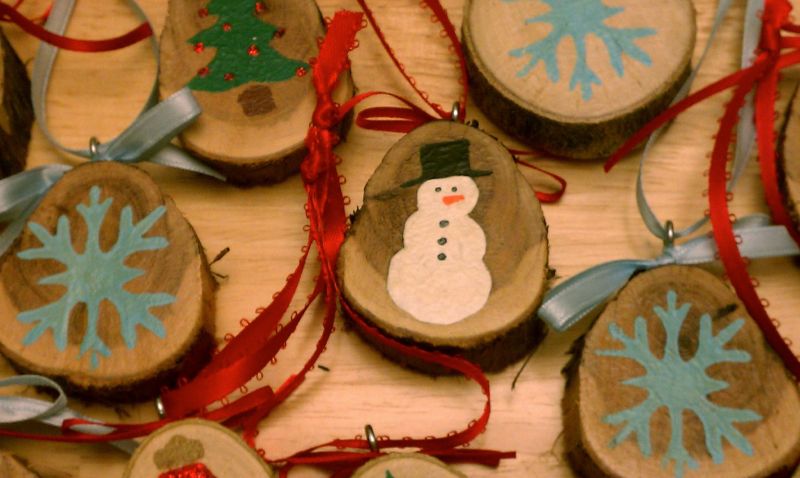
So you’re probably wondering how you can do this too… Well, you’re in luck because I’m ready to share!

Step 1: Cut your wood slices

Find a branch with a diameter of 2 – 3 inches (or large enough to fit your design) and cut thin slices. I used a reciprocating saw with a 9” wood blade on it to cut slices about an inch thick.  I just have a photo of the saw, but remember to securely clamp your branch before starting to saw it and to wear safety glasses while operating the saw.

Step 2: Sand your wood slices

The reciprocating saw left a rough finish so I used sanding blocks to create a smooth surface. I first used a very coarse grain sandpaper to get the surface level and then a fine grain sandpaper to create a nice finish. The sanding blocks were very handy – I held the block still while moving the wood slice to sand the surface.
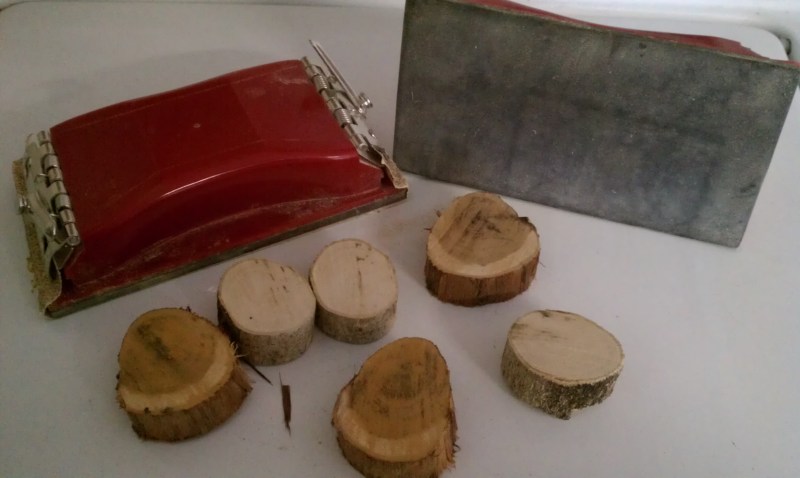
Step 3: Drill holes for small eyelets

This is as easy as it sounds. Use a small drill bit to drill a hole in the top of your wood sliced and then screw in a small eyelet. This will allow your gift recipients to hang your ornaments. You can pick up small eyelets at any home improvement store.

Step 4: Create your designs

I like to create my own linocuts (a print-making method) so I decided to create reproducible designs by basically making holiday stamps for my wood slices. You could also simply buy stamps or paint a design if cutting your own stamps isn’t your thing.

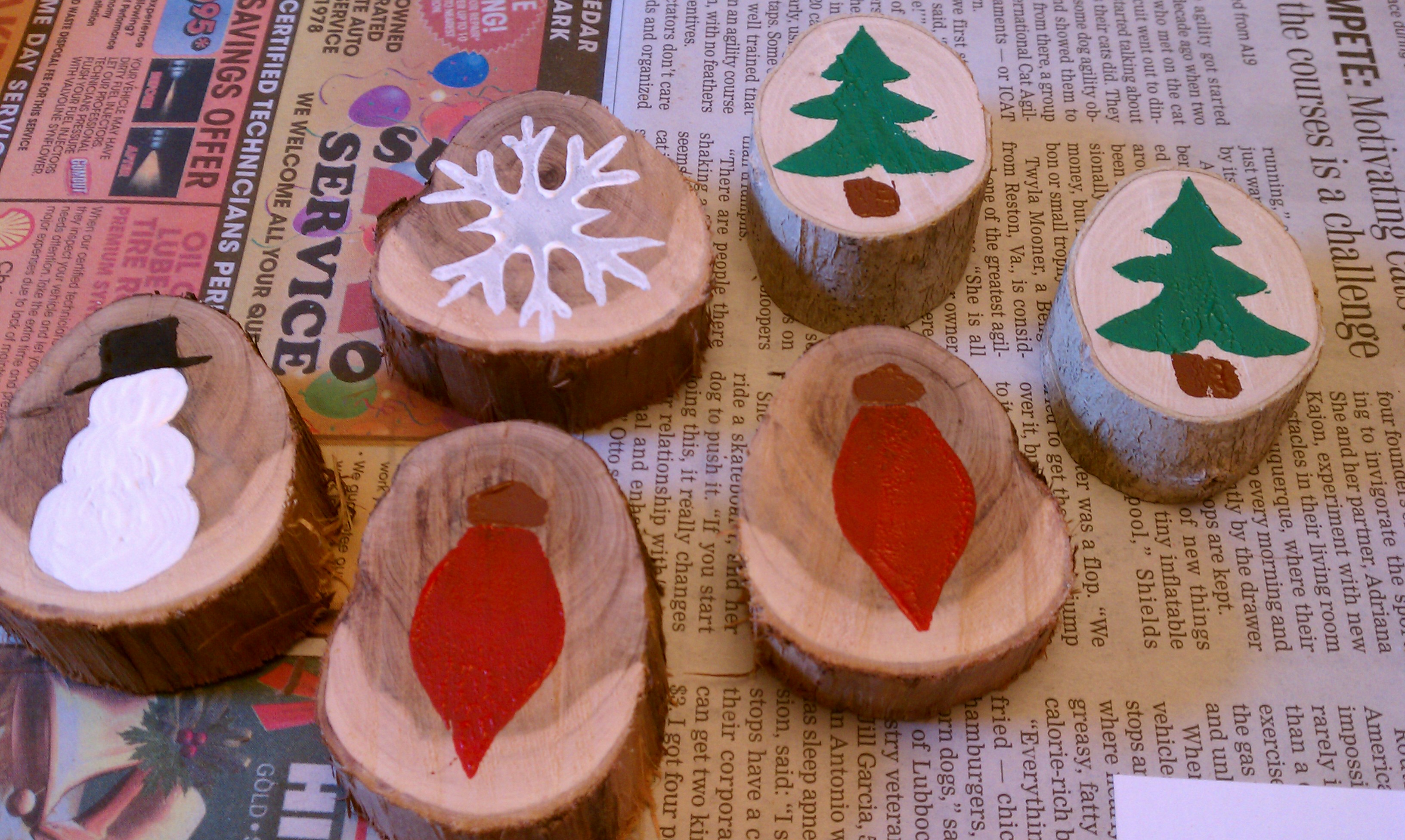
I started by drawing my designs on paper – a snowflake, a Christmas light bulb, and a Christmas tree. I traced the outline of my wood slices so that I would be sure to create designs that fit on the slices.

After that, I transferred the design onto my carving blocks.

And then I used my speedball cutter to carve out my designs.

Step 5: Get that design onto your wood slice!

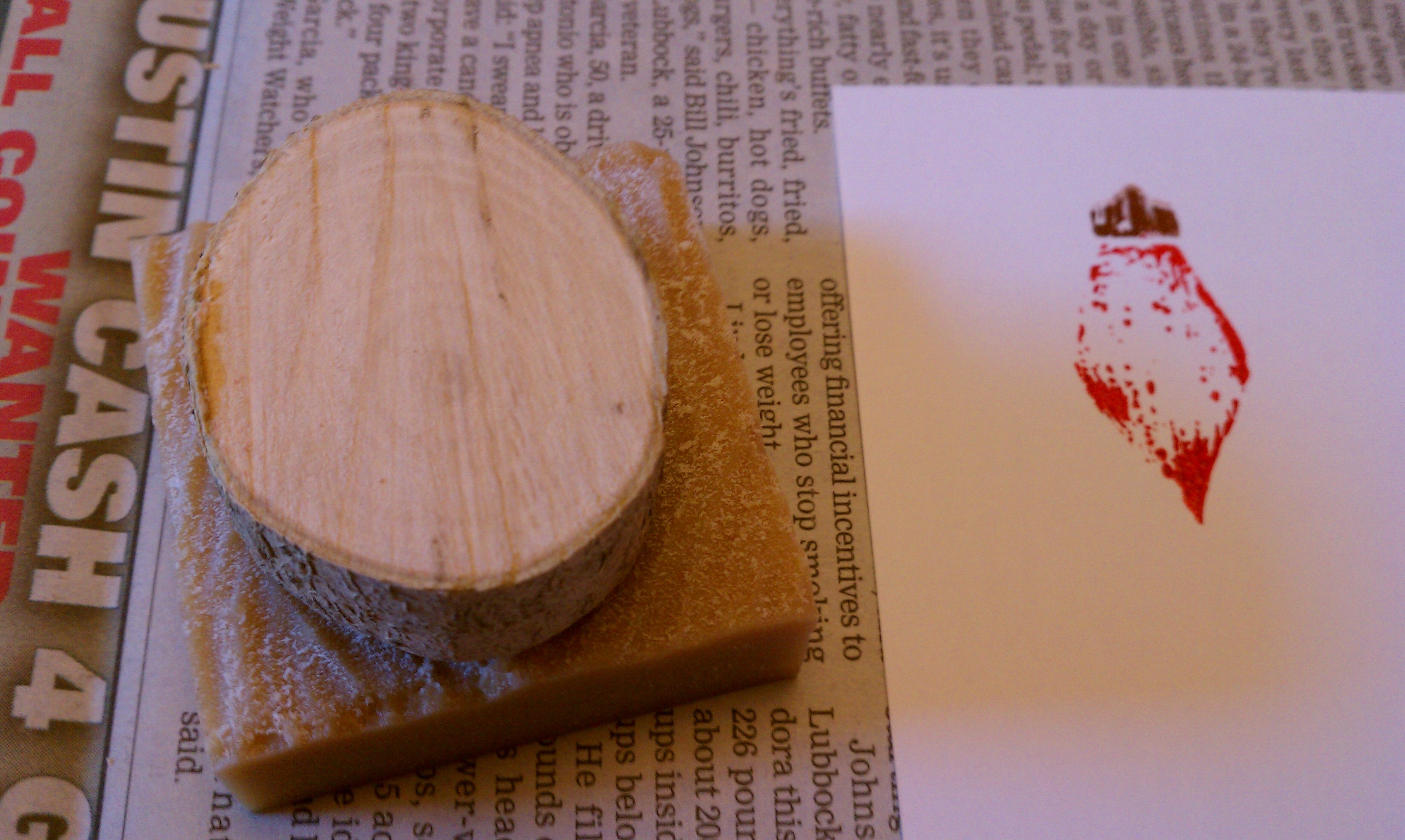
Whether you make your own stamp, buy a stamp, or paint your design free hand, it’s now time to get the design on to your wood slice. Because two of my designs were meant to have two colors, I used a paintbrush to apply my paint to the stamp before stamping the wood slice. Of course, before doing any stamping I first tested my carved stamps to make sure they looked how I expected and also tested the amount of paint that need to be applied. The snowflake design only used a single color so I used a small brayer instead of a paintbrush to apply the paint.

I found that it worked best to lay the stamp on the table, place the wood slice on top of it, and press down with firm (but not hard) pressure. This helped transfer the paint to the wood even if some small ridges remained after the sanding step.

The trick is getting the right amount of paint on the stamp so I recommend practicing on paper for a while before moving on to the wood slices. If I painted the paint on too thick, I would first light place the stamp on paper to absorb some of the extra paint. Of course if you are just painting directly on the slices you can just jump to that step! I made one freehanded design of a snowman for a particular snowman lover in my life.

Step 6: Embellish your designs

Because I felt that my Christmas bulbs and trees turned out a bit plain, I broke out some leftover red glitter glue to embellish them. For the red bulbs, I painted on the red glitter glue. For the trees, I added little dots to signify tree decorations.

Step 7: Seal your ornaments

I wanted to add some sort of sealant coat to my ornaments for protection. I settled on Mod Podge because I had some at home. Experimentation taught me that I couldn’t use a sponge applicator to brush on the Mod Podge or it would smear the paint even though it was dry. Instead, it seemed that using a paint bush to dab the Mod Podge on top of the paint worked the best.  When first applied, it looks somewhat white but it does dry clear.

Before drying:

After drying:

Step 8: Add a way to hang those ornaments

I used ribbon to create a small bow at the top of the ornaments and also to create a loop so that the ornaments can be hung. Hooray! They are complete and ready to be gifted!
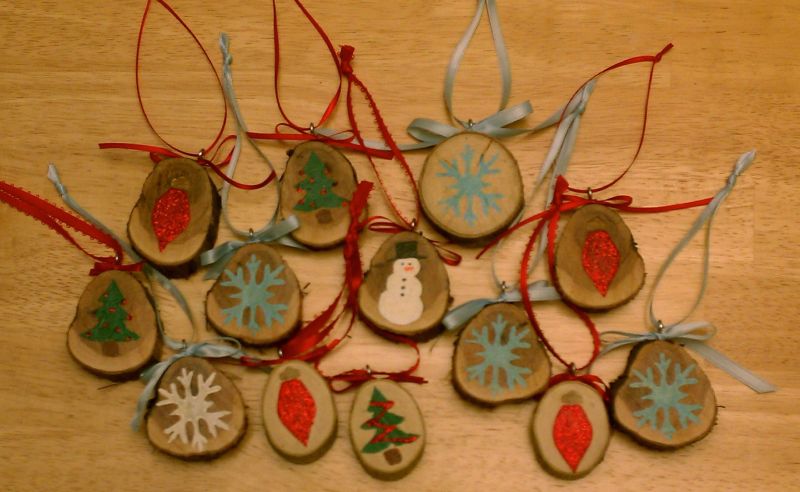

Enhanced by Zemanta

Why hello sunlight!
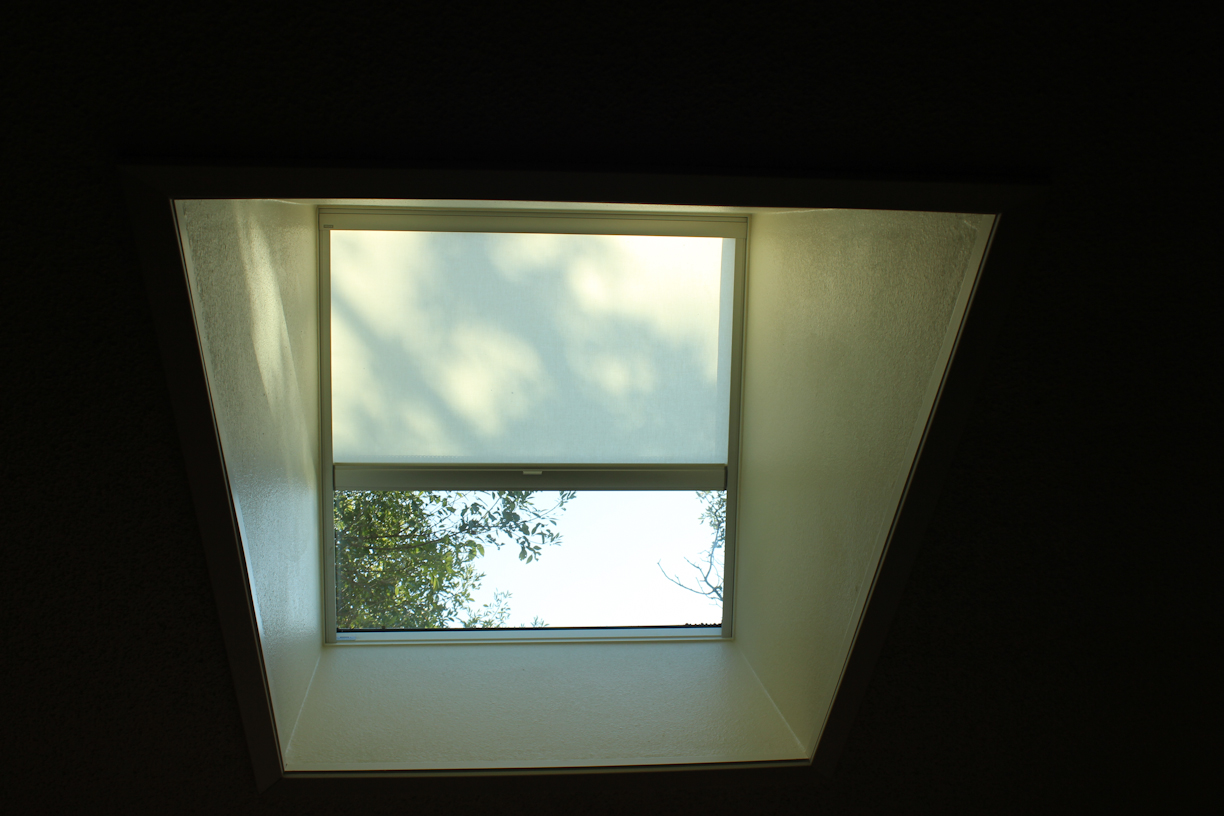
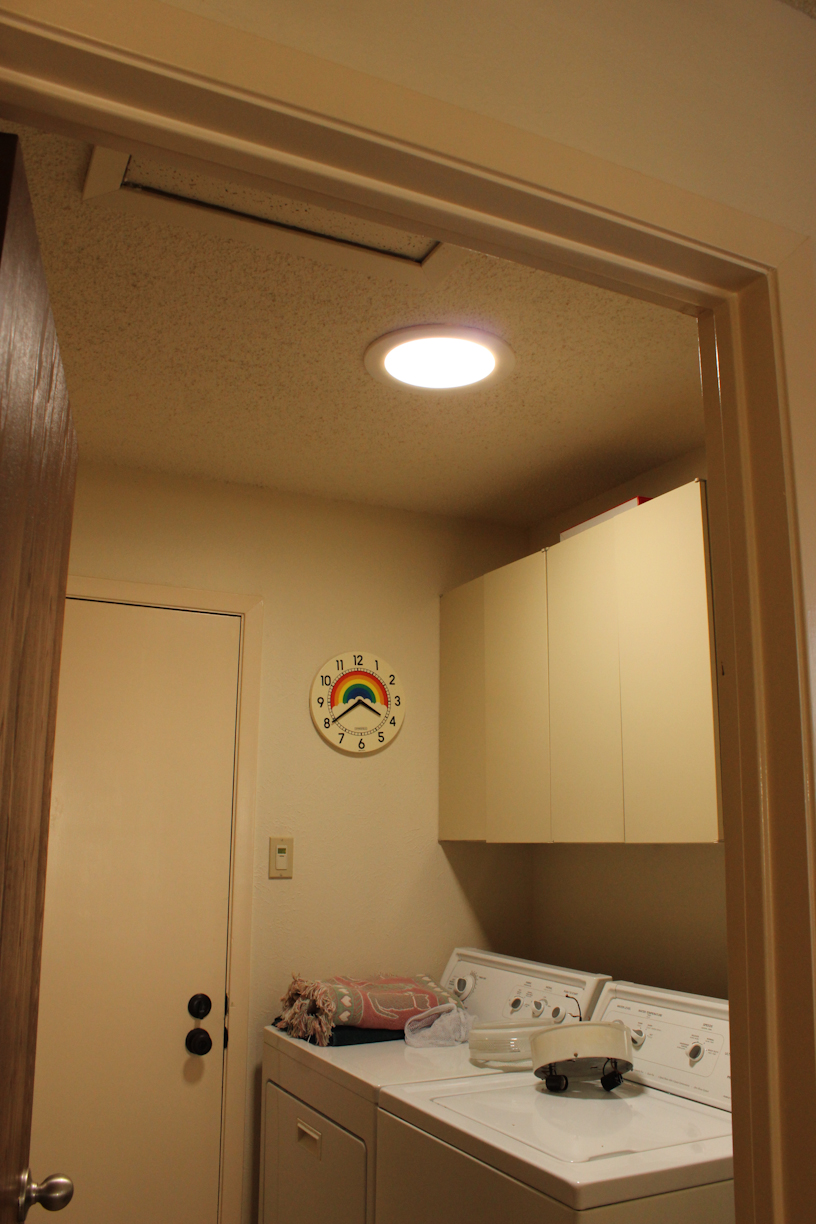
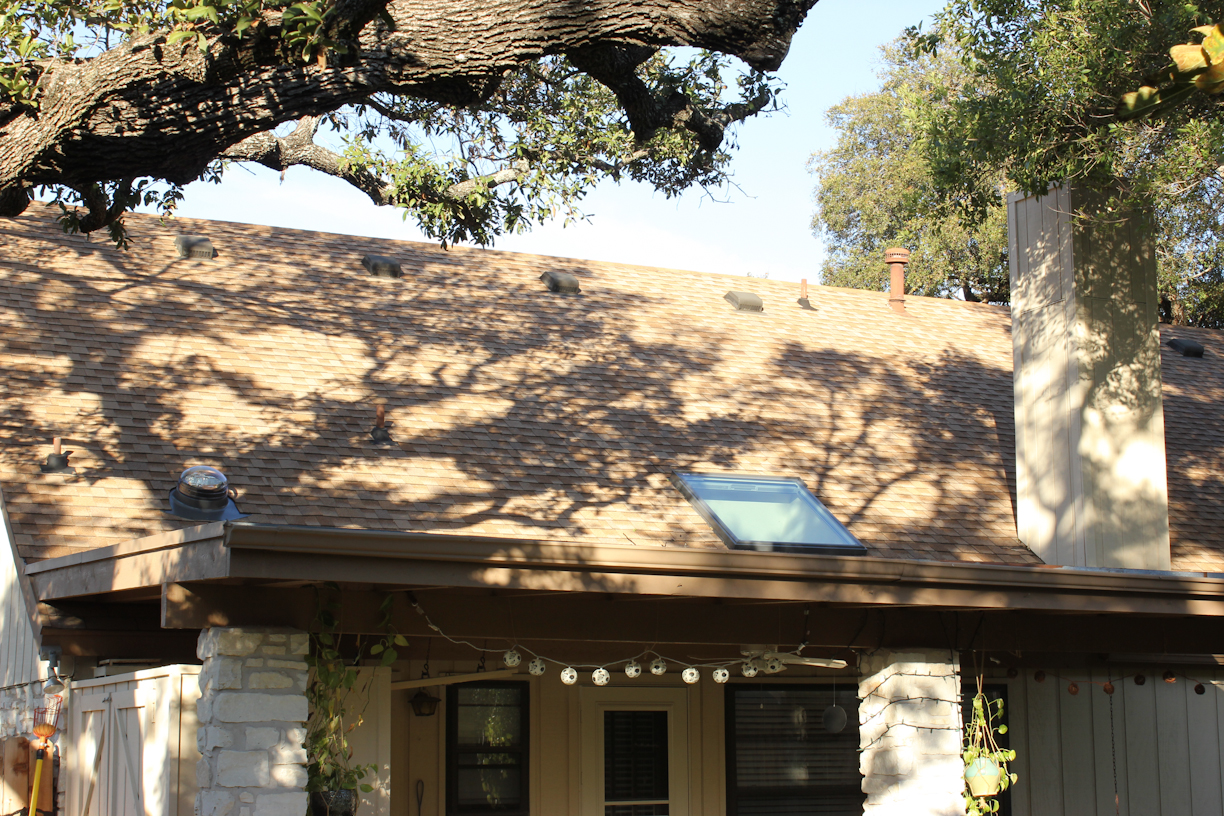
When we decided to purchase our current house, I was disappointed that it lacks vaulted ceilings. Our realtor put the idea in my head to install a skylight to open up the ceiling. So that’s exactly what I just did. Not only does it make the ceiling feel more open, it makes our previously dark living room nice and light. Our covered back porch prevents the back windows from getting much light. Now we have plenty of light. Check out the before and after photos to see what a huge difference the skylight made. We had a 4′ x 4′ Velux skylight installed with a solar powered remote controlled light filtering shade. While we were having a hole cut in the roof, we also had a Velux sun tube installed in the laundry room which doesn’t have any windows. It’s awesome!  All work was done by Design Skylights and I must say that the end cost was very reasonable.

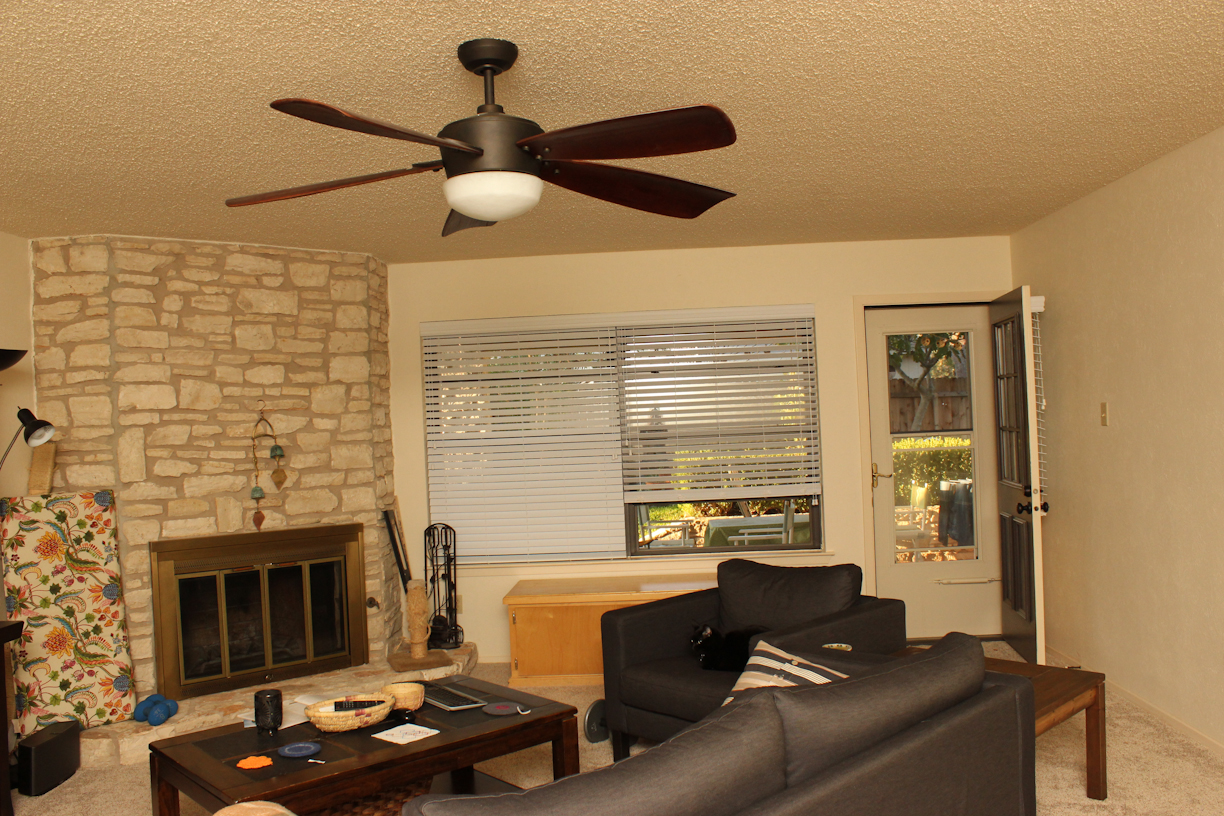
The before view looking towards the back of the house. The window and door look out to the covered porch. The room is lit with a flash so that you can actually see it. Bonus if you spot the hidden cat in this photo.

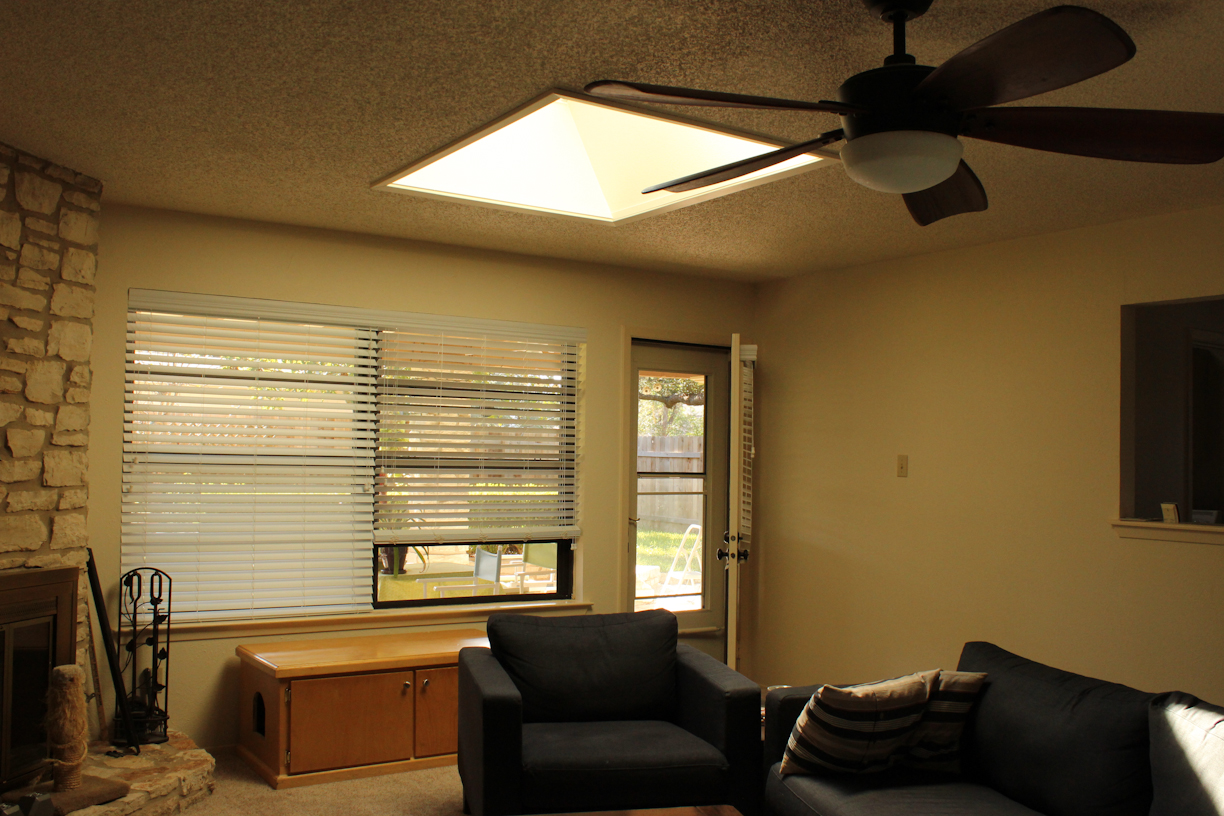
The after view, lit only by the light in the room due to the skylight and windows.

The light filtering shade will be very handy during the hot summer months. The shade is solar powered and operates using a remote control.

A view of the sun tube in the laundry room. The light is not on.

The outside view. The sun tube is the glass dome on the left.

Enhanced by Zemanta

Making a laser etched notebook

I attended another laser etching workshop put on by Women.Design.Build and MAKEatx.  In a previous workshop we etched pint glasses and in this workshop we etched cardboard covered moleskin notebooks. Because I already have a number of notebooks for notes and drawing, I decided to etch a notebook for my sister. In preparation for the class, I drew a design using her name and scanned it into a jpg file that could be converted to black and white and loaded into the software that controls the laser.

Hand drawn design for the notebook cover.

A shelf full of laser-etched goodness at MAKEatx.

Love the mustaches on sticks and the jackalope.

A jackalope etched notebook made before the workshop.


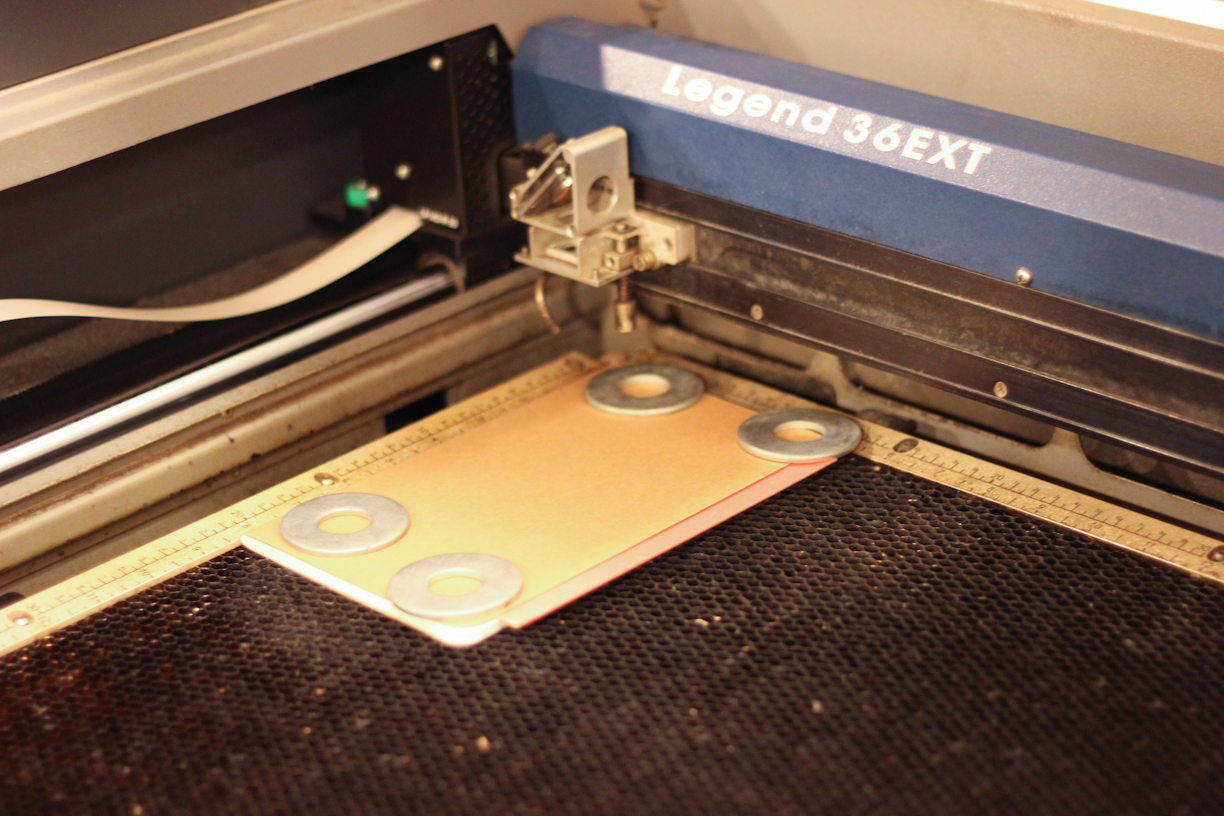
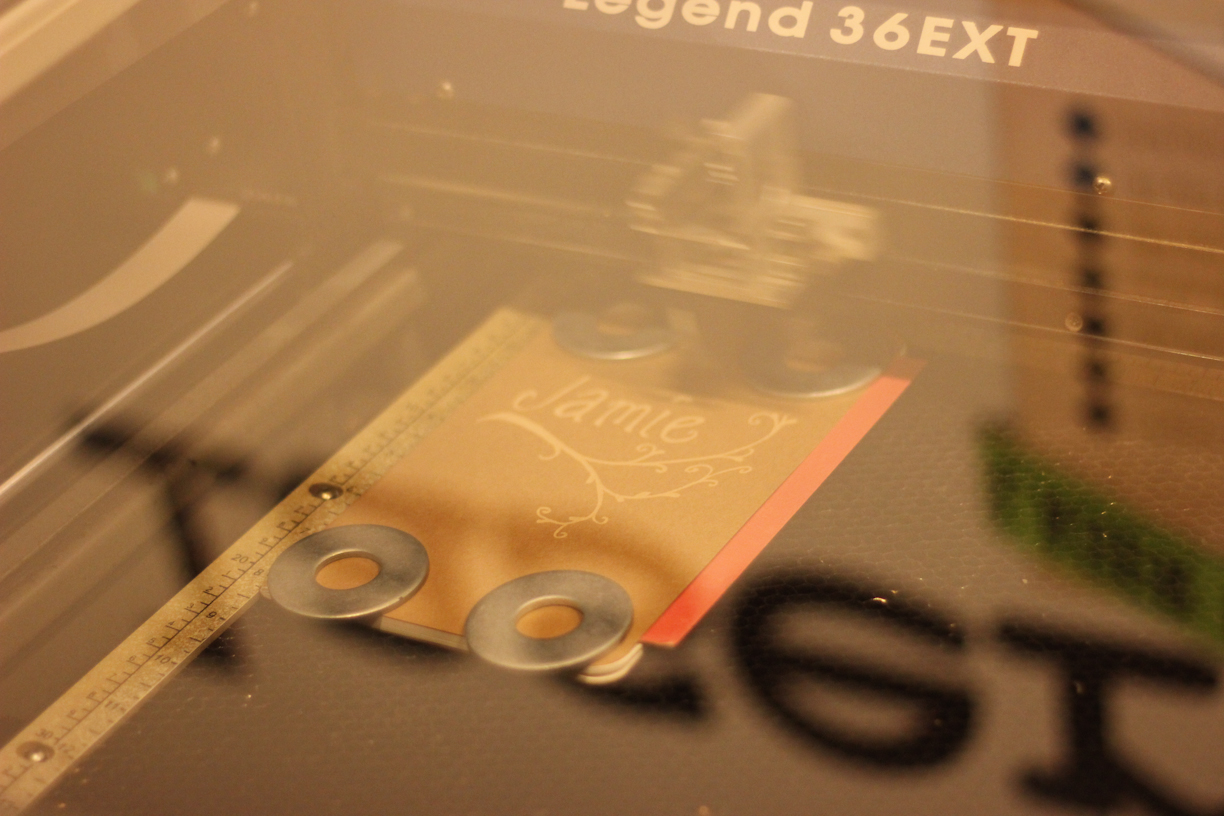
The notebooks were placed in the laser and the cover weighted with large washers since the cover is a bit lightweight.

The laser doing its thing.


An awesome idea for a notebook cover made by one of my friends at the workshop.

A french bulldog cover, made by another friend.


My notebook, ready to send to my sister.

Enhanced by Zemanta

Hand stamped infinity scarf

Two infinity scarves.

Sometimes I’m not so sure where my time goes, but I do know that I finally have a craft project to share! Now that we’ve had like two whole fall days in Austin, I decided it was time for a new scarf. I’m pretty bad at wrapping traditional scarves around my neck and looking fashionable, so I decided to make an infinity scarf, which is a loop scarf that you can typically wear as a single long loop or short double loops if it’s cold. It’s hard to mess up wearing a loop. There are a number of tutorials about sewing an infinity scarf. I read quite a few and relied on this video from Craft Gemini to show me the step where you have to join the two ends to form a loop. It can be a bit confusing if you don’t take your time. More on that later. My Supplies:

  • 1.5 yards of knit fabric, pre-washed and ironed as much as possible
  • Hand carved stamps (stamp blocks carved with a speed ball cutter)
  • Fabric paint in a few colors
  • Standard sewing stuff – matching thread, sewing machine, etc.

First I decided on a design using tear drop shapes, sketched them on my stamp blocks and carved three separate stamps so that I could use them in a variety of patterns.

The three stamps I carved, tear drop shapes.

Then, I tested them out on some paper to make sure they stamped well.

Stamp test!

I cut my knit fabric in half, so that I had two pieces of fabric, 1.5 yards long by 24 inches wide. Because you fold the fabric in half length wise and sew, this gives a scarf about about 12 inches wide (minus seam allowances). I got a nice dark brownish/grayish knit fabric with a small weave.

Knit fabric

I then used my stamp set and fabric paint to hand stamp a design down the middle of both pieces of fabric.

Three fabric paints – linen, light green and light blue.

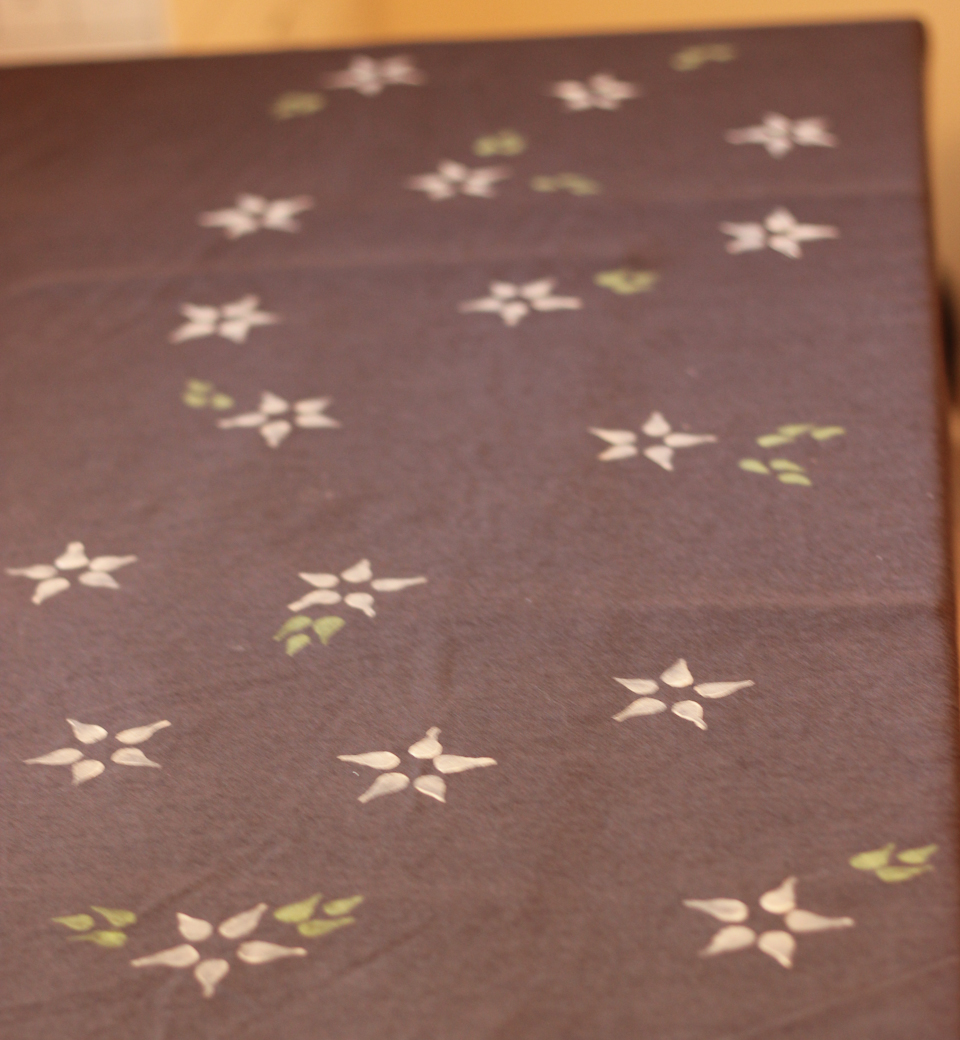
For one design I only used linen and green paints.

For the other design, I used all three colors.

If you do this, make sure to put something under the fabric as you stamp, the paint will seep through in some places. The next step was sewing. The first step to make an infinity scarf is to fold the fabric length wise, with the correct side of the fabric (in my case, the stamped side) touching. Then pin along the whole length of the fabric, but leave four inches on each side not sewn so that you can connect the loop in a later step.

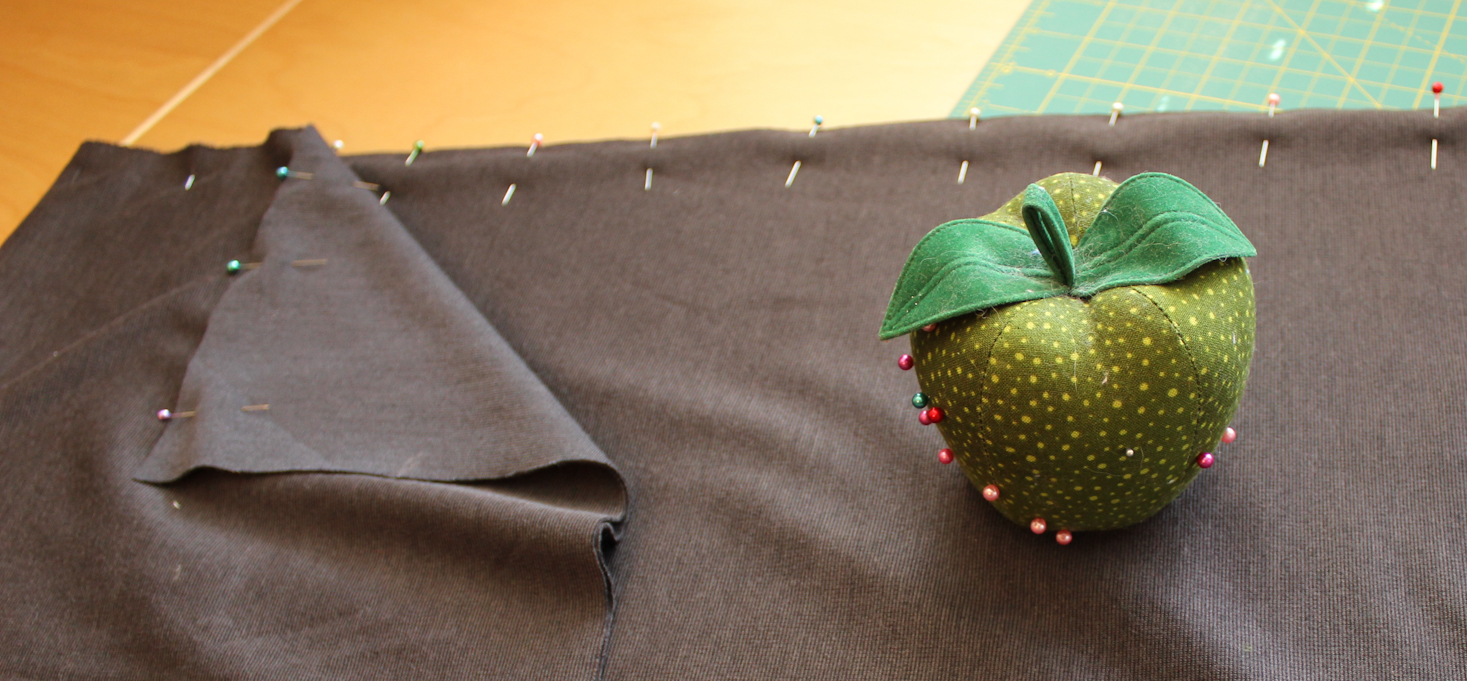
Fabric pinned length wise. I measured in 4 inches from both ends and used a pin to mark the spot where I would start and stop sewing.

When it comes time to sew, make sure to backstitch a bit on both ends so that your seams are secure!

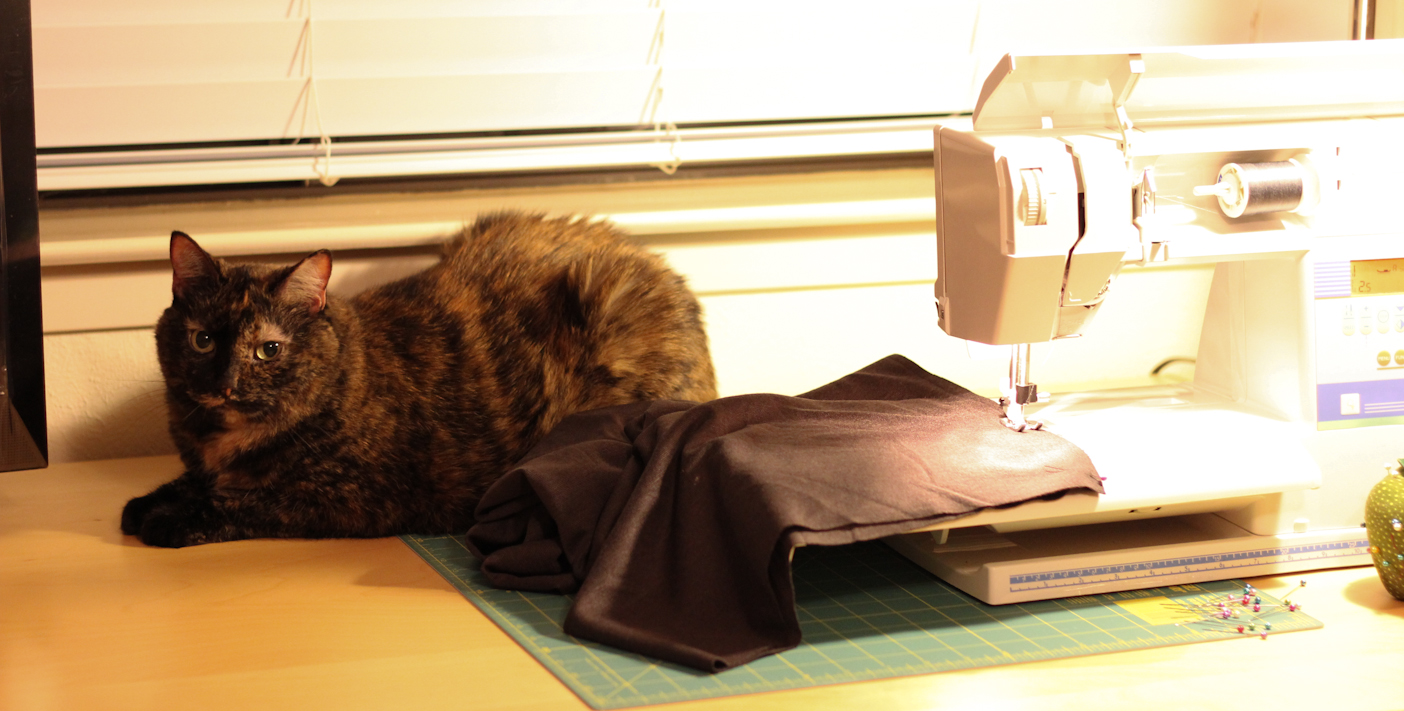
Annie the cat helps me sew. Or really just gets in the way.

Remember to start and stop sewing four inches from each edge and to backstitch to secure your seam.

After the fabric is sewn lengthwise, the tricky part begins. Definitely view the video I mentioned above if you are unsure about these steps. First, turn the fabric so that the correct side is facing out (the way it should be at the end). Notice the four inches that aren’t sewn on either side. Position the fabric so that the seams match and there are no twists in the fabric.

Fabric, turned so that the correct side is on the outside. Seam is lined up so that there are no twists in the scarf.

Next, you have to pin the ends of the fabric together, which is what feels a bit tricky. This is the part where you actually join your scarf into a loop. You start with matching corners and keep the correct side of the fabric facing in so that it touches the entire time you are pinning. Continue to pin around in a circle until you hit the other corners. The extra four inches you left on each side of the scarf is what allows you to do this – the rest of the fabric ends up being contained in those 8 inches after you are done pinning.

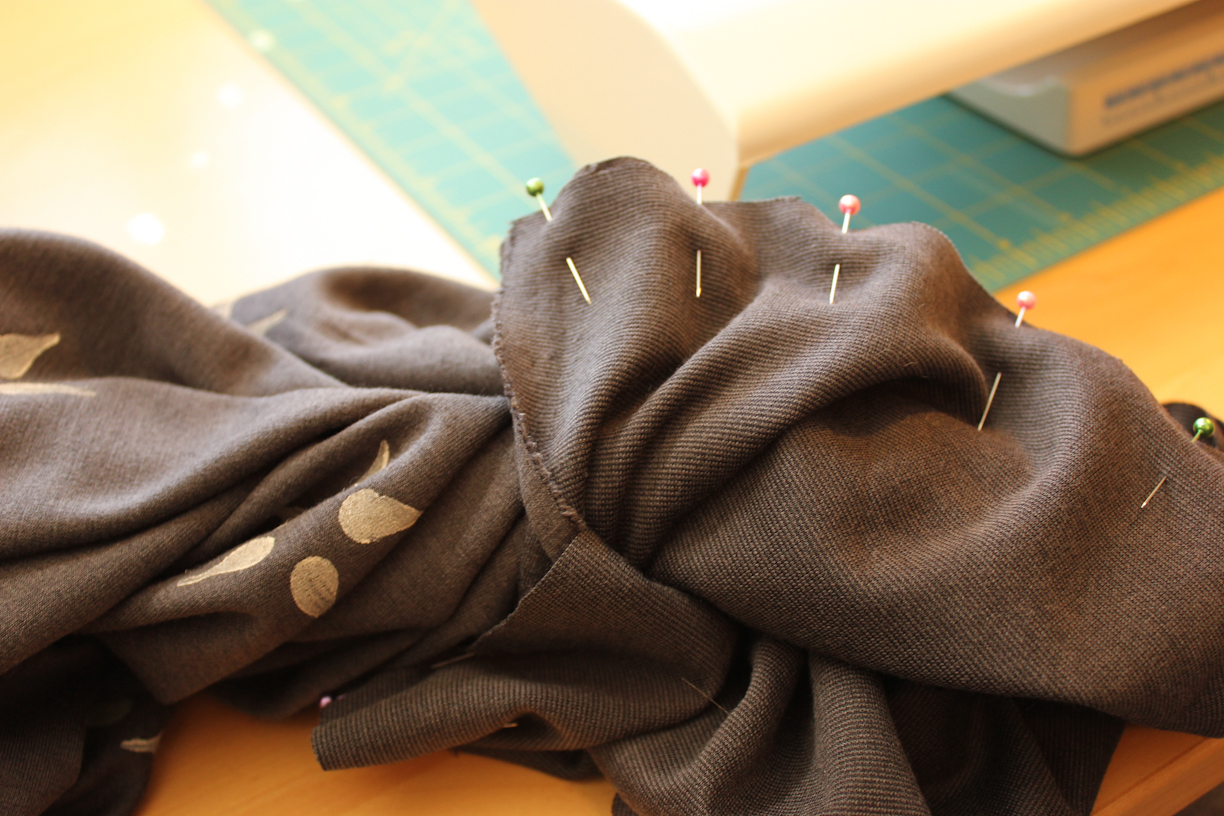
Pin the fabric, starting from matchin corners with the correct side of the fabric facing in and touching.

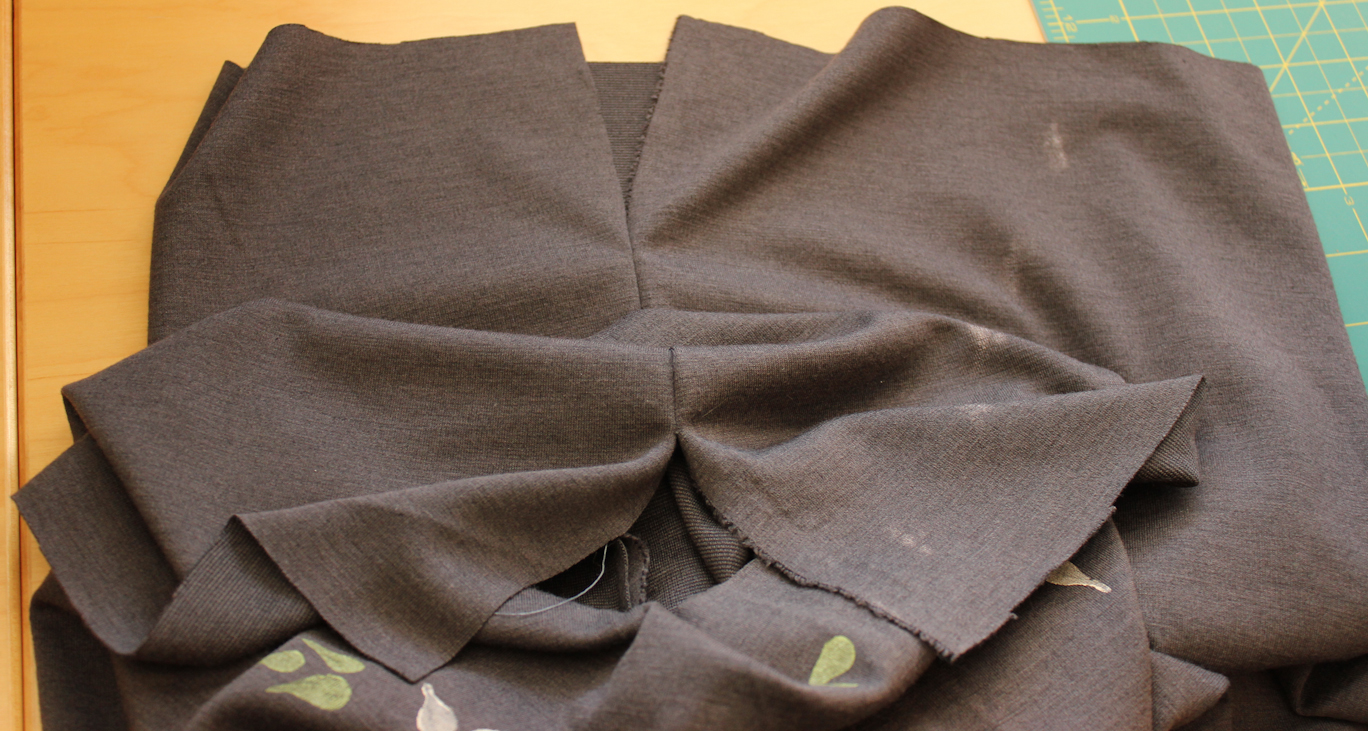
Pin around the entire circle until you come to the other corners. You’ll then see the main part of the scarf coming through the 8 inch opening. That part of the scarf has the correct side of the fabric facing out.

Then, you sew. Start at one corner and go to the other. Make sure to backstitch at both ends.

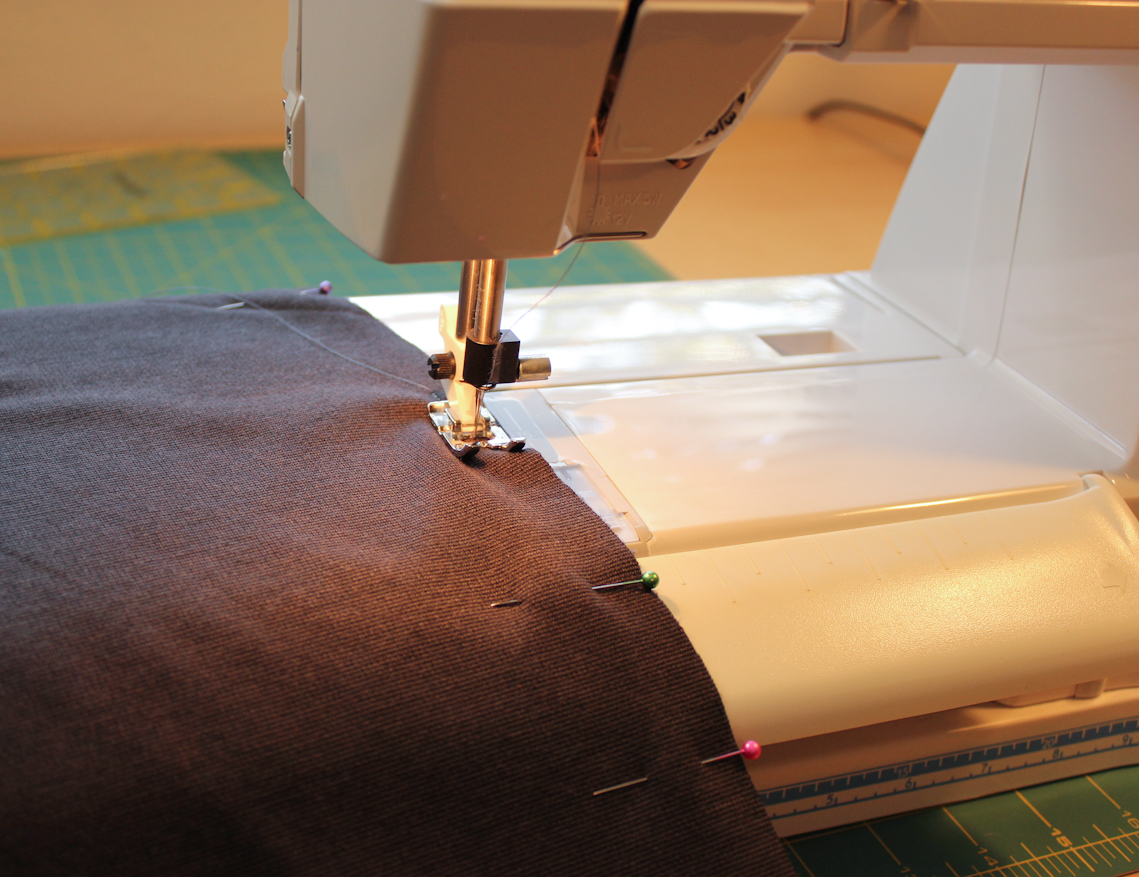
Sewing the two ends of the scarf together.

When you’re done, you’ll flip that section of the scarf so that the right side is facing out for the entire section. You’ll have an eight inch section left to hand sew to complete the scarf.

After sewing the ends together, you’re left with an 8 inch section to hand stitch.

Pin the opening closed using the same seam allowance you used on the rest of the scarf.

Pinned and ready to hand sew.

I used a slip stitch to close the seam, with help of a tutorial from Michelle patterns. Then, I positioned the scarf so that the seam was positioned in the back. Lastly, I wore the scarf around town. You can see the loop in the scarf on the left and the view of the scarf when it’s flattened out on the right. I’m quite happy with the finished product!

Make your own hand stamped infinity scarf - lauramakes.com

The finished scarves.

Enhanced by Zemanta

Dabbling with HDR photography

For those of you who’ve been reading my blog for a while, you’ve probably noticed the improved photos since January. My lovely husband surprised me with a DSLR camera, something that I’ve always wanted since my film SLR stopped working years ago. The new camera spurred me to take a photography class through UT Austin’s informal classes, as well as read some photo blogs and books. I latched on to the idea of trying high dynamic range (HDR) photography after seeing HDR photos in a variety of places. I know that professional photographers have mixed feelings about HDR, but for us amateurs it can really help bring out detail in photos that we would not otherwise capture. When we traveled to my husband’s family farm in Iowa over this summer, I knew I’d have the perfect subjects for HDR photos. The farm is over 100 years old, the farm house was built in 1927 and my father-in-law has a variety of old Ford tractors and old farm implements on display. See timstractors.com for more information on how he restores the tractors.

For the photos below, I used my big tripod, 5 stops for the HDR (-2, -1, 0, 1, 2), and Photomatix essentials to process the photo series. I tried to not go crazy with special effects.

The farm house, built in 1927.

One of the many Ford tractors brought back to its former glory by my father-in-law.

An old thresher, a farm implement that separates grain from the stalk and the husk.

An old Ford truck parked on the farm.

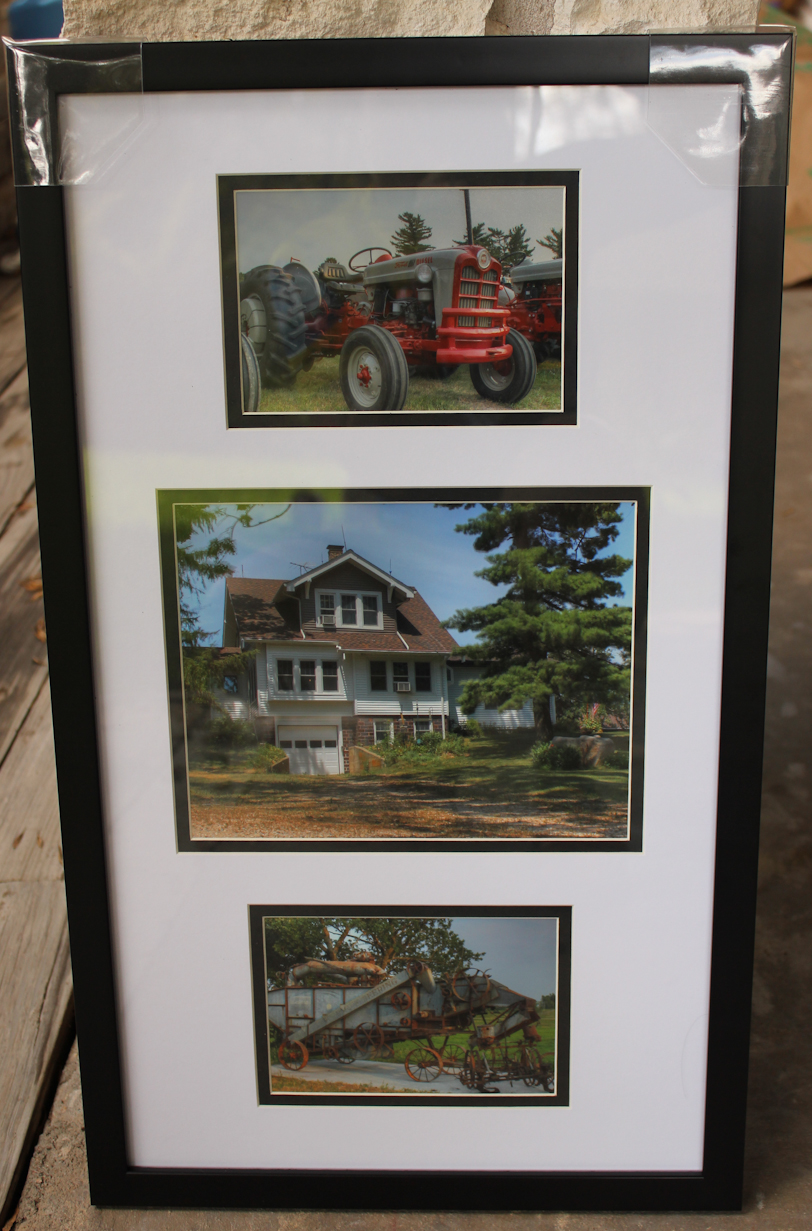
I picked up a collage frame and had a few photos printed to give to my father-in-law. I hope he likes it!

HDR photos of the farm ready to be gifted.

Creative Commons License
This work by Laura Feeney is licensed under a Creative Commons Attribution-NonCommercial-ShareAlike 3.0 Unported License.

Roasted vegetable and cabbage salad

We’ve been eating salad often the last few weeks. Mainly because we go out during the week and eat way too much and have to make up for it by having salad for dinner during the week. This week we decided to do grilled vegetables on top of a bed of roasted cabbage. I used sweet vegetables so that we could toss the salad with either a balsamic vinegar or some chipotle infused olive oil.

Ingredients:

  • Sweet potato
  • Sweet yellow onion
  • Carrots
  • Cauliflower
  • Poblano pepper
  • Cabbage
  • Thyme
  • Rosemary
  • Olive oil
  • Salt & Pepper

Steps:

Chop all vegetables. The sweet potatoes and the carrots take the longest to cook, so keep the slices thin. I like to slice the poblano thin. The cabbage should be sliced into thin ribbons. Toss the vegetables with a bit of olive oil and your spices. I used thyme and chopped rosemary from our garden, sea salt, and cracked black pepper.

Chopped vegetables

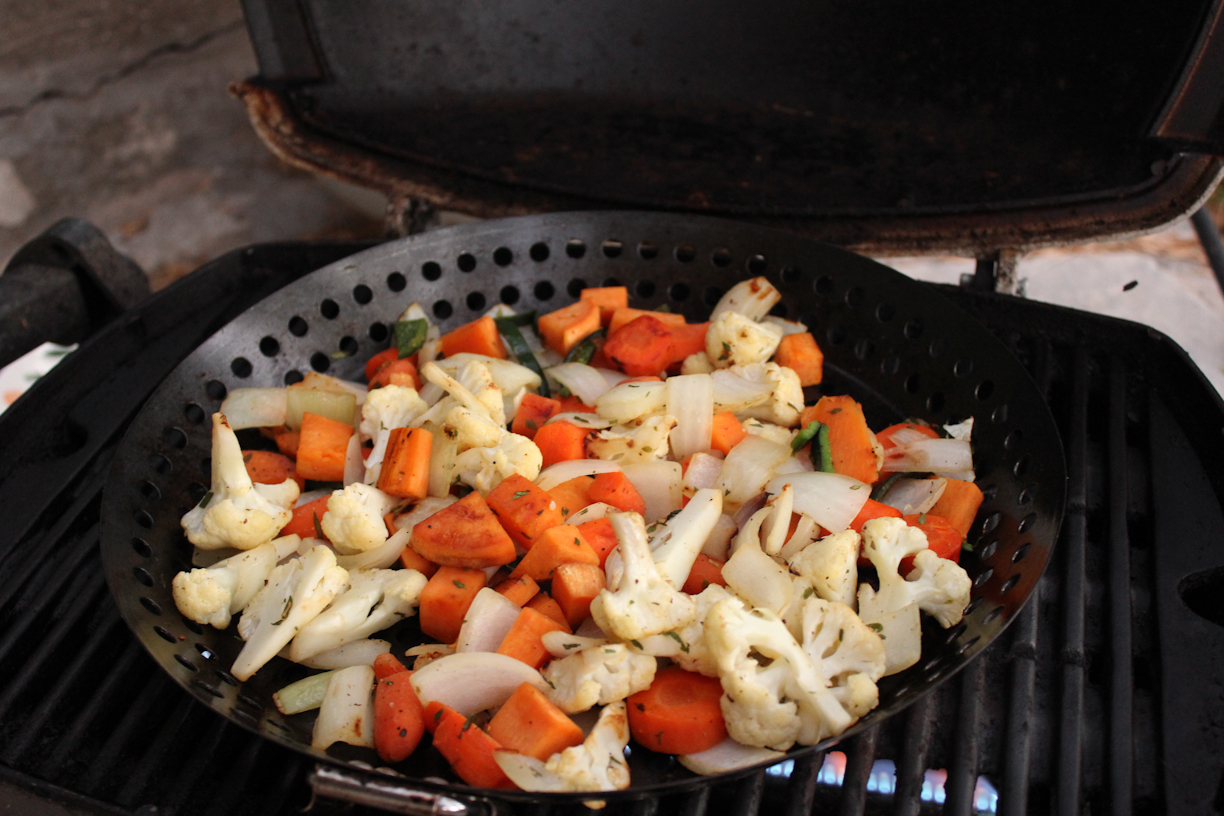
Oil a grill pan and cook the vegetable mixture over a low heat. This probably takes 20 – 30 minutes.

Grill pan

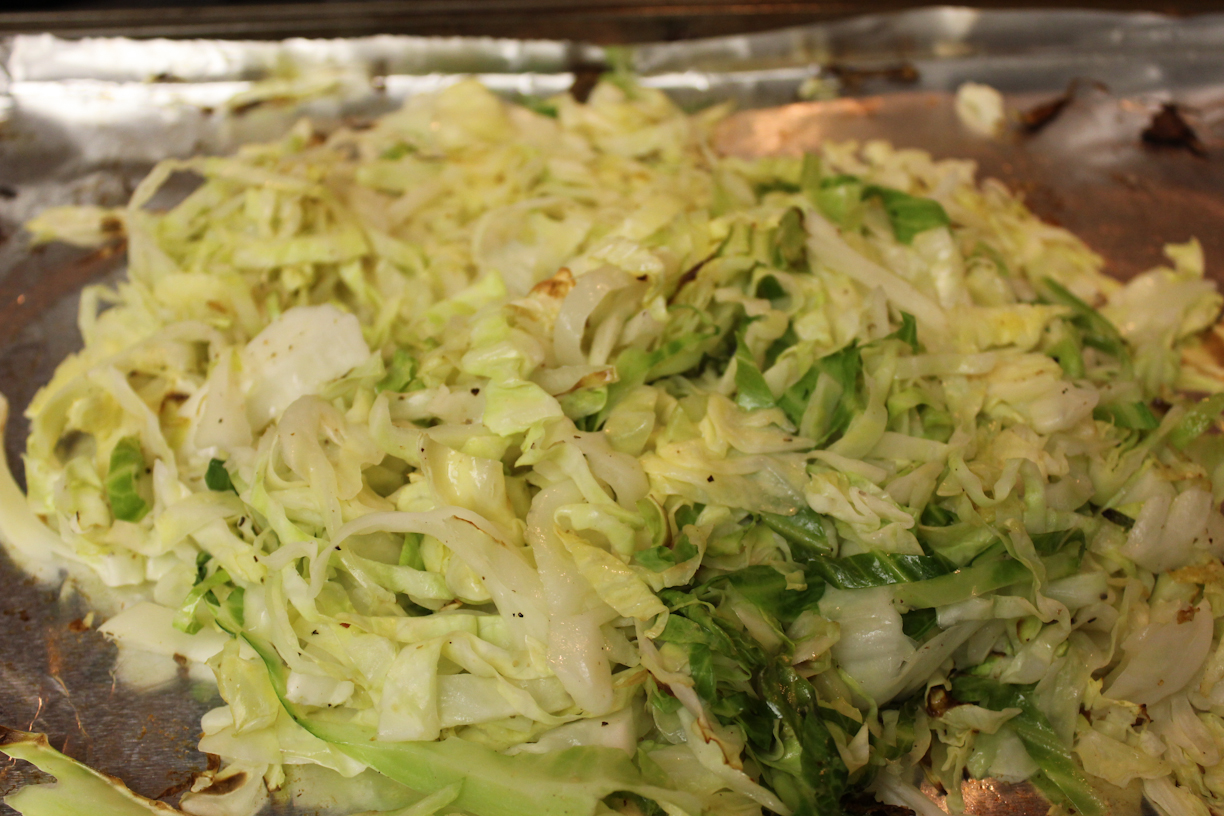
While the vegetables are cooking, prepare the cabbage. Toss the thinly sliced cabbage with olive oil, salt, and pepper. I usually just spread it out on a foil lined baking pan and use my oil sprayer to give the cabbage a light coat of oil.

Cabbage ready to be roasted

Roast the cabbage at 400 degrees. Stir it when the cabbage around the edges of the pan starts to brown. You want the cabbage to be uniformly cooked throughout. The total cooking time is about 15 minutes.

Cooked vegetables

Cooked cabbage

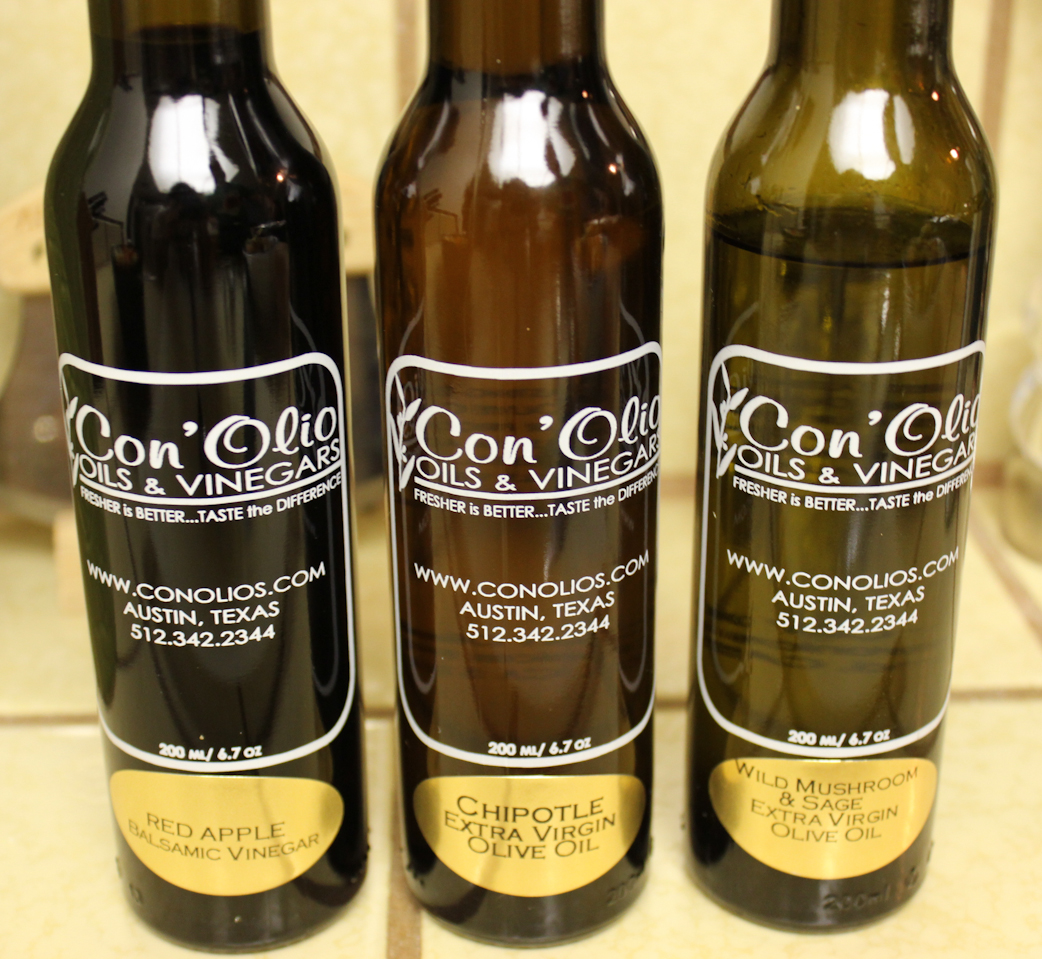
Serve the vegetables over a bed of cabbage. Each person can season their vegetables as desired. We tossed our vegetables with balsamic vinegars and olive oils on different nights:  red apple balsamic, chipotle olive oil, and fig balsamic. The red apple balsamic and chipotle olive oil were both from Con Olio Oils and Vinegars here in Austin. The fig balsamic I made myself earlier this year.

Bounty from Con Olio

If you don’t top your dish with cheese like my husband does, then this makes a nice vegan dinner.
Enhanced by Zemanta

Make your own sun screens

Every time I’ve walked into our new kitchen during the late afternoon / early evening with its west facing windows, I think to myself “it’s time to make sun screens.” Well, I finally got around to it so now the sun doesn’t blind us and we have improved energy efficiency, which is important in sunny and hot Texas. Because the built-in screens for our windows only cover the part of the window that opens, I had to create new screen frames for the windows, rather than just simply using the screen frame that was there. Converting existing screen frames into sun screens is much easier, something I’ve done before as well.

Ugh, the sun shines right through the kitchen window on the west side of the house!

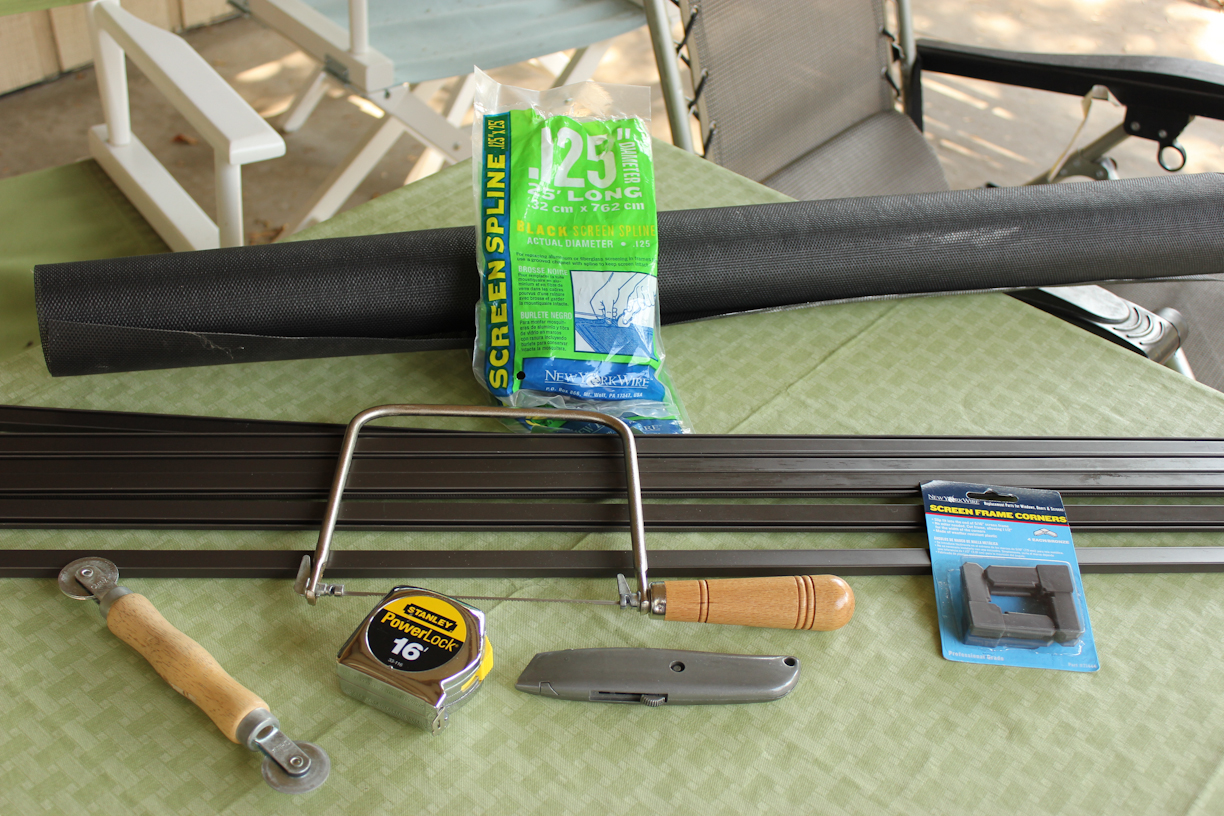
To make a sun screen, first measure your windows and head to the store to get supplies. Lowes and Home Depot sell screen frame kits that basically have everything you need, except the screen material and the screen spline roller tool. Since I had some screen frame pieces left from our previous house, and I needed to create two frames, I bought my supplies separately. Here’s what you need:

Supplies:

Tools:

  • Screen spline roller
  • Cutting utensils: scissors, box cutter
  • Drill, screw driver
  • Metal saw (ignore the saw in my picture below, apparently it’s a wood saw. Make sure you have a metal saw)

Supplies and tools all collected


General instructions:

Measure your window to determine what size to make the screen frame. Make sure it will cover the window, but leave room to hang the screen using your chosen method. Factoring in the screen corners, cut the metal frame pieces to size. My screen corners added 3/4″ to each side of my screen, so I had to subtract 1.5″ from each side of my screen frame so that it would be the appropriate size. After cutting four pieces, assemble them with the screen corners.

Assembled frame

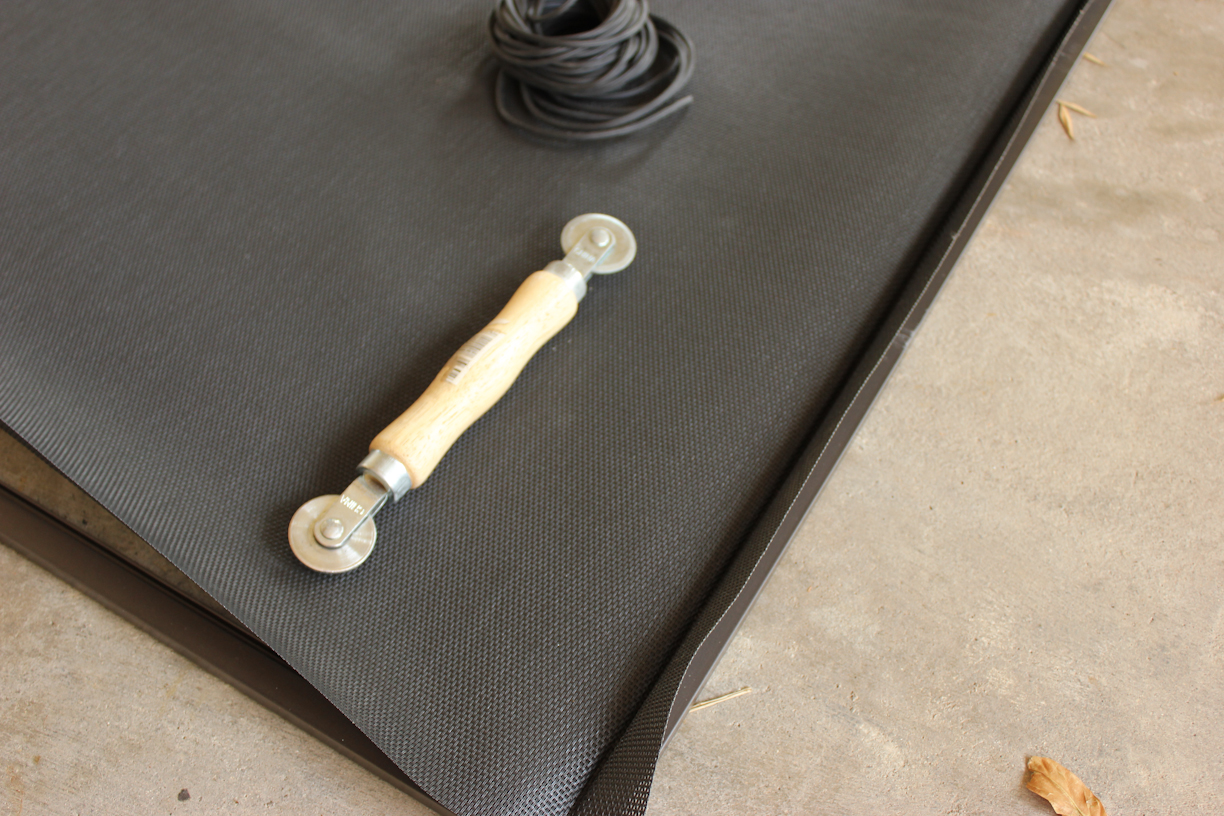
Then, cut a piece of screen to fit over the frame, leaving at least an inch or more on each side. Lay the screen over the side of the frame that has the channel for the spline. The roller tool has one end that is narrow and another end that’s wider with a groove. The narrow side is used to push the screen down into the channel before forcing in the spline. This helps you make sure the screen doesn’t get ripples and is positioned correctly.

Use the roller to push the screen down into the frame before using the spline.

Next, use the other side of the roller to push down the spline into the channel, starting at one corner. This is where it helps to have the thinnest spline that will work for the frame.

Spline in the channel of one side of the frame.

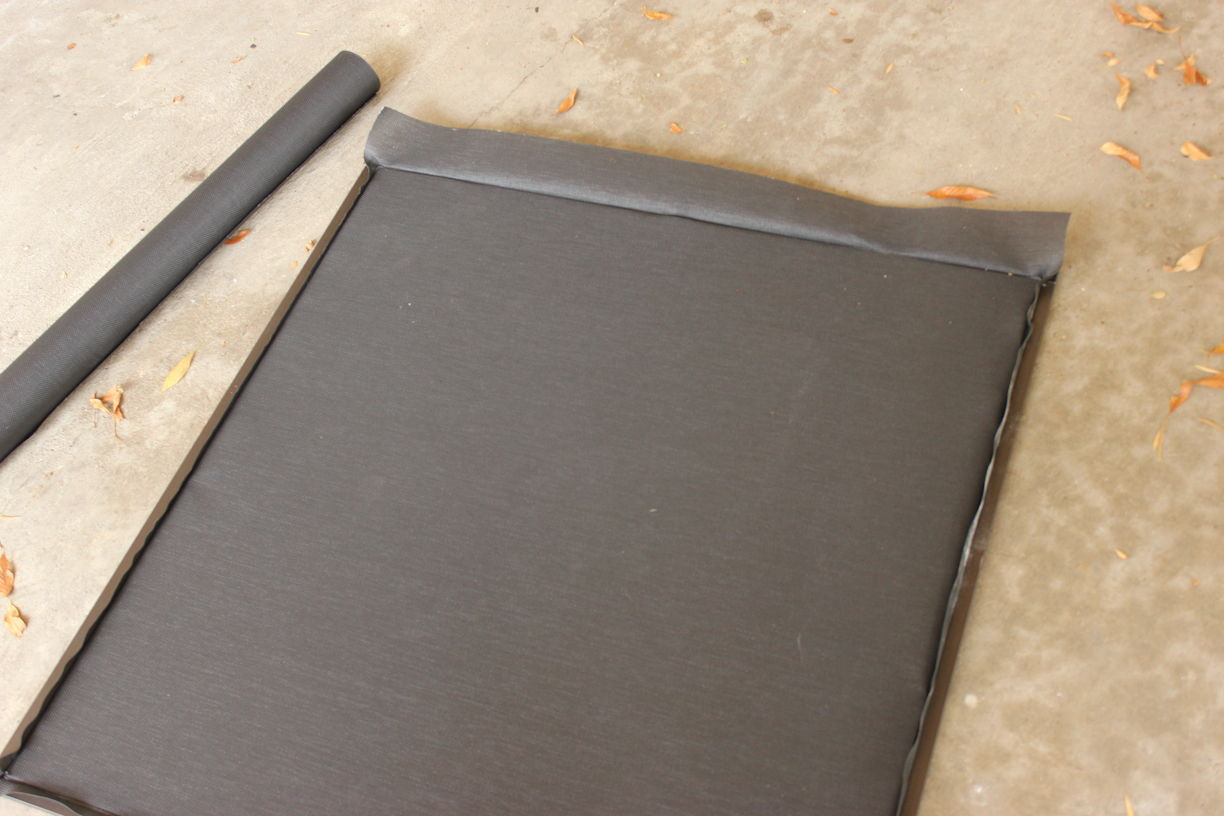
I don’t worry about cutting the spline at each corner, I just make the turn and keep going. Make sure to hold the screen fairly taut while rolling in the spline, which can take some force. It helps to have two people for this part, especially if it’s the first time you’ve tried making a screen. Once you’re finished, use the box cutter to cut the excess screen off, close to the frame. Be careful that you don’t cut your new screen! I position the razor blade towards the frame to reduce those chances.

Screen, before trimming excess

To hang the screens, we drilled into the metal window frame at the top and the bottom and used the plastic screen clips:

Installed sun screen on the kitchen window.

And now we can finally leave the blinds open in the evening, without being blinded by the sun in the early evening!

Bonus!

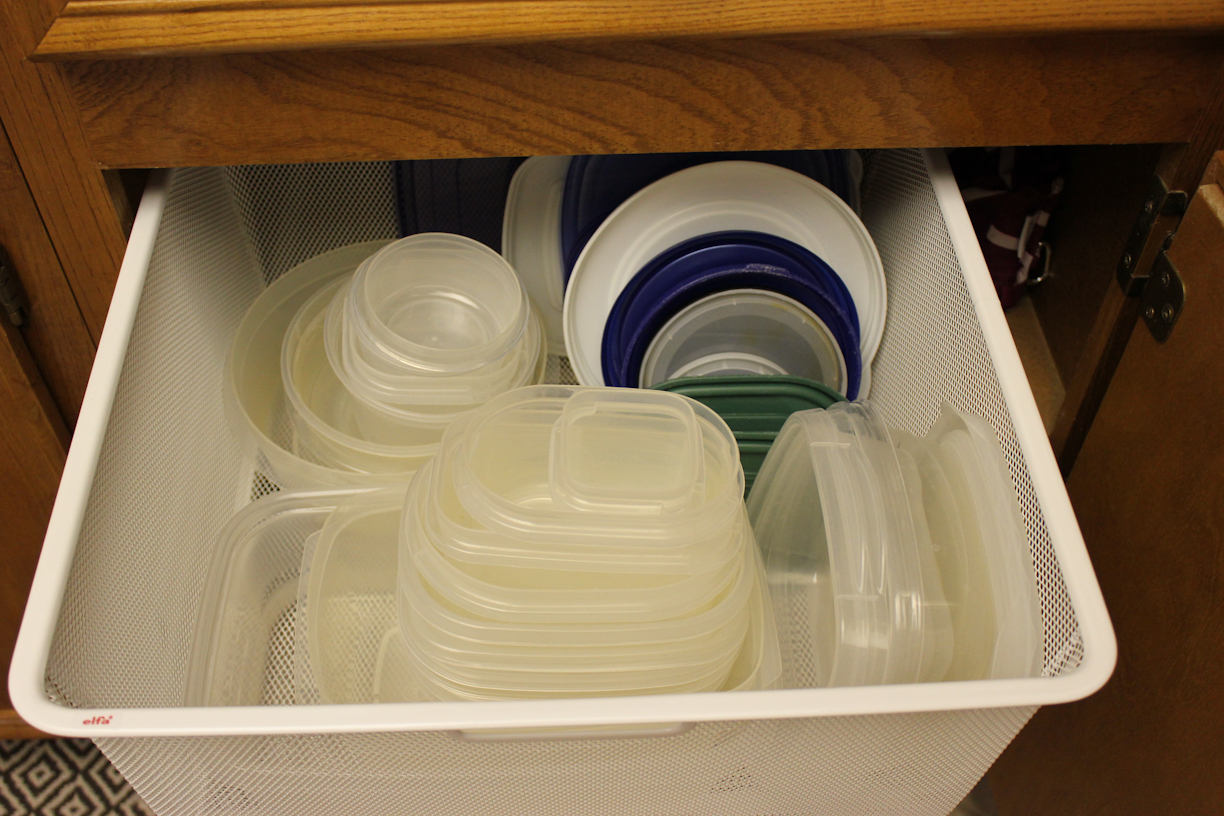
This weekend I took care of another exciting house project – organizing our plastic container storage! The Container Store had just the thing, an elfa basket that be installed in a cabinet on a track so that you can pull it out of a cabinet for easy access. You can also easily lift out the basket to get at anything you have stashed in the very back of the cabinet.

Elfa drawer, installed in the cabinet. Yes, that shelf is kind of warped, but the basket frame still works as designed.

Elfa drawer, pulled out with plastic containers nicely organized.


Enhanced by Zemanta

My new foot stool

I was wandering through Joann Fabrics not too long ago with an extra 40% off coupon in my pocket when a short little wooden foot stool caught my eye. Ever since moving into the new house, I’ve wanted something to help me reach the top shelves in the pantry without having to drag out our folding step stool. I quickly brought the foot stool home with me and got to work finishing it.

Raw wood foot stool from Joann Fabrics.

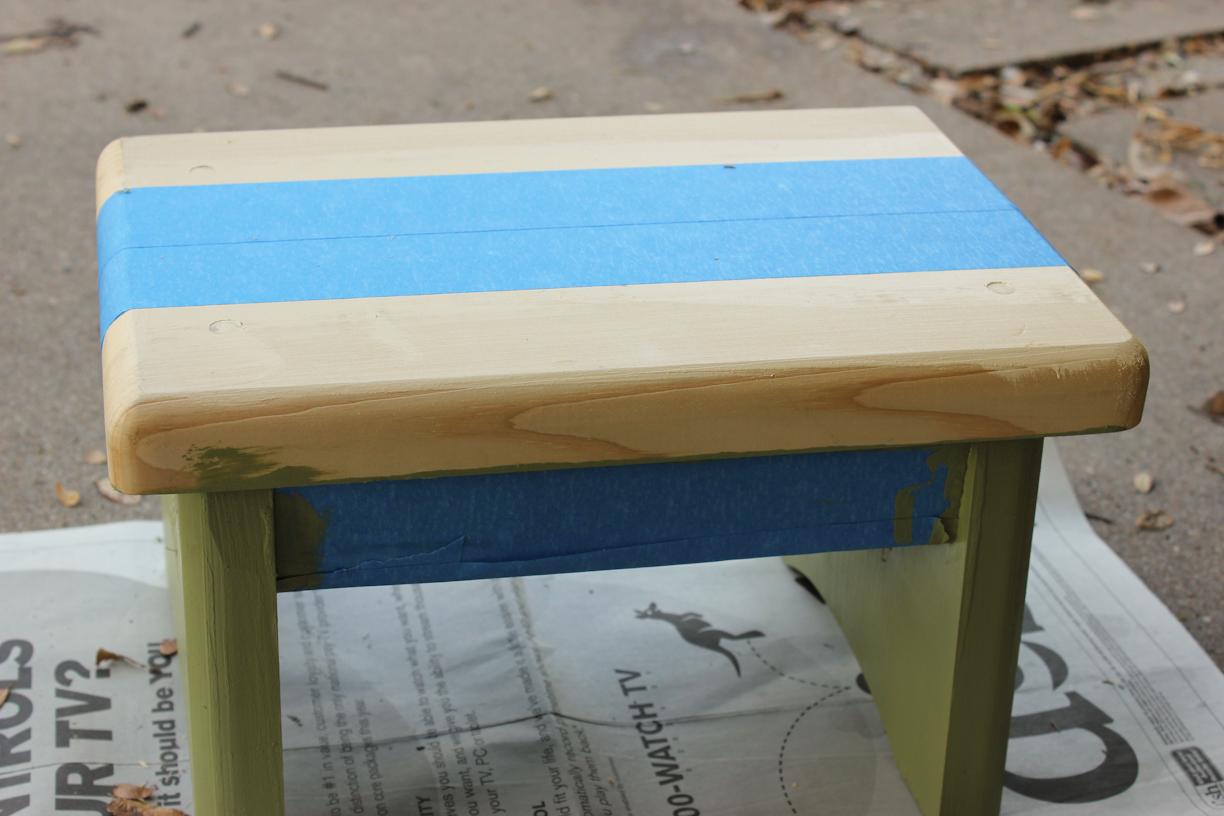
From previous painting projects, I have a ton of paint samples in a variety of colors. I decided to use those samples to paint my stool. I wanted to make it two colors, so I painted a stripe down the top of the stool in yellow, and the side supports underneath. After two coats dried, I taped over those parts so that I could paint the rest of the stool green.

Yellow paint is under the blue tape.

Getting ready to paint the top.

After two coats of green were complete, the stool was ready! I had to give it extra drying time because of the humidity here – the paint felt tacky for a while but eventually the tackiness went away. I added stick-on rubber pads to the feet to keep the stool from leaving scraped off paint on the floor.

Finished product.

Finished product, side view.

The stool lives in our pantry, ready to spring into action and help me reach items on the top shelves.

Enhanced by Zemanta