Making a Mother’s Day letter frame

Quite often I have the urge to make handmade gifts. Much of the time, my urge doesn’t actually align with my available time and I default to buying gifts. For Mother’s Day this year (yes, this post is late) I collaborated with my sister to make a photo collage that spells “Mother”. While you can go online and order frames that spell anything you want, I had two problems with this. The first problem is that the frames tend to be quite large and the second is that you can’t upload your own photos to use. The big draw to making this gift was using photos from the cities where my sister and I live.

After we both went out and took a slew of  photos, I processed them to be black and white and cropped them to be 3.5″x5″ so that I could buy a smaller frame that would fit better in our Mom’s house. The photos were printed as 4 x 6 prints that I cut down to size with my swing arm paper cutter. I found a frame at Michaels that would fit the photos and had a piece of mat cut to fit inside the frame. I used photo corners to mount the photos. I had to carefully measure and draw light pencil lines on the mat in order to properly align the photos. After mounting the photo corners, I erased all of my lines.

The finished product, now in Mom’s hands:


Photo key:

  1.  My sister and her fiance making the letter M in Anchorage
  2. A work of art in the sidewalk on 2nd street in Austin
  3. My husband and I forming the letter T in Austin
  4. A sculpture / bench downtown Austin
  5. The letter E from a light up sign in Anchorage
  6. The side of a bench in Austin


What to do with so many plants?

I have a thing for plants. This has led to me collecting many, many houseplants over the years. Since we’ve moved, the majority of them are happily hanging out on the back porch. They seem to really enjoy it back there, growing much larger leaves than they would inside. I have a number of pothos plants. I started with two and now have 7, not including ones I’ve given away. They are very easy to propagate, you just cut off a vine and stick it in water until roots grow and then plant it. When the vines get within chewing distance of our cats, I start to notice puncture marks in the leaves. I decided that a good way to keep the plants away from the cats would be to hang them up. Conveniently, I came across a tutorial on Pinterest from skinny laminx for making your own plant hangers out of rope, twine, string, etc.

I picked up some thin hemp rope at the craft store and followed the tutorial to create a hanger for one of my plants. I have plans to make more some time soon.

Close up view


Hanging next to a stone pillar on our porch

Enhanced by Zemanta

Etching pint glasses with Women.Design.Build

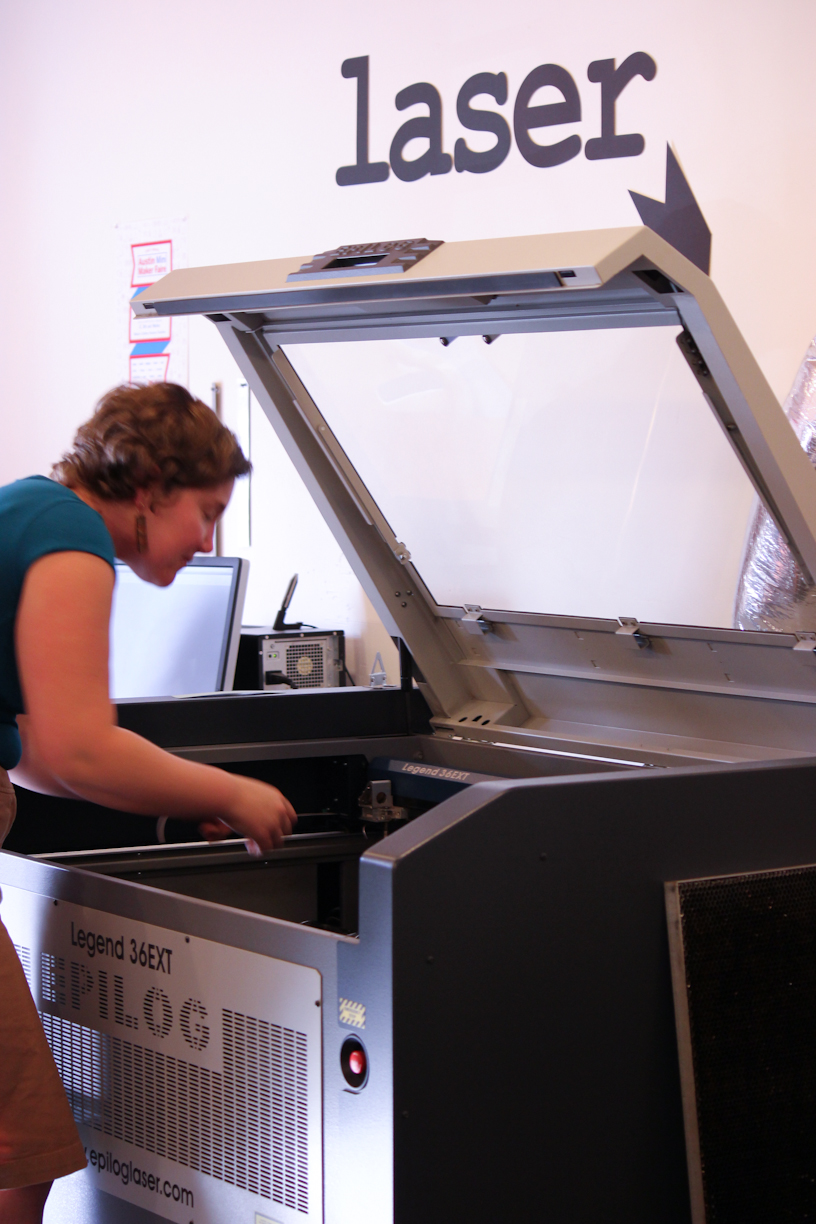
Recently I learned of  Women.Design.Build, a local organization that encourages women to get involved in their community through design and construction activities. One way that they do this is through workshops where you can try out a new skill. Last week I attended a glass etching workshop at the MAKEatx studio. You know how we etched our pint glasses? With a giant LASER! Right up my alley, reminding me of days spent in the basement of the UT physics building working with lasers. The MAKEatx laser is much more awesome than any laser I used in the past.


Laser etched / cut designs are located all around the studio

Yep, that’s a giant laser. CO2 apparently.

Prior to etching our glasses, we had to create a small black and white graphic to etch on the glass. With Father’s Day right around the corner, I decided to make a gift for my Dad. He’s got a thing for motorcycles so I incorporated that into my design.

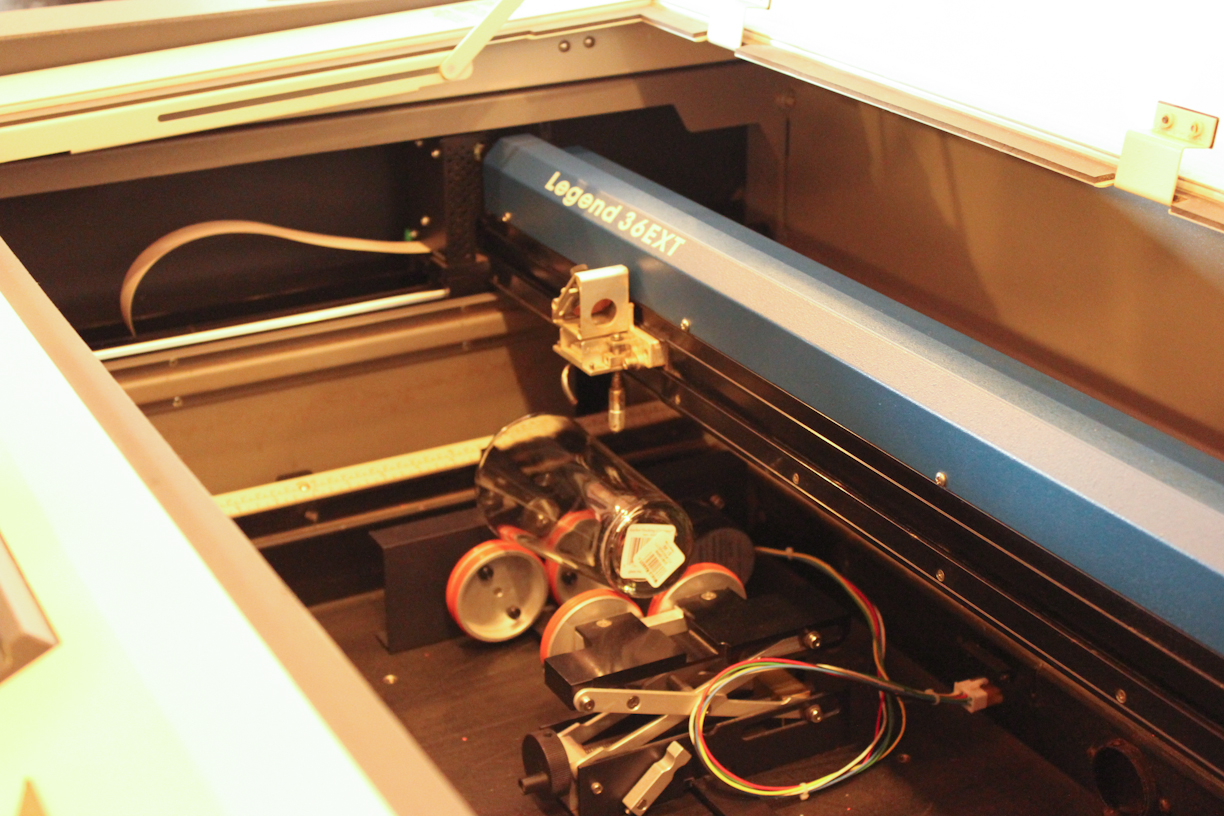
Placing the pint glass in the machine required a bit of calibration.


Pint glass loaded and ready to go

After the pint glass was loaded, the file from the controlling computer was opened to send the design to the laser. We closed the lid and pressed the go button and the laser whipped out our designs in no time.

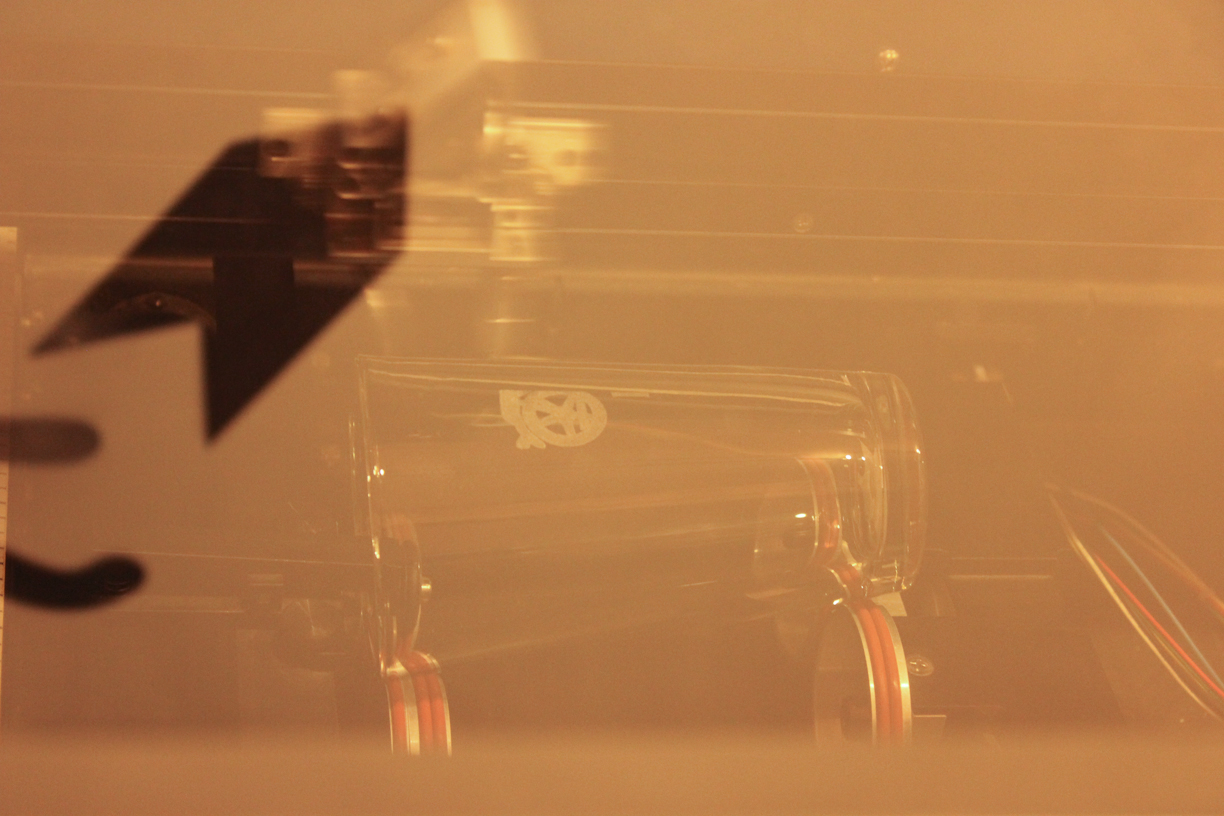
The laser in action. You can see one of the motorcycle wheels.

My finished glass


There were about 12 of us in the workshop and many had to create their designs on the computers there. We had plenty of time to browse around the workshop and drink some wine. Everyone was very friendly and it was an enjoyable evening. I look forward to attending more events in the future.

Seen around the workshop:

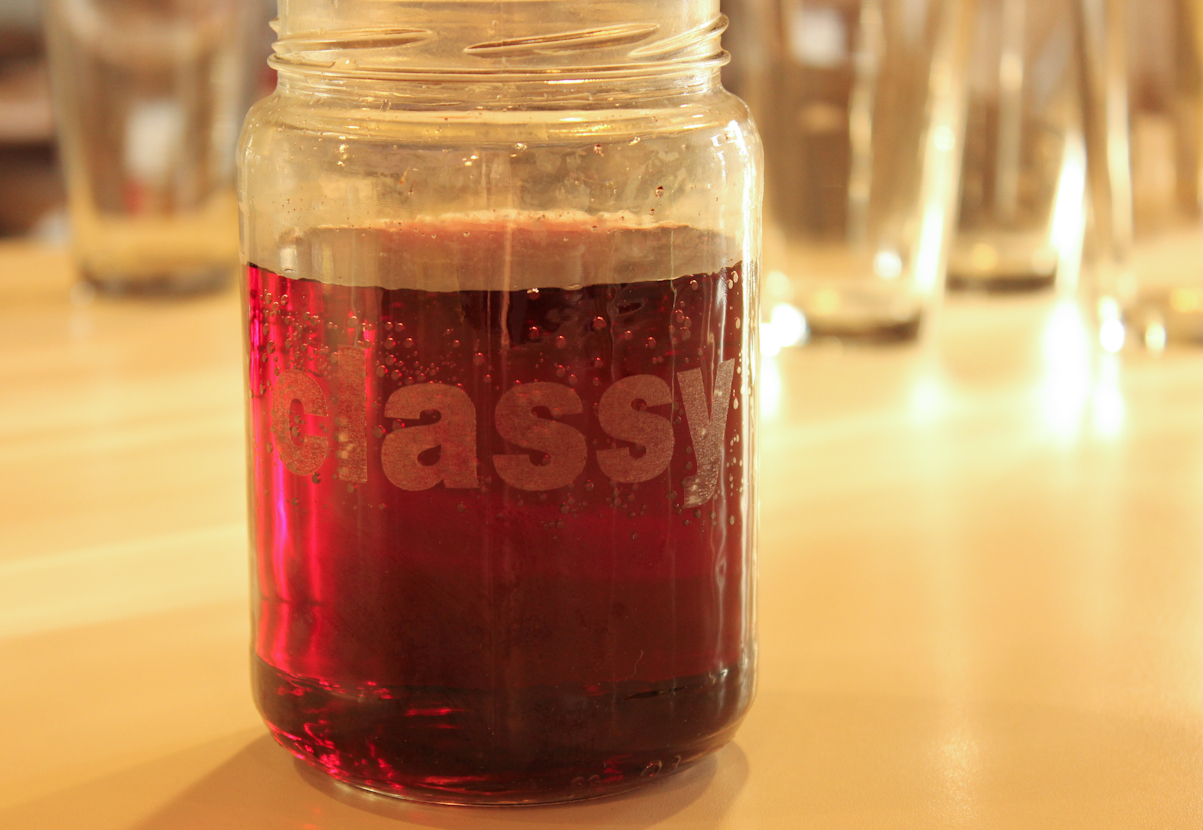
Another etched glass – a mason jar that says classy. For drinking wine of course.

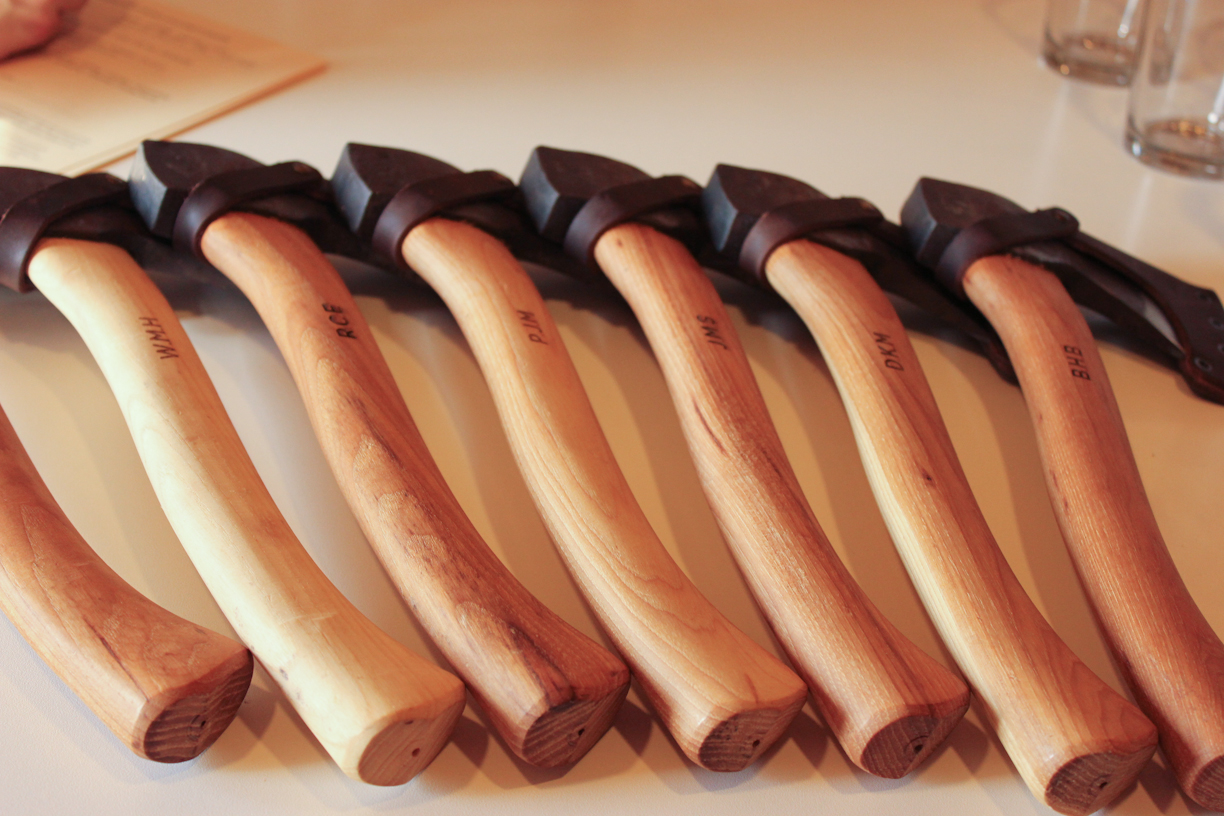
Amazing groomsmen gifts – hatchets etched with initials.


So true.


Enhanced by Zemanta

Making ourselves feel at home

When we moved, we quickly missed the beer and wine glass storage we had added to our kitchen at the old house. Throughout our time there, we slowly installed shelves on the wall, corner shelves, and shelves above the sink. We used those shelves to store the fancy glassware we collected. Even with the additional cabinet space at the new house, we didn’t have enough room for all of the fancy glassware. Since beer and wine drinking are hobbies of ours, this was something we wanted to remedy right away.

Enter Craigslist, again. After a week or so of browsing the site, I found the perfect piece of furniture: unfinished, $60, fits in the convertible, and had glass doors. Luckily, the Minwax gel stain I used on the bathroom cabinets in the old house was the perfect color to match the wine rack we already owned.

Preparing the cabinet:

  • The cabinet had wax spilled on the top of it at some point so I did my best to remove it by first scraping it off with a razor blade and then using an iron and paper towels to try to absorb what was left.
  • There was a small hole in the top that I filled with wood filler.
  • I removed all hardware from the cabinet – glass, hinges, knobs, etc.
  • I sanded the entire cabinet with 100 grit sandpaper followed by 180 grit sandpaper and cleaned off the sanding dust with a tack cloth.

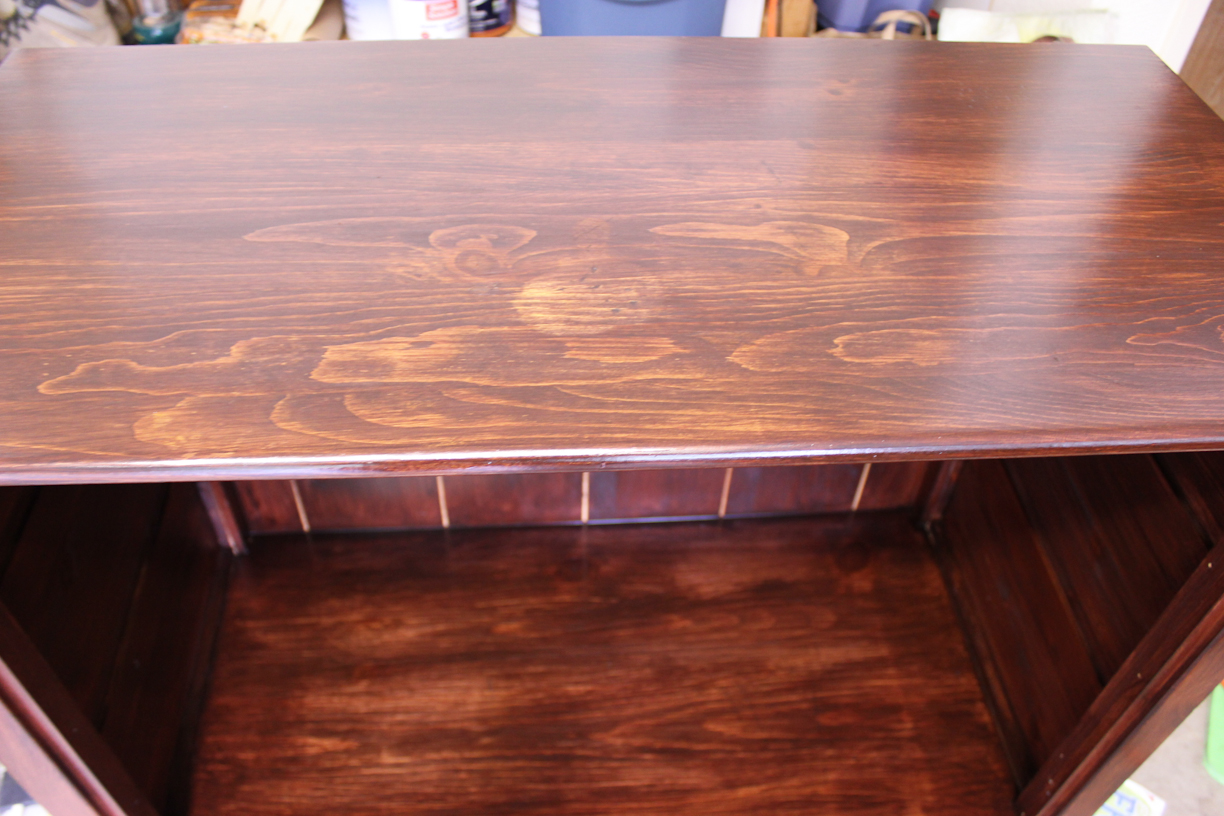
After that, it was on to the staining. I did one coat of stain and two coats of polyurethane. The wax spot on the top didn’t quite stain completely, but it’s not too noticeable. You can see it in the center of the photo below.

After assembling the cabinet again, it was time to move it inside. I also stained two pieces of pine to create wall shelves above the cabinet. I used brackets from Ikea that we had in the previous house.

After that it was just time to decorate! It was such a great feeling to finally finish unpacking the dining room.

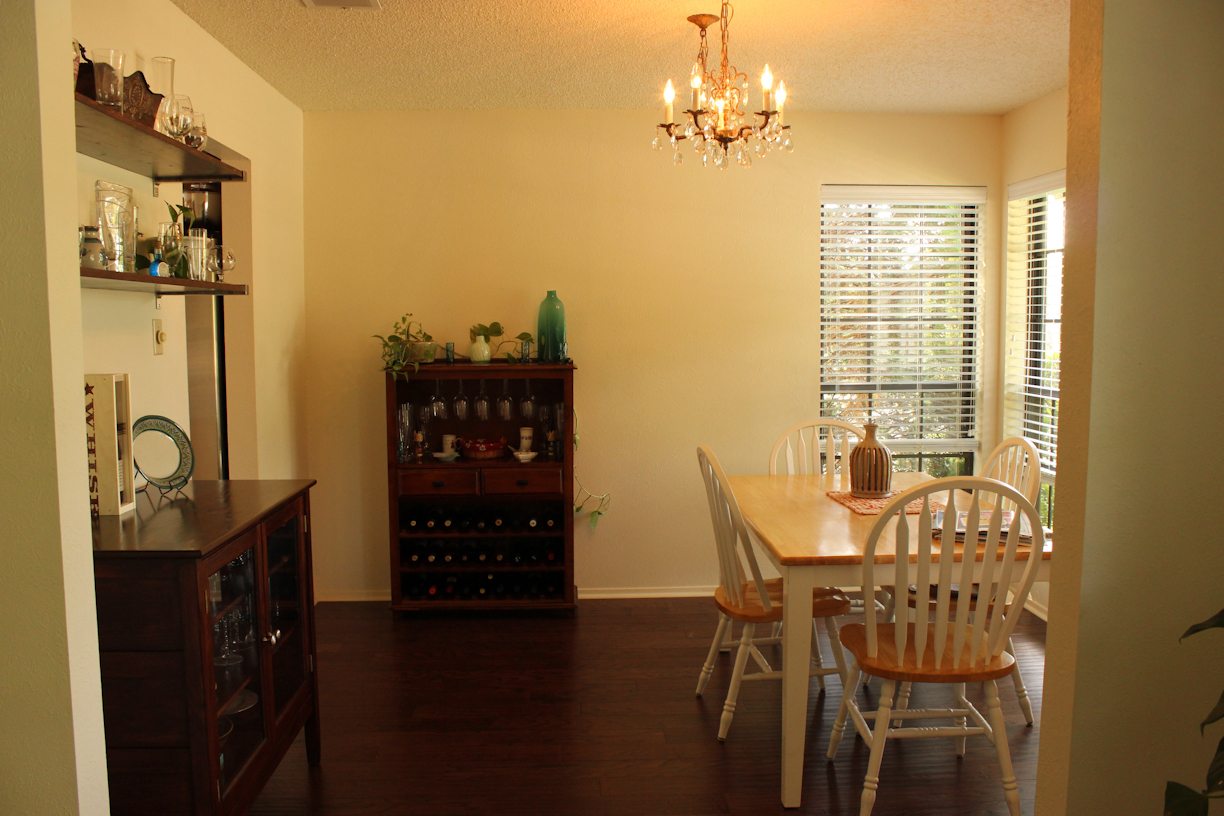
The whole view of the dining room, taken from the sitting room.

Can’t wait to paint this room and replace that light fixture…. someday.

Enhanced by Zemanta

Making furniture to hide those litter boxes

During the recent move to our new house, we struggled with where to put our cats’ litter boxes. At the old house we had three litter boxes for the three cats. We decided to try going down to two litter boxes in the new place. However, we weren’t excited about any potential litter box locations.

A few Google searches later and I knew there were a variety of furniture options I could purchase to hide litter boxes. I also knew that they were pricey, leading me to decide make my own. A few days of watching Craigslist and a trip to the Salvation Army later, I scored two solid wood furniture pieces that worked in our house and were big enough to conceal a litter box for about $90 total. I couldn’t even purchase an already made piece of furniture for twice that cost.  Once the furniture was home, we put in the litter boxes for a few weeks and left one of the cabinet doors open so that the cats would get used to the new digs. Probably only needed to do it for a few days, but we were still busy unpacking.

Furniture piece one: a cabinet that fit nicely by the front door and stairs.

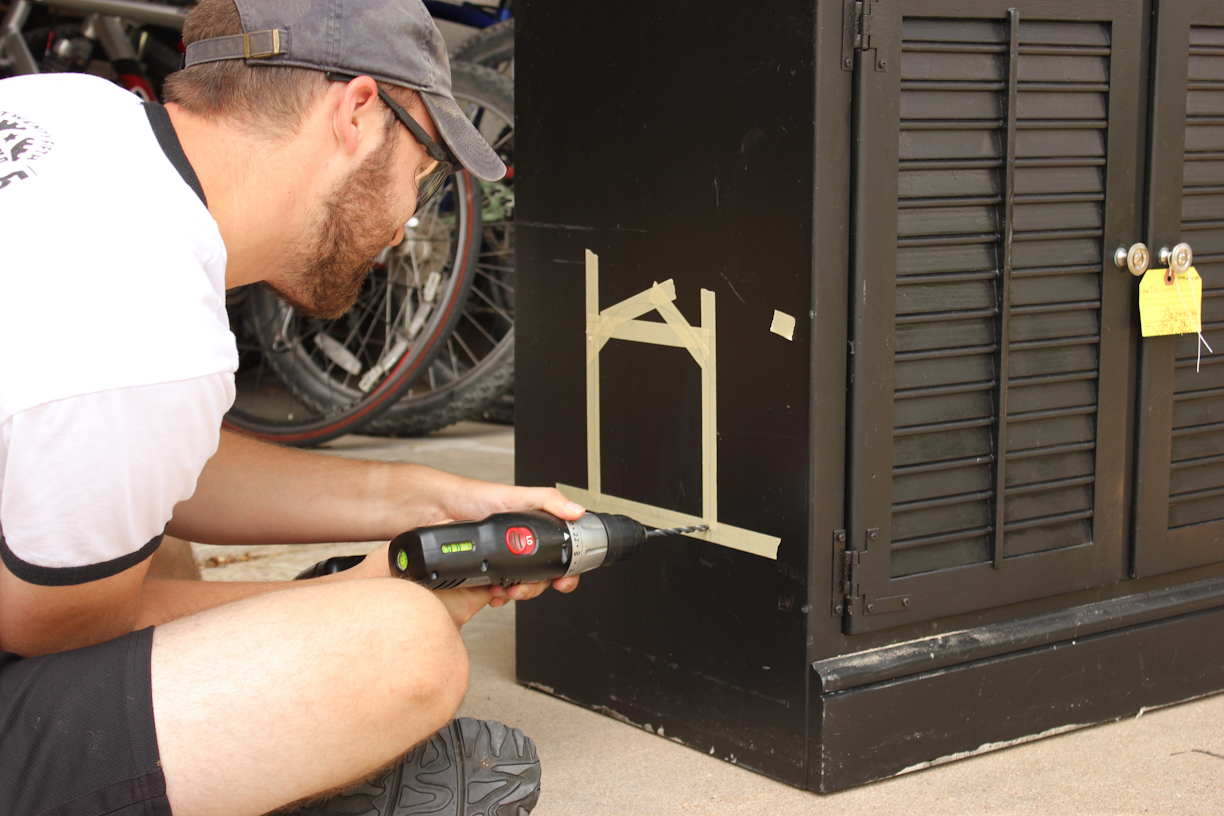
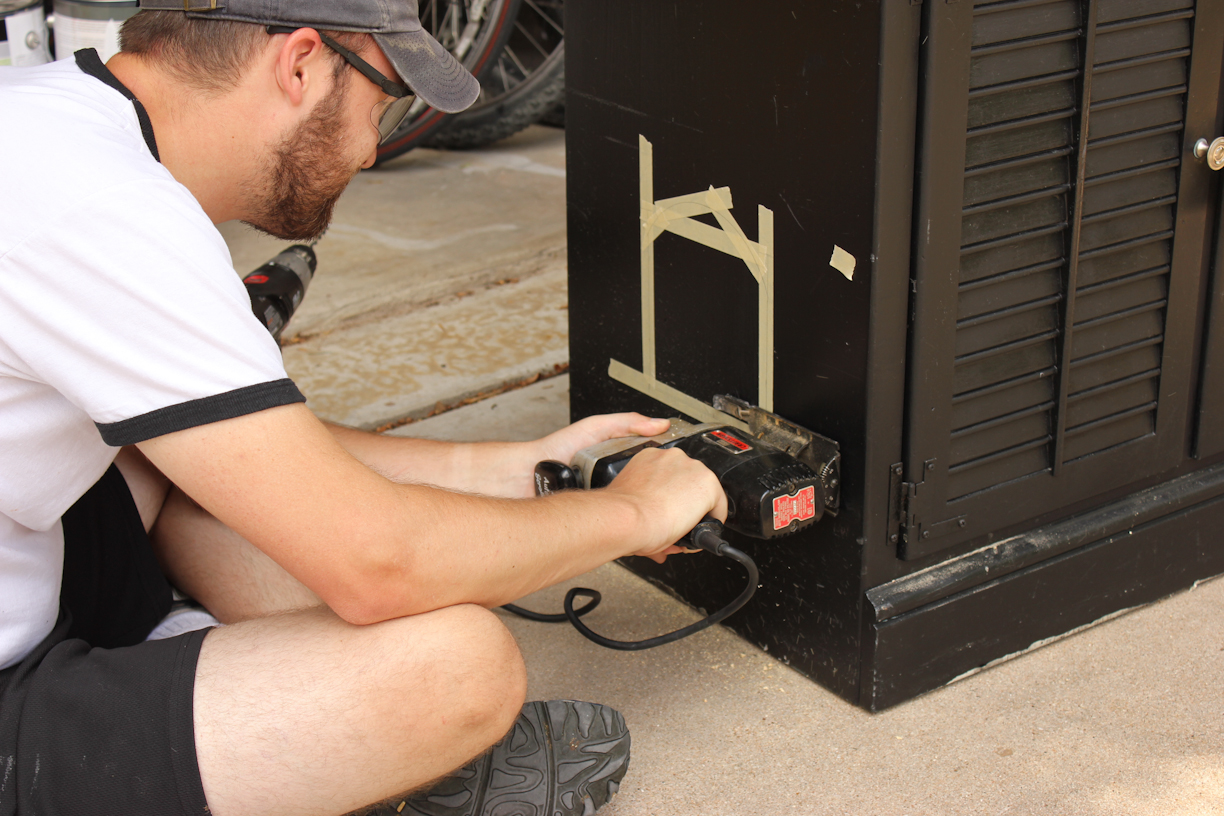
After measuring where to put the cat sized hole –  few inches above the inside platform, centered, about 7 inches wide – I drew the lines for the hole, using a bucket to get the arch correct. I then covered the lines with masking tape and drew them again so that the wood would not splinter when we cut it.
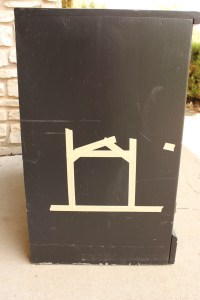
My husband then took care of using the drill to start the hole and then the jigsaw to cut out the opening:

After finishing the whole, we removed the tape and sanded the edges.

As our cats don’t always hit their litter box target (weird, right?) We decided to line the inside of the furniture with heavy duty plastic drop cloth so that it can be cleaned / replaced as needed. I used a staple gun to hold the pieces in place. Update, 7/26/14: we’ve recently added pet pee pad lining behind the boxes in addition to the plastic for those times when the one cat misses the litter boxes. They do a pretty good job of absorbing liquid and locking in the odor.
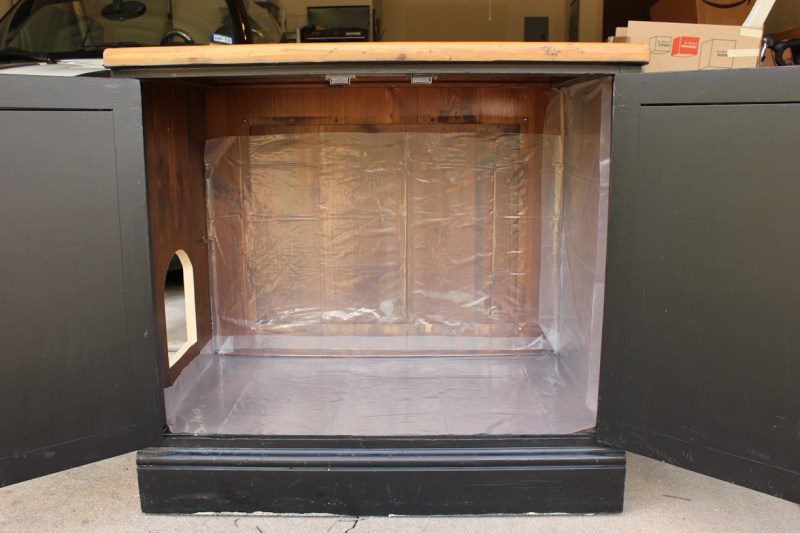
As soon as we carried the cabinet inside and installed the clean litter box, our cat Carston make a beeline for the litter box. I couldn’t even get a photo first! It was good to know he wasn’t reluctant about trying it out. Here’s his exit:

The litter box inside, along with a litter mat to try to trap litter before the cats make it out the hole.

Now unsuspecting guests will never know what this piece of furniture is hiding by our front door. As a bonus, it’s an excellent place to store mail! Now I just need to repaint it once I settle on the colors for that part of the house and hang some art work above. Someday.
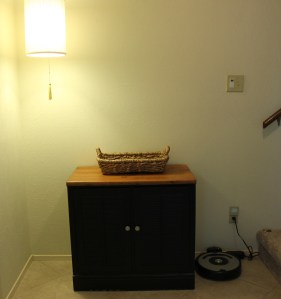
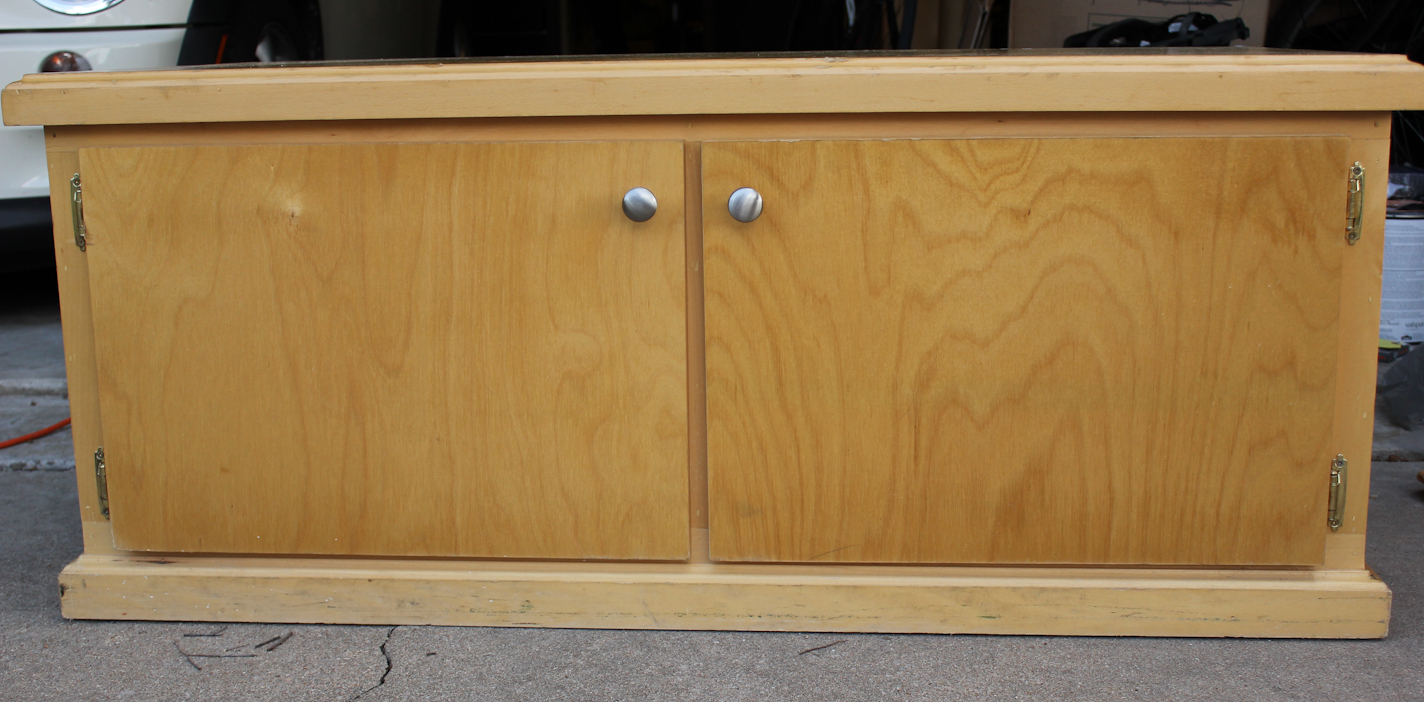
Furniture piece #2 is a rock solid low cabinet. It was obviously made by hand. It smelled strongly of patchouli when I got it home.
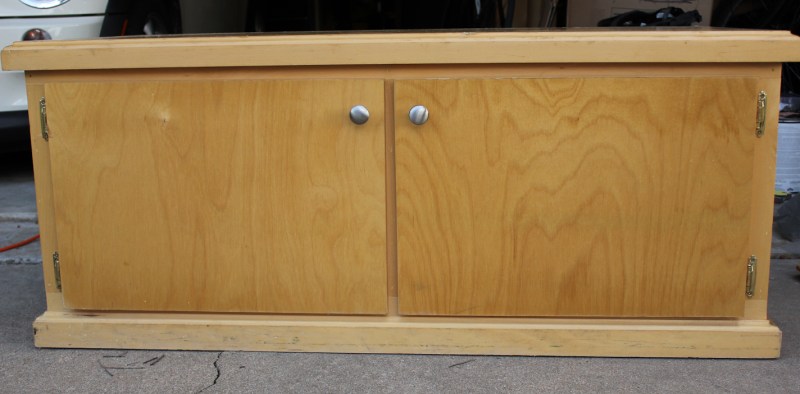
Following the same process, we cut a hole in the slide a few inches above the inner platform, lined it with plastic and swapped out the gold knobs for brushed nickel knobs left over from our bathroom renovation at the old house.
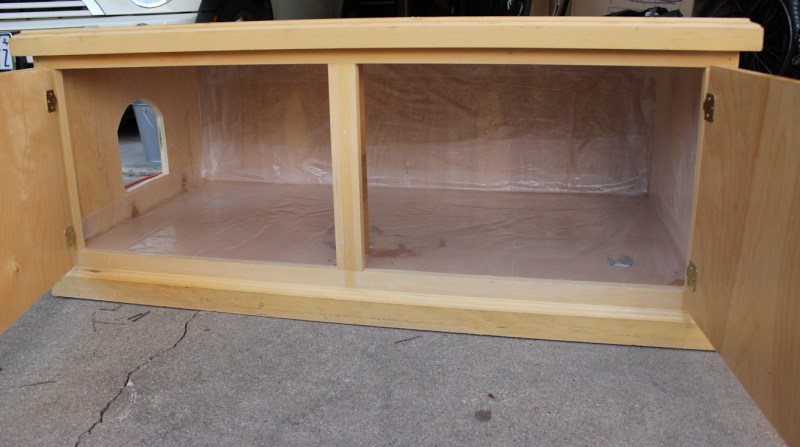
Here it is inside. It’s so roomy we could probably put two boxes inside.
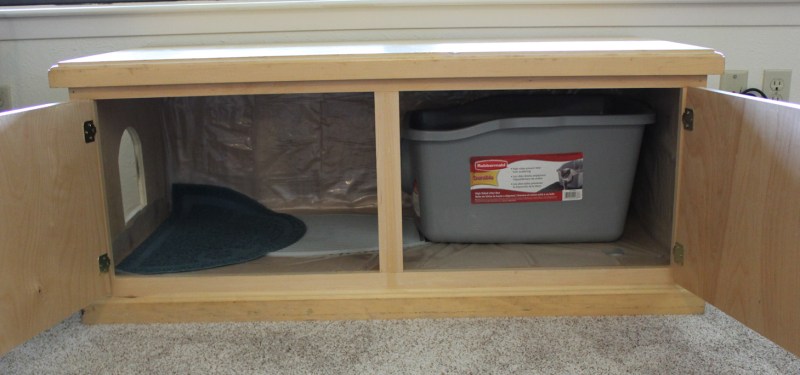
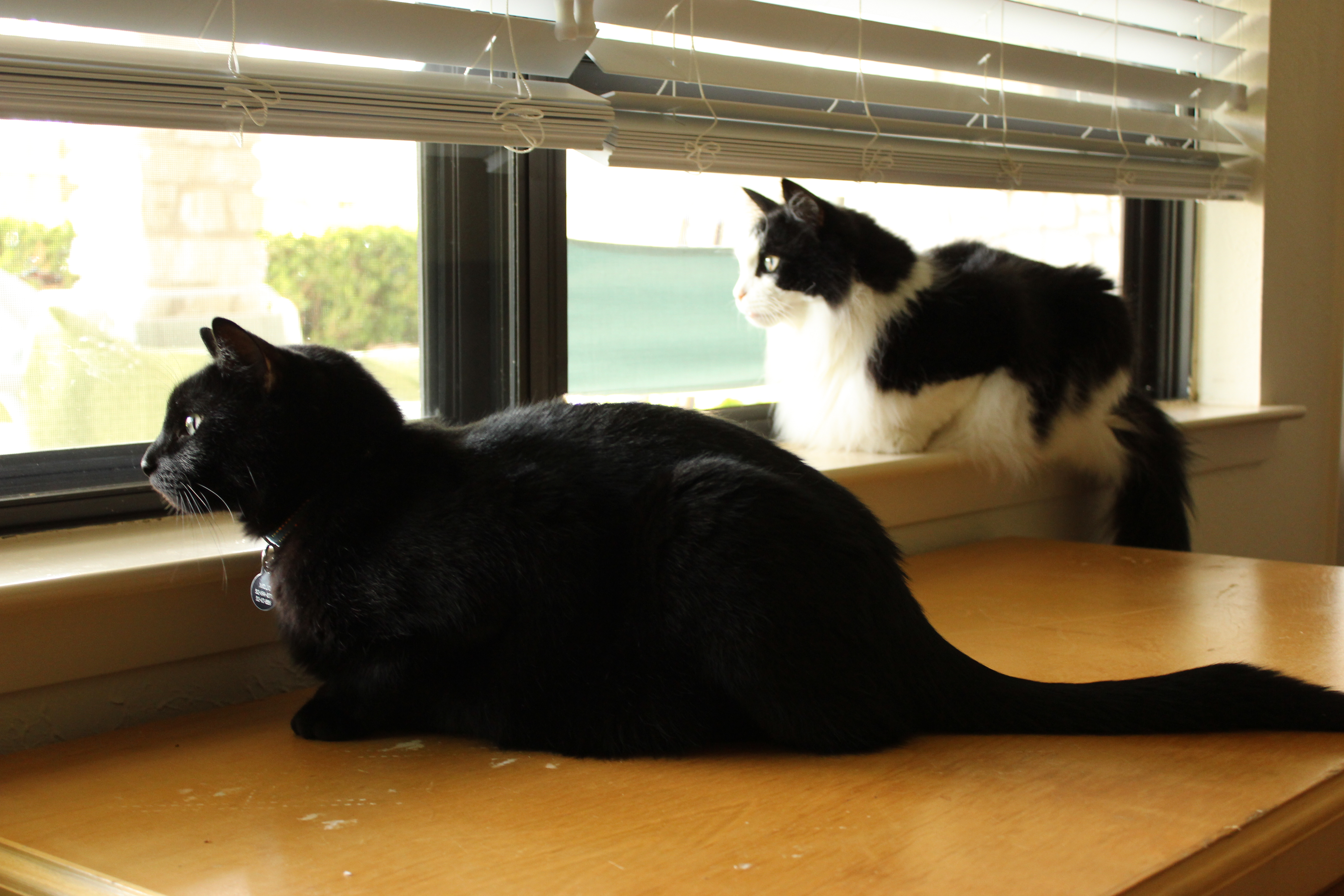
It’s positioned just below the window that looks on to our back porch, a perfect kitty sitting spot. The exit faces our fireplace so it’s concealed from the rest of the living room. I plan to either strip and re-stain this cabinet darker or paint it to match our living room. I would like to get cushions to put on top so that it acts as a people sitting bench in addition to a kitty sitting bench. Again, someday.

Mojo and Carston say it’s perfect for gazing out the window:

The cats have been using their new litter box cabinets with the holes in the side for more than a week now. We’ve happily noticed a that these cabinets do a decent job of containing unpleasant odors and the cats are more than happy to use them. Hooray!

What kind of furniture finds have you repurposed for your pets?

Making a wine bottle chandelier

Ok, so I just made a small wine bottle hanging light fixture… not really a chandelier. It’s been a project in the making for quite some time and a great way to break, I mean upcycle, some wine bottles.

A preview of the finished product


First, I had to figure out how to cut the bottom off of wine bottles. The internet was ripe with methods that didn’t work. First I tried a crazy idea where you dip string in acetone, tie it around a bottle and catch it on fire.

Yeah, that didn’t work.

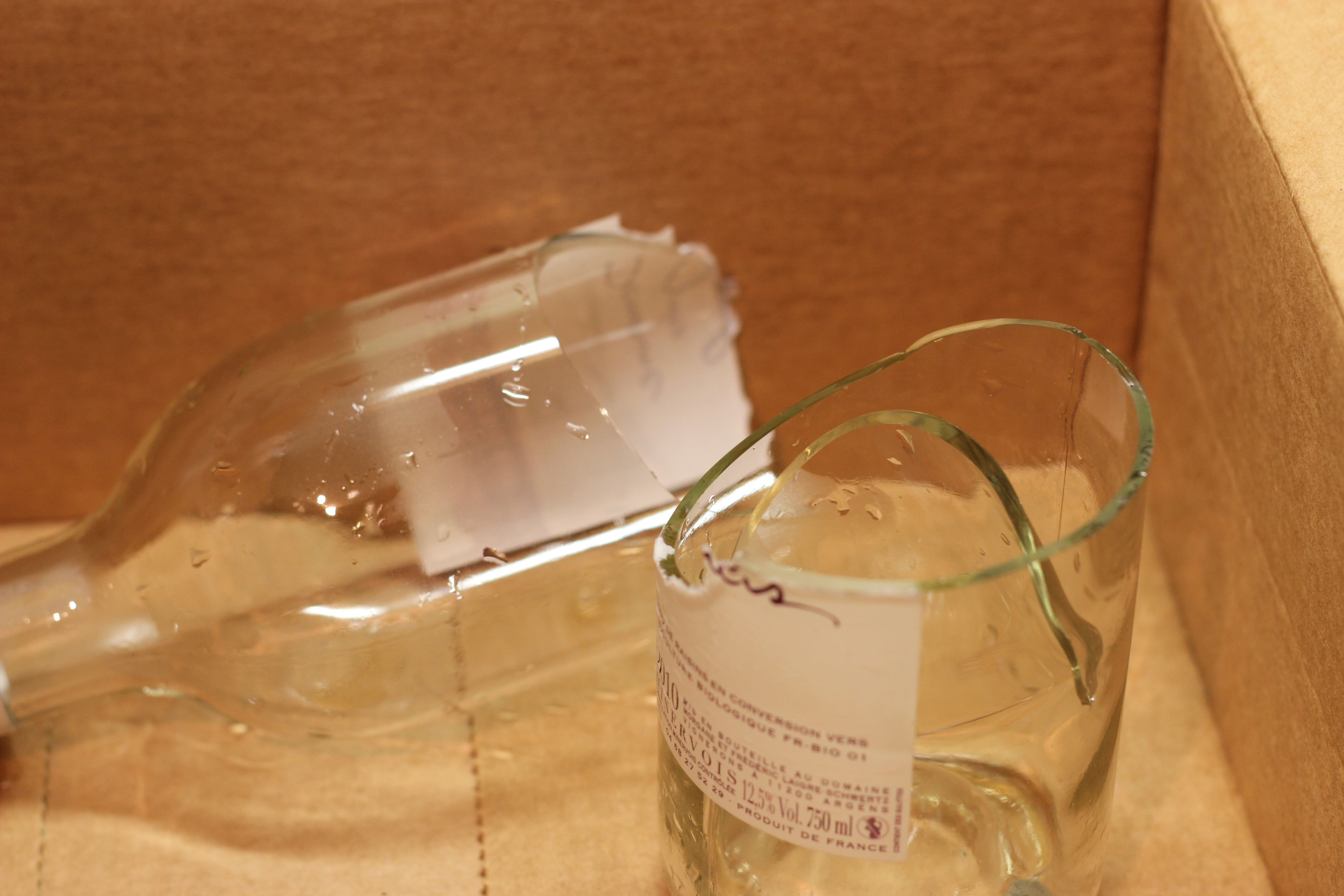
Next, I found a YouTube video that demonstrated how to use a makeshift jig to score bottles with a cheap glass scorer and then use the temperature difference between hot and cold water to crack the bottle. I was never able to get my jig to create a straight enough score so when the bottle did break, it just created a mess.

Oops

After multiple rounds of trying to improve my jig, I settled on purchasing this Generation Green Bottle Cutter. After setting it up I got to practicing. And practicing. Getting the bottles to actually crack was the hardest part. I found that heating the bottle in the oven to 225 and then dipping it in ice water just ended in spider cracks everywhere. However, dipping the water in hot and then cold water took many dips for the most part and the hot water cooled down very quickly. It was important to keep the hot water very hot which I ended up doing by microwaving the bowl of hot water every few minutes. Pouring boiling water from a teapot onto the score slowly for a few seconds sometimes worked as well.

Dipping the bottle in hot and cold water

When the score cracked, I could hear it and see the fact that the bottle was beginning to crack. It often took a number of additional temperature changes before the bottle would separate altogether. The Generation Green Bottle Cutter came with a tapping tool that could be used to separate the bottle along the score if it wouldn’t crack. I tried this a few times but never created a straight cut. Even when just using the water a straight cut was rare. I think I created a perfectly straight cut 2 or 3 times and unfortunately only once with the color of bottle I wanted to use. I finally got 3 bottles cut close to straight so that I could use them in my chandelier.

Once I had the cut bottles, it was time to create the light fixture. I picked up the following:

  • A swag kit that included a chain, hooks, wired plug and switch
  • 3 Candelabra sockets
  • Candelabra bulbs
  • Heat shrink tubes
  • Electrical crimp connectors
  • A piece of pine lumber

I then got my handy helper to cut the lumber into two 1 foot sections. One of the sections was split down the middle. We attached two hooks on either end of the wider piece, drilled 3 holes for wires and installed metal staples to use to fasten the wires. We then glued the two smaller pieces to the wider one in a U shape and I stained the wood.

The board before gluing on the sides

After the U was constructed and stained, It was time to insert the candelabra sockets in the bottles and start wiring them up to the plug. I used the crimp connectors to wire the three sockets in a parallel circuit.

Wiring the sockets through the wood holder

After the wiring was complete, I covered the connections with heat shrink wrap and electrical tape.  It was then time to hang the mini chandelier! After hanging it above a dresser, I found the best place to insert the switch that came with the swag kit.

No flash, shows the color of the bottles

Above the dresser

Enhanced by Zemanta

Making sound panels in the theme of Dazed & Confused

Cover of "Dazed & Confused (Widescreen Fl...

Cover via Amazon

Recently my company, Ant’s Eye View, moved our Austin office. We ended up with an incredibly awesome location on North Lamar Blvd that happened to be the scene of the Emporium in the movie Dazed and Confused. My co-workers decided to play up the famous location a bit so we’ve got the Emporium sign painted across a wall that spans multiple rooms and each conference room is named after a location in the movie. Oh, and there are movie posters and paddles for decorations.

After moving into the office, we found that the conference rooms had terrible echoes. To fix this, we decided to make sound dampening panels for each room. To complement the movie theme, each room has panels in solid colors that go with the location.

The Top Notch room (click to see sign colors):

The 50 yard line room:

The Moon Tower (pale yellow and dark blue in case you can’t tell):

Being crafty, I was the person who actually constructed the sound panels.

Materials:

  • Sound dampening foam – we used 2′ x 2′ foam with a waffle texture and they look a bit like this
  • Particle board – for mounting the foam and fabric
  • Solid cotton fabric
  • White felt (goes under the cotton to keep bumps from show as much)
  • Mending plates
  • Screws
  • Staple gun
  • Drill

Method:

Cut particle board into 2 x 2 squares. Cut fabric a few inches larger on each side and iron it. First put down the cotton, then the felt, then the sound dampening foam, and then the particle board. Fold in the corners sort of like you are wrapping a present and fold it over the back, pulling it tight.  Use the staple gun to tack down the fabric. Mark holes using the mending plate so that one hole just barely shows above the panel. I used two plates for the 2 x 2 panels. Drill a small hole and then use a screw driver to screw in the small holes. You’re now ready to hang your sound panels!

Enhanced by Zemanta

Wine bottle lights – a gift for you, a gift for them

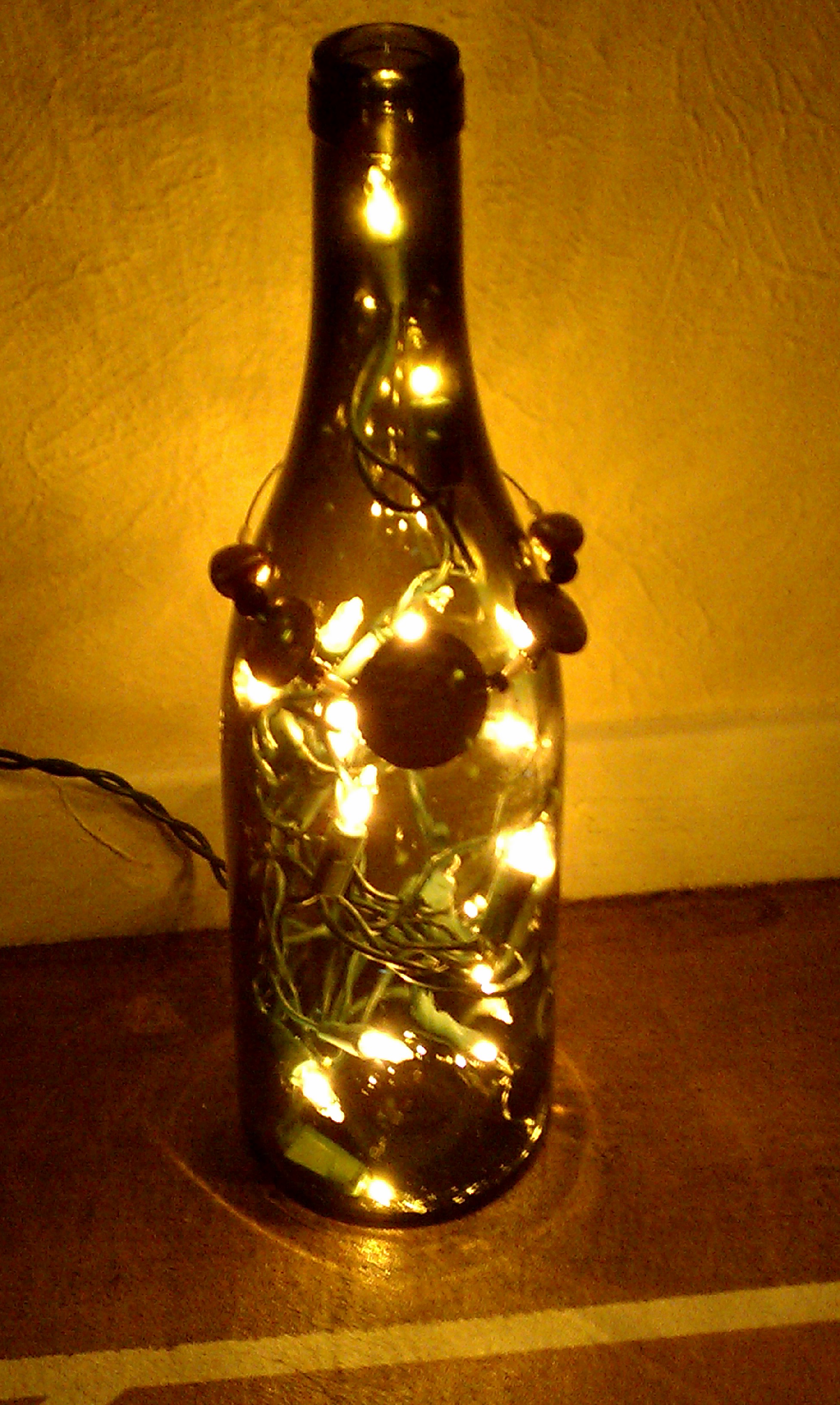
Wine bottle lights are a gift that can be given any time of year really. Especially if you want to give yourself the gift of drinking a few bottles of wine so that you have some nice looking bottles to start with.

I saw this idea in a number of places and can’t even really point to a source.

Supplies:

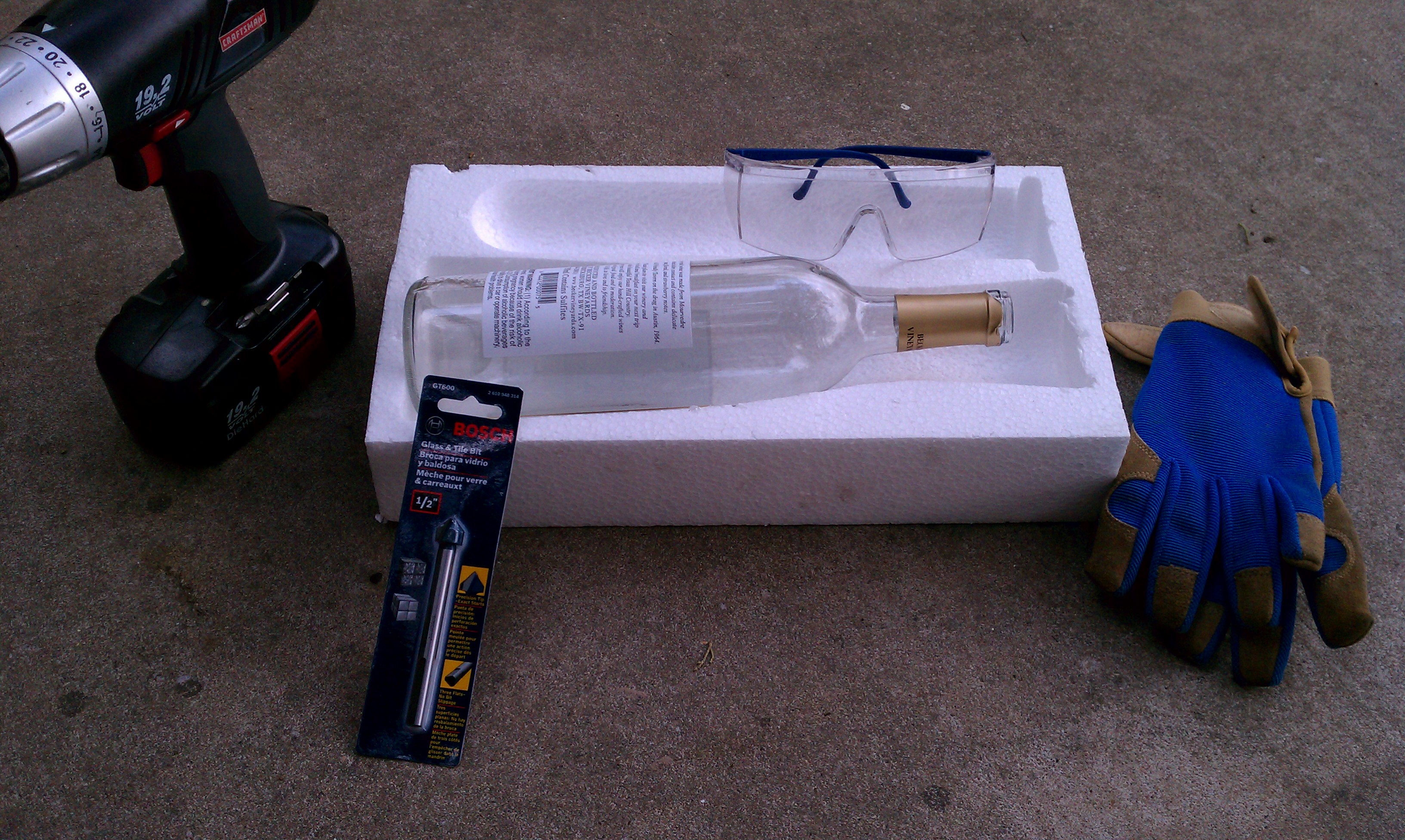
  • Empty wine bottle (colored ones are nicer than clear)
  • Indoor/outdoor christmas lights. I used a clear strand with 20 bulbs and a plug only on one end
  • Corded drill (cordless will run out of batteries)
  • 1/2″ Glass drill bit (like this one at home depot)
  • Wire and beads if you want to make a “necklace” for the bottle

Instructions:

  • Wear safety glasses and gloves while drilling through the bottles. None of mine broke during drilling, but make sure to be safe.
  • I used a piece of styrofoam to cradle the bottle while drilling it
  • Use the label to start the hole. If the bottle doesn’t have a label, put a piece of masking tape on the bottle.
  • Start drilling. The whole process takes 20 – 30 minutes. I would start and stop quite often because my hand got tired.
  • Drill until the drill bit fits through the hole
  • Soak the bottle in hot water with a bit of oxyclean until the label is easy to get off. A razor blade will help. I also used a brillo pad to take off the glue. After that was done, I used a bottle brush to clean out the glass dust left in the bottle.
  • Feed the lights one by one through the hole
  • Using some wire and vintage beads from Etsy I made a necklace for the bottle

I’d like to think I’ll make a whole army of these to decorate my yard, perhaps under the bottle tree but we’ll see how that goes. For now though, the bottles have been a hit with the recipients!

Enhanced by Zemanta

A homemade gift: Vanilla!

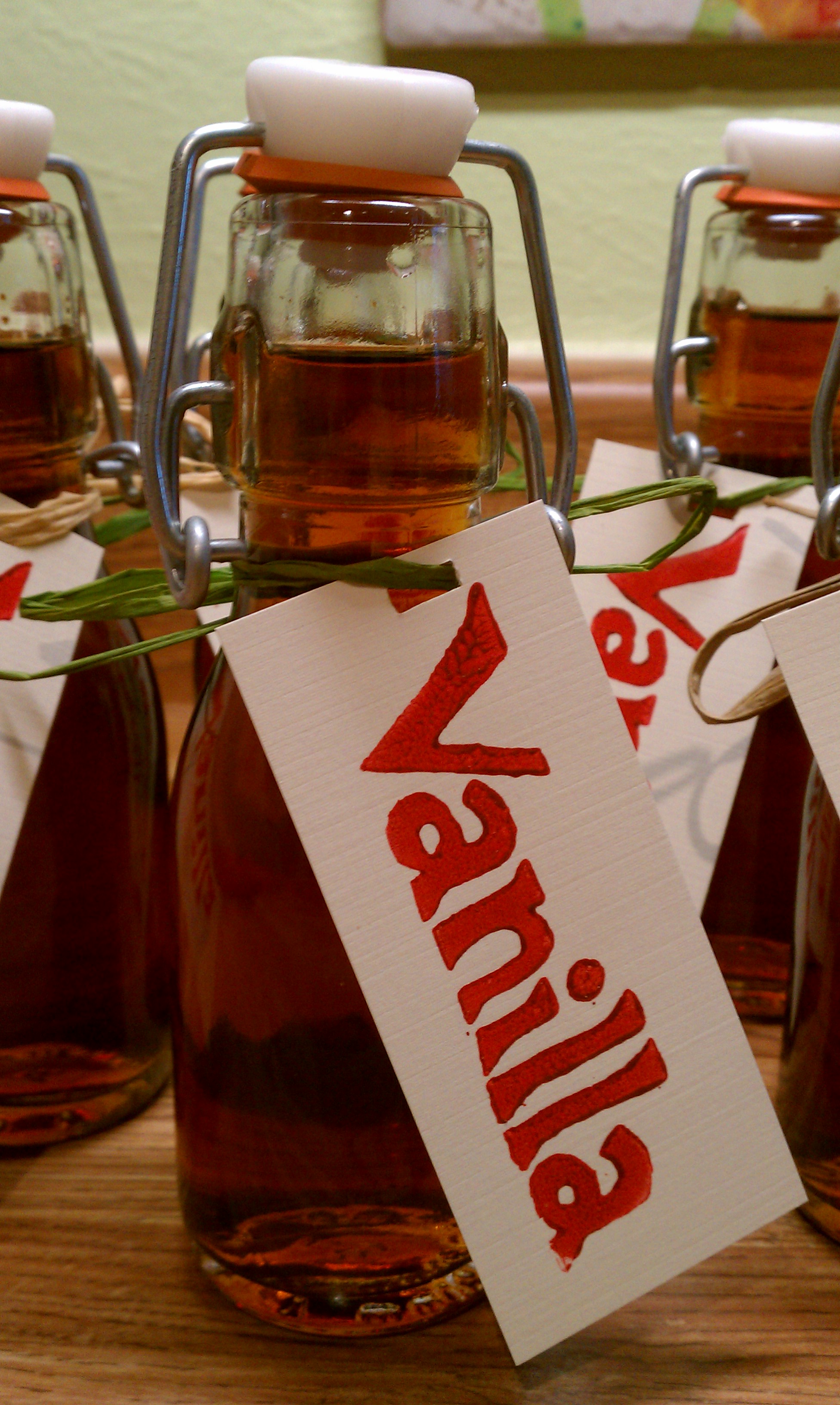
Earlier this year, I wrote about making my own vanilla extract. I know a number of women who like to bake, so I decided to give some of this deliciousness as gifts this year! I bought some small swing top bottles at the container store, made labels with a home made stamp and packaged up the vanilla. I sure hope it’s a hit 🙂

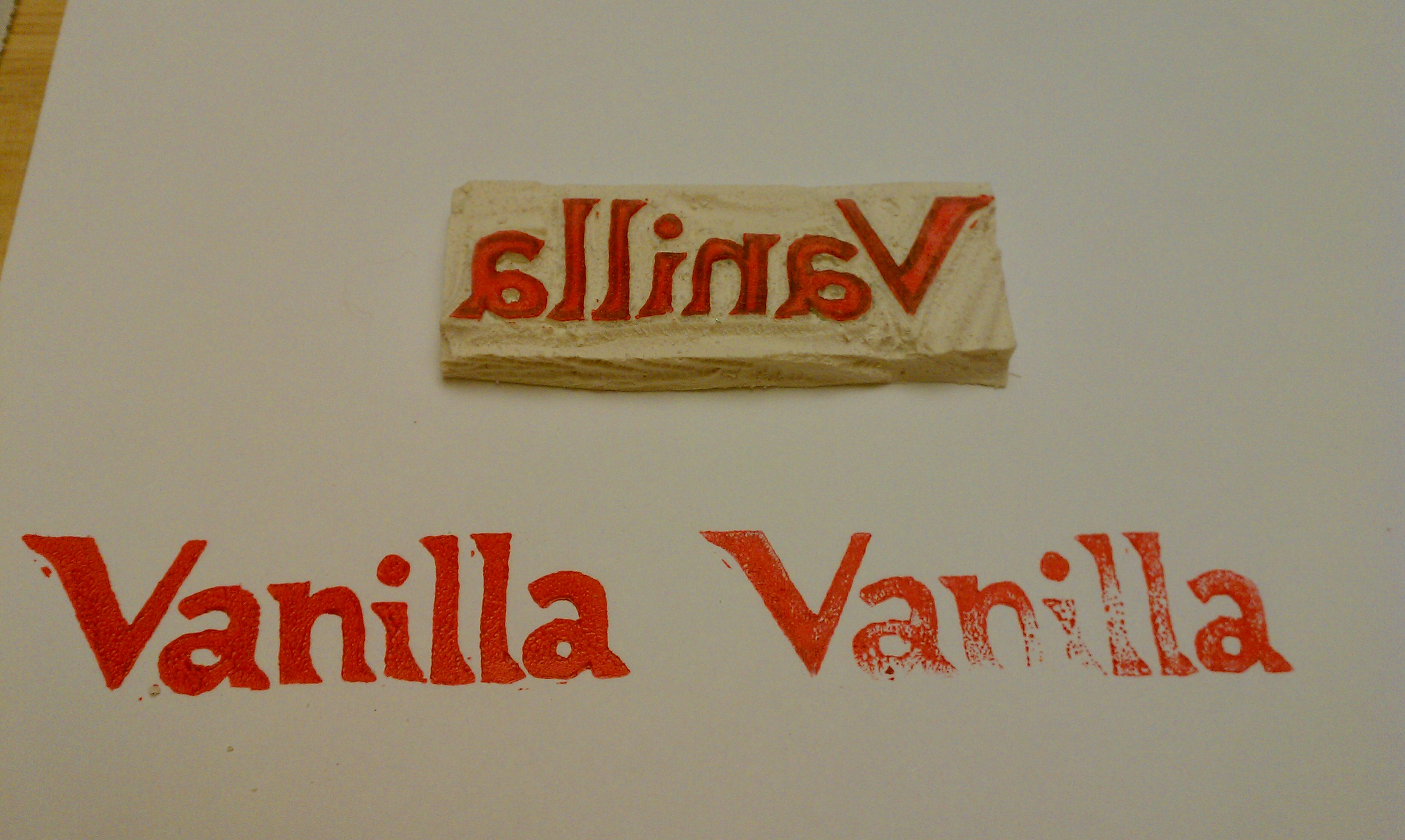
To make my own stamp, I first started by creating gridlines on my sketch paper and then drawing the word in a nice font of my own making.

I then carefully carved my stamp block using a speedball lino cutter handle. After doing some test stamps and cleaning up the carving, I mixed red and brown to make a slightly dark red colored paint and stamped a thick piece of cardstock.

After the paint dried, I cut up the paper into labels, punched a hole in the label and used some rafia to tie it around the neck of the bottle.

Enhanced by Zemanta

Personalize your stockings with beads and wire!

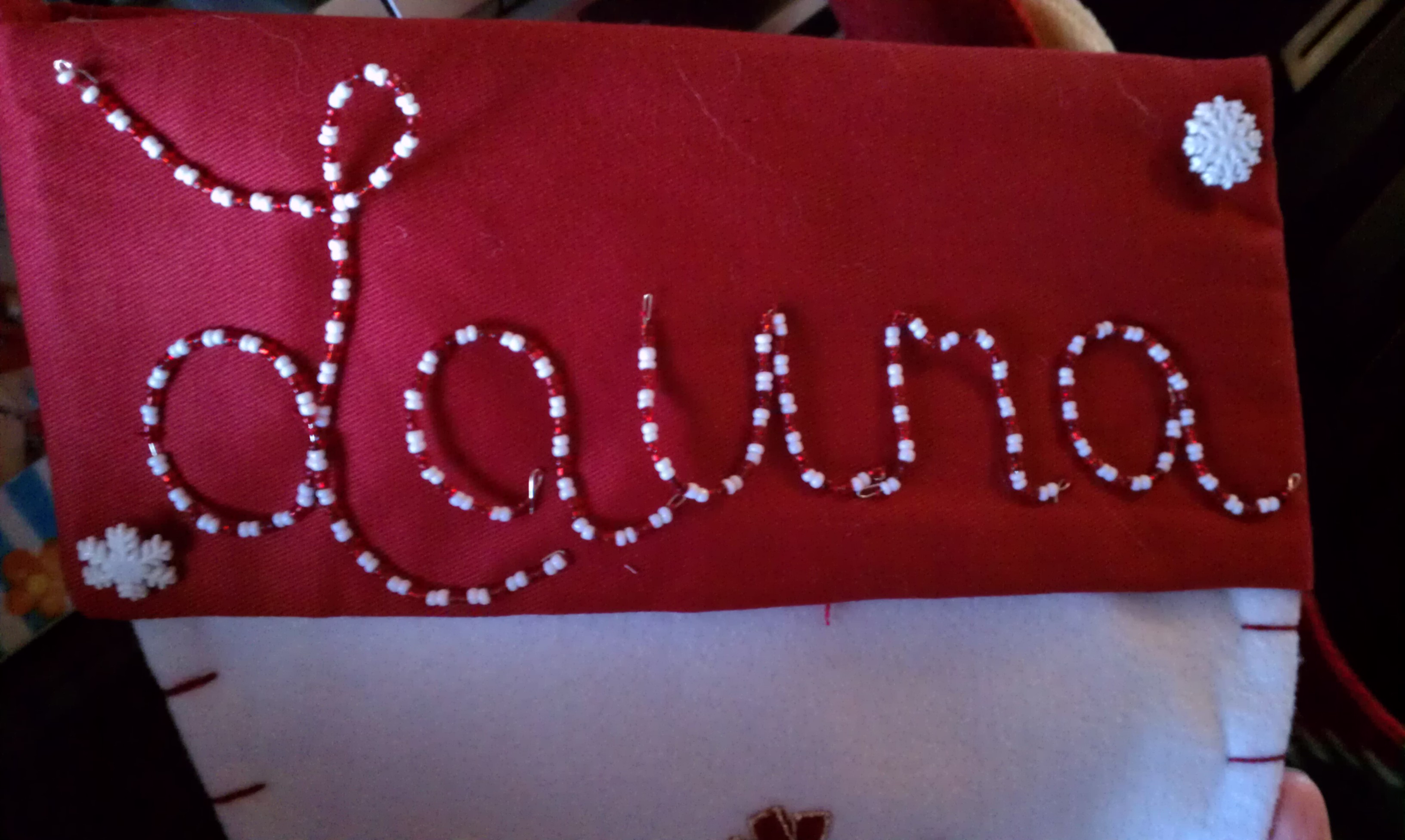
A number of years ago, a friend gave me an awesome idea of how I could personalize our stockings WITHOUT using glue and glitter like we did when I was a kid. It took a bit more work than glue and glitter, but every year I get out our stockings and smile because I love them so much.

Here’s how you can do this too:

1. Get some flexible wire. You need to bend it into letter shapes. I used cursive writing for our names. The wire should be flexible enough that you can just form it with your hands and cut it with scissors.

2. Form the letters. Include little loops at the end so that you can put thread through the loop and secure it to the stocking.

3. Put small seed beads on the wire. I used a red and white pattern to match our stocking.

4. Use red (or other appropriately colored) thread and secure the letters to the stocking. I used the start and end of the letters to do this.

5. Add other buttons and beads that match. You can see the little snowflake buttons that I sewed on.

6. Hang them and enjoy 🙂 Happy Holidays!